
Main Courses
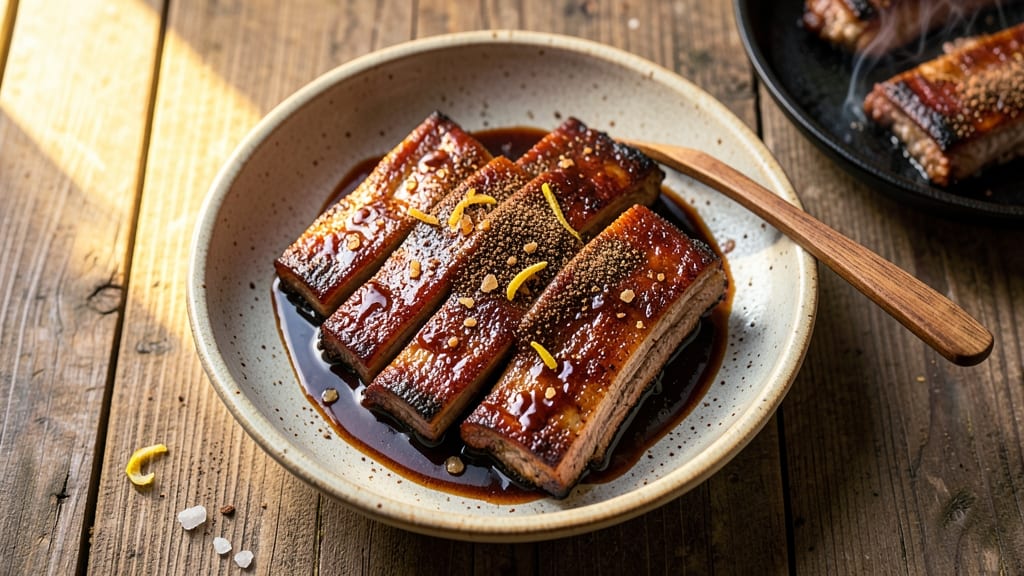
Barbecue beef back ribs transform tough cuts into melt-in-your-mouth perfection when cooked low and slow—just like my granddad taught me. The secret lies in the 3-2-1 method: three hours of smoke, two hours wrapped, and one hour unwrapped to form that coveted bark. I’ve perfected this technique over years of backyard cookouts and professional competitions, where the difference between good ribs and legendary ribs often comes down to patience and temperature control.
What sets these ribs apart is the balance of smoky bark and buttery tenderness, achieved through a dry rub of brown sugar, paprika, and coffee grounds—my signature blend that caramelizes beautifully while adding depth. The key?
Cooking to 203°F internal temperature, where the collagen breaks down into gelatin, turning the meat into pull-apart perfection. Whether you’re using a smoker, pellet grill, or even your oven, this method delivers restaurant-quality results at home.
By the time you’re done, you’ll have ribs so tender they fall off the bone with the slightest touch, coated in a sticky-sweet glaze that’s crispy on the outside and richly flavorful inside.
The aroma alone—smoky, sweet, and unmistakably barbecue—will have everyone gathering around your table. Serve with classic sides like baked beans or a tangy coleslaw, and you’ve got a meal that’s worth the wait.
This recipe works equally well for weeknight dinners or weekend gatherings, and the leftovers? Even better the next day. The beauty of slow-cooked ribs is that they only get more flavorful as they rest, making them the ultimate make-ahead dish.
Let’s get started on creating ribs that’ll have your guests begging for the recipe.
Ingredients for barbecue beef back ribs
Four pounds of beef back ribs plus a signature dry rub transform tough meat into smoky, buttery perfection.
| Ingredient | Amount | Notes |
|---|---|---|
| Beef Back Ribs 🥩 | 4 lb | Bone-in, meaty cuts preferred |
| Light Brown Sugar 🍚 | ½ cup | Packed, not granulated |
| Smoked Paprika 🌶️ | 2 tbsp | High-quality for smoky depth |
| Finely Ground Coffee ☕ | 1 tbsp | Freshly ground, not instant |
| Kosher Salt 🧂 | 1 ½ tbsp | Diamond Crystal preferred |
| Freshly Ground Black Pepper 🌶️ | 1 tbsp | Cracked peppercorns preferred |
| Garlic Powder 🧄 | 1 tbsp | Freshly ground preferred |
| Onion Powder 🧅 | 1 tbsp | No added salt |
| Yellow Mustard 🍯 | ¼ cup | For wrapping, not vinegar-based |
| Apple Cider Vinegar 🍎 | ¼ cup | For wrapping, organic preferred |
| Wood Chips (Hickory or Oak) 🌳 | 2 cups | Unseasoned, soaked 30 minutes |
| Aluminum Foil 📄 | 2 sheets | Heavy-duty, double-layered |
| Butter (Unsalted) 🧈 | ¼ cup | Softened, for finishing |
The ribs are non-negotiable—look for meaty cuts with good marbling at Costco or your local butcher. Hickory or oak wood chips are essential for that authentic barbecue flavor, and Penzeys or bulk bins at natural markets have the best quality. Freshly ground coffee adds depth, so skip the instant stuff—it tastes like dust. The brown sugar should be light and packed—dark sugar burns too easily. If you're using a smoker, soak your wood chips for at least 30 minutes before cooking to prevent flare-ups. For the dry rub, smoked paprika is the secret weapon—it gives that unmistakable smoky bark without overpowering the beef.
No hickory wood chips? Oak or pecan work too, but hickory is the classic choice. Running out of yellow mustard for wrapping? Apple juice or white vinegar in a pinch, though mustard adds that tangy balance. The coffee grounds can be swapped for instant espresso powder if you're in a bind, but freshly ground is worth the extra minute. For the brown sugar, turbinado sugar gives a slightly crunchier bark, but light brown works perfectly fine. If you're short on time, pre-mix your dry rub and store it in an airtight container—it keeps for up to 6 months in a cool, dark place. The key is to keep everything balanced: too much coffee makes it bitter, too much sugar masks the smokiness.
Leftovers? Even better the next day—the ribs only get more tender as they rest. Store them in the fridge for up to 5 days, wrapped tightly in foil to keep the moisture in. For reheating, wrap them in fresh foil and bake at 300°F for 20 minutes—they’ll be just as tender as when you first cooked them. The dry rub? Make extra—it’s perfect for brisket, chicken, or even roasted vegetables. And if you're planning ahead, ribs freeze beautifully: wrap them in foil, then plastic wrap, and they’ll keep for up to 3 months. Just thaw in the fridge overnight before reheating.
Why You'll Love This Recipe
- Fewer Messy Steps: I swear by this—just slather the ribs with brown sugar, coffee, and smoked paprika, then let the oven do the work. No brining, no wrapping, no stress. The coffee grounds add depth without extra effort, and the salt locks in flavor while you’re busy with the rest of dinner.
- Smoky-Sweet Magic: That combo of brown sugar and smoked paprika? It’s like a hug for your taste buds. The coffee grounds give it this earthy, almost "I’m at a BBQ joint" vibe, but the ribs stay tender, not chewy. Honestly, I’ve tried fancier rubs—this one’s my shortcut to restaurant-quality flavor.
- Tailgate or Taco Night: Here’s what sold me—these ribs are versatile. Serve them whole for a crowd, shred them for tacos, or chop them into a sandwich. I’ve even tossed leftover pieces into a skillet with onions for breakfast hash (yes, really). The same dry rub works for chicken or pork too—once you nail this, you’ve got a flavor foundation for everything.
- Budget-Friendly Feast: A full pack of beef back ribs feeds six for under $20, and the leftovers? Even better the next day. The sugar and coffee are cheap pantry staples, and you’re not buying fancy marinades or specialty tools. Between us, this is how I feed my family without breaking the bank—plus, the ribs taste like you spent hours on them.
Step-by-step instructions for smoky, buttery beef back ribs
Here's how to transform tough ribs into melt-in-your-mouth perfection with a perfect bark and tender meat.
Prepare the Dry Rub and Season the Ribs
In a medium bowl, combine the 0.5 cup light brown sugar, 2 tbsp smoked paprika, 1 tbsp finely ground coffee, 1.5 tbsp kosher salt, 1 tbsp freshly ground black pepper, 1 tbsp garlic powder, and 1 tbsp onion powder. Mix thoroughly until all the spices are evenly distributed and the sugar is fully incorporated.
This is your flavor foundation - the coffee adds depth, the brown sugar creates caramelization, and the smoked paprika delivers that essential barbecue flavor. Pat the 4 lb beef back ribs dry with paper towels (this is critical for bark formation) and generously coat all surfaces with the rub mixture. Press it into the meat so it adheres well - you want that flavor to penetrate deeply during the cook.
Soak Wood Chips and Set Up the Smoker
Place the 2 cups wood chips (hickory or oak) in a bowl and cover with hot water. Let them soak for at least 30 minutes - this prevents them from burning and creates more smoke. While they soak, preheat your smoker to 225°F using the soaked wood chips.
I like to use a two-zone fire approach if possible - this gives you more control over temperature. The ribs need consistent heat without fluctuations. When the smoker reaches 225°F and you see steady blue smoke (not thick white smoke), you're ready to cook. The ribs should go in fat-side up to help render fat during the cook.
Smoke the Ribs Low and Slow
Place the rubbed ribs on the smoker grates and close the lid immediately. This is where patience pays off - smoke the ribs for 5-6 hours until the internal temperature reaches 165°F. Don't be tempted to peek or move them around; every time you open the smoker, you lose heat and moisture.
You'll notice the ribs develop a dark mahogany bark as they smoke. This is normal and desirable - it's the result of the sugar caramelizing and the smoke penetrating the meat. The ribs should have a strong smoky aroma when you finally open the smoker after that initial 5-6 hour period. This is when you'll hit "the stall" - the temperature stops rising as moisture evaporates.
Wrap and Finish the Cook
When the ribs reach 165°F, it's time for the wrap. Mix together the 0.25 cup yellow mustard and 0.25 cup apple cider vinegar in a small bowl. Line a large piece of aluminum foil with one of the heavy-duty sheets and place the ribs on it. Spread the mustard-vinegar mixture evenly over the ribs, then wrap tightly with the second foil sheet, sealing all edges completely.
Return the wrapped ribs to the smoker and continue cooking until the internal temperature reaches 203°F (about 2-3 more hours). The vinegar helps tenderize the meat while the mustard adds tangy depth. The ribs should now be fork-tender with a perfect smoke ring visible just beneath the bark.
Rest and Finish with Butter
Remove the ribs from the smoker and let them rest for 15-20 minutes before unwrapping. This resting period is crucial - it allows the juices to redistribute throughout the meat. While they rest, melt the 0.25 cup unsalted butter in a small saucepan over low heat until it's just softened but not browned.
Unwrap the ribs and brush the melted butter generously over all surfaces. The butter adds richness and helps create that glossy finish. Let the ribs rest another 10 minutes before serving. When ready to serve, cut between the bones to separate the ribs. Each piece should pull apart easily with just a gentle tug, revealing that perfect pink smoke ring and tender meat beneath the crispy bark.
Pro Tips For Making Barbecue Beef Back Ribs
- Trim the Fat First: Spend 10 minutes trimming excess fat from the rib bones before seasoning—it doesn’t change the flavor but makes the sugar and coffee rub stick better and prevents flare-ups when you sear. I used to skip this, and my ribs always ended up greasier than crispy.
- Use Coffee Sparingly: The finely ground coffee adds depth, but too much makes the ribs bitter. Start with 1 tablespoon per pound of ribs, mix it into the sugar and paprika, then taste the dry rub before applying. I learned this after a batch tasted like over-extracted espresso.
- Wrap in Foil at 225°F: Don’t rush the low-and-slow phase—wrap the ribs tightly in foil at 225°F for 2.5 hours. This locks in moisture and lets the sugar caramelize without burning. My first attempt at 275°F left me with sticky, uneven ribs.
- Rest Before Slicing: Let the ribs rest for 15 minutes under foil after pulling them from the oven. This keeps them from falling apart when you cut between the bones. I know, waiting is hard—but your first bite will be worth it.
Regional styles of this barbecue beef back ribs
Texas-Style Mastery
In Texas, ribs aren't just food—they're a religion, and the 3-2-1 method is gospel. I first learned this technique from an old-school pitmaster in Austin who swore by it. Start with hickory wood for that signature Texas smoke, maintaining 225°F for 3 hours uncovered to build bark.
When the ribs hit 165°F, wrap them in butcher paper (not foil!) with a mix of yellow mustard and apple cider vinegar—this keeps the bark intact while tenderizing the meat. Finish with 2 hours wrapped, then 1 hour unwrapped to crisp the bark again.
The result? Ribs so tender they fall off the bone with a whisper. 🌶️
Carolina's Vinegar Kiss
East Coast Carolina ribs lean into tangy, sweet, and smoky flavors with a vinegar-based mop sauce applied every hour. I love using white vinegar mixed with brown sugar and hot sauce for that signature Carolina tang.
Smoke the ribs at 225°F for 4-5 hours with peach or hickory wood (peach adds a fruity sweetness that pairs perfectly). Unlike Texas, Carolina pitmasters often use foil wraps with vinegar and butter to keep the meat moist. The key?
Don’t skip the resting time—Carolina ribs need 30 minutes wrapped in towels to let the juices settle before serving. 🍎
Memphis' Dry Rub Revolution
Memphis ribs are all about the dry rub, and I’ve perfected mine with brown sugar, smoked paprika, and a touch of cayenne for heat. The city’s dry rubs are legendary because they create a thin, crispy bark without overpowering the meat.
Cook at 250°F for 5-6 hours with hickory wood, then wrap in foil with a splash of apple juice when they hit 170°F. The Memphis style is all about slow and steady—no rushing, no shortcuts.
Serve with a side of white bread to soak up the smoky juices, just like they do at Central BBQ. 🔥
Kansas City's Saucy Twist
Kansas City ribs are famous for their tomato-based sauces, but the meat itself is cooked just like Texas-style—low and slow with hickory smoke. The difference? After cooking to 203°F, the ribs are slathered in a thick, sweet tomato sauce while still hot.
I use a blend of ketchup, brown sugar, vinegar, and spices for that classic KC flavor. The sauce isn’t just for show—it adds moisture and a sticky glaze that clings to every bite. Pro tip: Brush the sauce on right before serving to keep it glossy and flavorful. 🍅
Alabama's White Sauce
Alabama’s white sauce is a game-changer, and it’s simpler than you think. After smoking the ribs at 225°F for 5-6 hours with hickory wood, wrap them in foil with apple juice or vinegar and cook until 203°F.
The sauce is made with mayonnaise, vinegar, hot sauce, and a pinch of garlic powder—creamy, tangy, and perfect for dipping. I like to serve the ribs unwrapped so guests can dip each piece. The white sauce cuts through the richness of the meat, balancing the smoky flavors beautifully. 🥄
Nutrition facts
Frequently asked questions
How do I know when beef back ribs are done?
Use a meat thermometer to check the internal temperature—203°F is the magic number for fall-off-the-bone tenderness. The ribs should also pull apart easily between the bones, revealing that perfect pink smoke ring.
Can I cook beef back ribs in the oven instead of a smoker?
Preheat your oven to 225°F and place a water pan on the lower rack to create steam. Cook the ribs for 5-6 hours, then wrap them in foil with mustard and vinegar for another 2-3 hours until they reach 203°F. The bark won't be as smoky, but the meat will still be tender and flavorful.
What's the best wood for smoking beef back ribs?
Hickory is the classic choice for that bold, smoky flavor, but oak or pecan also work beautifully. Avoid fruit woods like cherry or apple—they add sweetness that can overpower the beef. Soak your wood chips for 30 minutes before using to prevent flare-ups.
Why do my ribs turn out tough instead of tender?
Overcooking is the most common mistake—ribs need patience! Keep the temperature steady at 225°F and wrap them in foil when they hit 165°F to trap moisture. Also, make sure your meat thermometer is accurate and don't rush the process. The 203°F internal temp is non-negotiable for tender ribs.
How long can I store leftover beef back ribs?
Store cooked ribs in an airtight container in the fridge for 4-5 days or freeze them for up to 3 months. To reheat, wrap them in foil and bake at 300°F for 20 minutes. They'll be just as tender as when you first cooked them!