
Soups & Stews
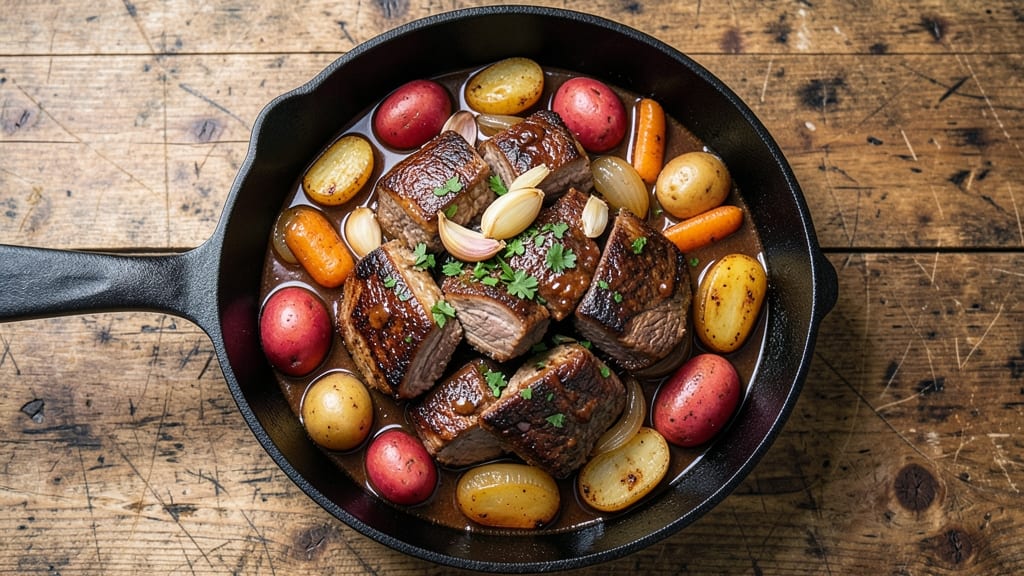
This barbecue beef stew recipe delivers the kind of deep, smoky richness that transforms a simple pot into a centerpiece dish. 🔥 After years of perfecting slow-cooked beef with caramelized root vegetables, I’ve developed a method that captures the essence of a backyard cookout—right in your kitchen.
The secret lies in layering smoky flavors through careful seasoning and low-and-slow cooking, ensuring every bite is tender, aromatic, and packed with that unmistakable barbecue soul.
The foundation starts with a smoked paprika and garlic rub that clings to the beef, while onions, carrots, and potatoes develop a caramelized crust from hours of gentle simmering.
Unlike quick stews, this one rewards patience—each ingredient melts into a velvety broth that’s rich enough to stand alone or pair perfectly with crusty bread. The result? A dish that tastes like it’s been simmering all day, even if you only have a few hours to spare.
What you’ll end up with is a deeply flavorful stew where the beef practically falls apart at the touch of a spoon, and the vegetables are tender yet still hold their shape. The aroma alone—smoky, savory, with hints of garlic and herbs—will have everyone gathered around the table waiting.
This isn’t just a stew; it’s a comforting, hearty meal that feels like a hug in a bowl.
Serve it with a side of cornbread to soak up every last drop of that smoky broth, or pair it with a crisp coleslaw for balance. The beauty of this recipe is its versatility—it’s perfect for a cozy weeknight dinner or a gathering with friends.
Let’s get cooking and bring that deep-smoked flavor to your table.
Ingredients for barbecue beef stew
Six hearty ingredients create this deeply smoky, caramelized beef stew that feels like a backyard cookout in a pot.
| Ingredient | Amount | Notes |
|---|---|---|
| Chuck Roast Beef 🥩 | 3 lb | With good marbling for tenderness |
| Yellow Onions 🧅 | 2 whole | Medium, sliced into wedges |
| Carrots 🥕 | 4 whole | Medium, cut into chunks |
| Russet Potatoes 🥔 | 3 lb | Cut into 2-inch chunks |
| Garlic Cloves 🧄 | 6 cloves | Minced for depth of flavor |
| Smoked Paprika 🌶️ | 2 tbsp | For that authentic smoky taste |
| Ground Black Pepper 🌶️ | 1 ½ tbsp | Freshly cracked for heat |
| Kosher Salt 🧂 | 1 ½ tbsp | Diamond Crystal preferred |
| Dried Thyme 🌿 | 1 tbsp | Or 3 tbsp fresh thyme |
| Bay Leaves 🍃 | 2 whole | For subtle earthy notes |
| Beef Broth 💧 | 4 cups | Low-sodium preferred |
| Tomato Paste 🍅 | 2 tbsp | For richness and depth |
| Dark Brown Sugar 🍯 | 2 tbsp | Balances smoky flavors |
| Apple Cider Vinegar 🍎 | 1 tbsp | Brightens the stew |
| Extra-Virgin Olive Oil 🫒 | 2 tbsp | For searing the beef |
The chuck roast is non-negotiable here—its fat marbling ensures melt-in-your-mouth tenderness. Grab one from the butcher counter if you can, or look for pre-cut chuck roast in the meat section at Whole Foods or Kroger. If you're buying a whole roast, trim off excess fat but leave some for flavor. The smoked paprika is your secret weapon for that authentic barbecue taste—Penzeys or McCormick brands deliver consistent quality. For the potatoes, Yukon Golds work too, but Russets hold up better during long cooking. The garlic should be fresh, not jarred—it makes all the difference in flavor depth.
No smoked paprika? Substitute 1 tbsp regular paprika plus ½ tsp liquid smoke for a similar effect. Running low on beef broth? Use 3 cups water plus 1 beef bouillon cube—just don’t overdo the salt. Fresh thyme is ideal, but dried works at one-third the amount. If you’ve got tomato paste in a squeeze tube from Trader Joe’s, that’s perfect—no waste, and it keeps for months. For the brown sugar, muscovado adds a deeper molasses note, but regular dark brown sugar works just fine. The apple cider vinegar can be swapped for red wine vinegar if that’s what you have on hand.
This stew tastes even better the next day—plan ahead and make a double batch. Store leftovers in an airtight container in the fridge for up to 5 days, or freeze for 3 months. I like to portion mine into mason jars for easy grab-and-go lunches. The broth thickens as it cools, so add a splash of water when reheating. For extra richness, stir in a pat of vegan butter or a dollop of sour cream when serving.
Why You'll Love This Recipe
- Ditch the Chopping: I swear by this recipe because you only need to dice onions and smash garlic—no julienne carrots or peeling potatoes like some fancy stews demand. The chuck roast does all the heavy lifting while you sip your coffee.
- Smoky Depth Magic: That slow-cooked beef in barbecue sauce? It turns tender enough to melt on a spoon, while the caramelized onions and crispy potato edges bring the whole thing to life. Honestly, the first bite makes me want to make it again immediately.
- Game-Day Crowd Pleaser: Whether you’re feeding a hungry family or hosting game night, this stew stretches to feed six easily. Between us, it’s the one dish that never gets complaints—even from the picky eaters.
- Budget-Friendly Luxury: A chuck roast is cheap, and this recipe stretches it into three hearty meals. I’ll be real: my freezer’s always stocked with leftovers because reheating this stew is like eating it fresh—just add a splash of water and let it simmer.
Step-by-step instructions for deep-smoked beef stew
Here's where the magic happens—slow-cooked richness meets smoky depth for a stew that tastes like a backyard feast.
🔥 Step 1: Sear the Chuck Roast for Maximum Flavor
Heat a large Dutch oven over medium-high heat until it's smoking hot. Add the 2 tbsp extra-virgin olive oil and swirl to coat the bottom evenly. Pat the 3 lb chuck roast beef completely dry with paper towels—this ensures a proper sear instead of steaming.
Place the beef in the pot and sear for 4-5 minutes per side until it develops a deep brown crust. Here's the thing—I press down gently on the roast during the first minute to prevent curling. This guarantees even contact with the hot surface. Once browned, remove the beef and set it aside on a plate.
🥘 Step 2: Build the Smoky Vegetable Base
In the same Dutch oven, add the 2 whole yellow onions sliced into wedges and the 4 whole carrots cut into chunks. Cook for 8-10 minutes until the onions soften and begin to caramelize at the edges—that's when you'll smell that sweet, nutty aroma developing.
Add the 6 cloves minced garlic and cook for 30 seconds until fragrant. Here's where the smoky magic begins: sprinkle in the 2 tbsp smoked paprika, 1.5 tbsp ground black pepper, and 1.5 tbsp kosher salt. Stir for 1 minute to toast the spices slightly—this deepens their flavor. The pan should look dark and aromatic at this point.
🍳 Step 3: Develop the Rich Stew Foundation
Stir in the 2 tbsp tomato paste and cook for 2 minutes until it darkens slightly. This step creates the base for that deep, complex flavor. Add the 2 tbsp dark brown sugar and 1 tbsp apple cider vinegar, stirring to combine. The sugar will caramelize just enough to balance the smokiness.
Pour in the 4 cups beef broth and scrape up all those browned bits from the bottom of the pot. Add the 2 whole bay leaves and 1 tbsp dried thyme. Return the beef to the pot, along with any accumulated juices, and bring everything to a gentle simmer over medium heat. This is where the long cook begins.
⏰ Step 4: Slow Cook Until Fork-Tender
Transfer the pot to the oven and cook uncovered at 325°F for 2 hours. Here's the critical part: don't peek or stir during this time. Every time you open the lid, you lose heat and moisture. After 2 hours, add the 3 lb russet potatoes cut into 2-inch chunks—they'll cook perfectly in the remaining time.
Continue cooking for another 1 hour to 1 hour 15 minutes until the beef is fork-tender. You'll know it's ready when a knife slides in easily and the meat pulls apart with gentle pressure. The stew should be thick and rich, with the vegetables completely tender but still holding their shape.
🍽️ Step 5: Adjust and Serve with Confidence
Remove the beef and vegetables from the stew and transfer them to a serving platter. Strain the cooking liquid through a fine-mesh sieve into a clean pot and return it to the stove. Simmer over medium heat for 5-7 minutes to reduce slightly if needed. Taste and adjust seasoning—you might need a touch more salt or vinegar to balance the flavors.
Slice the beef against the grain into ¼-inch thick slices and arrange it over the potatoes and carrots. Ladle the reduced stew sauce over everything and serve immediately. The result should be a hearty bowl of deep-smoked beef with caramelized vegetables and a rich, velvety sauce that coats every bite.
Pro Tips For Making Barbecue Beef Stew
- Sear the Chuck Hard: I learned this the hard way—skipping the sear makes the stew taste like it’s missing something. Get that roast screaming hot in a heavy pot with a tablespoon of oil, and let it develop a deep crust on all sides before adding anything else. The flavor payoff is worth the extra 5 minutes.
- Cut Potatoes Uniformly: Russets break apart when they’re uneven, turning your stew into a mushy disaster. Aim for 1.5-inch chunks—big enough to hold shape but small enough to cook through. If you’re lazy (like me), a mandoline makes this step actually enjoyable.
- Deglaze with BBQ Sauce: After browning the onions and garlic, splash in ½ cup of your barbecue sauce right away—this lifts all the stuck-on bits and adds instant depth. Skip the water or broth here; the sauce’s smoky sweetness is the thing that matters most.
- Add Potatoes Last: I used to toss them in early, and they’d turn to glue. Potatoes need about 15 minutes in the stew to soften properly, so add them with the last 20 minutes of cooking. If you’re short on time, parboil them for 5 minutes first—they’ll still hold their shape.
Essential equipment for great barbecue beef stew
Dutch Oven
This is the workhorse of your stew—Le Creuset's 6-quart Dutch oven is my go-to for its even heat distribution and durable construction. The heavy cast iron retains heat beautifully, ensuring consistent temperatures during the long cook.
If you're on a budget, Lodge's 6-quart Dutch oven is an excellent alternative that won’t break the bank. For those who prefer ceramic, Xtrema's 6-quart ceramic Dutch oven offers similar performance without the weight. 🔥
Meat Thermometer
You absolutely need a reliable meat thermometer to nail the perfect doneness. I swear by the ThermoWorks Smoke for its instant-read accuracy and durable probe. For a more budget-friendly option, Taylor Precision's digital thermometer works just as well.
Insert the probe into the thickest part of the beef—165°F internal temperature is your target for fork-tender results. Trust me, nothing ruins a stew like overcooked beef.
Carving Knife
A sharp carving knife makes all the difference when serving. My favorite is the Dexter-Russell 12-inch carving knife—its long blade glides through the beef effortlessly. If you're slicing directly from the pot, a Wüsthof Classic 8-inch carving knife is a great mid-range option.
Always slice against the grain for tender bites. Don’t skimp on this tool; it’s worth the investment for presentation and ease.
Fine-Mesh Sieve
For a smooth, velvety sauce, you’ll need a fine-mesh sieve to strain out the vegetables and herbs. The OXO Good Grips collapsible sieve is my top pick—it’s sturdy, easy to clean, and fits perfectly over a pot.
If you’re tight on space, Vegreville's 8-inch stainless steel sieve is another solid choice. Straining the broth ensures your stew has that restaurant-quality finish without any unwanted bits.
Instant-Read Thermometer
Beyond the meat thermometer, an instant-read thermometer helps monitor the stew’s temperature during the slow cook. The Thermoworks Thermapen ONE is my favorite for its speed and precision. For a more affordable option, Meater's Plus delivers similar accuracy.
Use it to check the oven temperature—325°F is critical for even cooking. This tool gives you confidence that your stew is cooking exactly as it should. ⏰
Tongs for Serving
Serve your stew with style using a pair of long-handled tongs. The OXO Good Grips 12-inch serving tongs are my go-to—they’re sturdy, easy to grip, and perfect for reaching into deep pots. For a more rustic touch, Nordic Ware's 10-inch serving tongs add a classic feel to your presentation.
Long handles keep your hands safe from the hot pot, and they make serving a breeze. 🍽️
Nutrition facts
Frequently asked questions
Can I make this barbecue beef stew in a slow cooker?
Brown the beef in a skillet first, then transfer everything to a 6-quart slow cooker. Cook on low for 8-10 hours or high for 5-6 hours, adding potatoes during the last 2 hours. The slow cooker keeps the flavors concentrated and tender—just check for doneness with a meat thermometer (165°F).
How can I make this stew smokier without a grill?
Add ½ teaspoon liquid smoke to the spices when building the base, or use 1 extra tablespoon smoked paprika. For extra depth, toast 2 tablespoons coffee grounds with the spices—they add a subtle smoky note. If you have a smoker box, place it in your oven with the stew for the last 30 minutes of cooking.
What's the best way to reheat leftovers?
Reheat gently in a pot over low heat with a splash of beef broth to prevent drying. For microwave reheating, cover with a damp paper towel and heat in 30-second intervals, stirring between each. Never reheat to boiling—this can make the beef tough. If the stew thickens too much, stir in 1-2 tablespoons water or broth while warming.
Can I substitute other cuts of beef?
The chuck roast is ideal for its fat marbling, but you can use brisket or stew meat in a pinch. Avoid lean cuts like sirloin—they won't become tender. If using brisket, cut it into 1.5-inch cubes and cook for 15-20 minutes longer to ensure tenderness. The extra fat in chuck roast creates the richest flavor, though.