
Sauces & Condiments
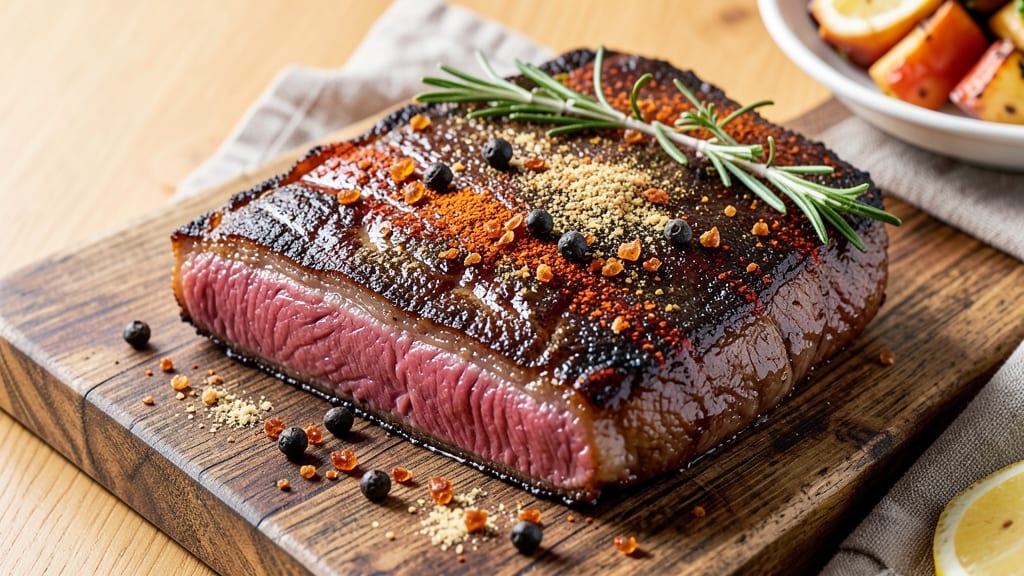
This BBQ beef dry rub recipe transforms tough cuts into tender, flavor-packed masterpieces—no matter if you're grilling, smoking, or slow-cooking. 🔥 I developed it after years of perfecting rubs for competitions, where the difference between good and legendary comes down to the right spice balance. The secret? A harmonious blend of smoky, sweet, and savory notes that clings to the meat like armor, building flavor as it cooks.
The blend starts with coarse brown sugar for caramelization, then layers in smoked paprika for depth, garlic powder for punch, and onion powder for complexity. A touch of cayenne adds heat without overpowering, while black pepper and mustard powder create that signature tangy kick.
What makes this rub special is its versatility—it works on brisket, ribs, steaks, or even chicken thighs, delivering a crust that's both crisp and flavorful.
What you'll end up with is a dry rub that's easy to mix, simple to apply, and impossible to resist. The spices create a bark that's sweet, smoky, and just spicy enough to make your taste buds sing.
This isn't just a seasoning—it's a flavor foundation that turns ordinary meat into something extraordinary. Ready to elevate your grill game? Here's everything you need to make it.
Store it in an airtight container for up to 6 months, but trust me, it'll disappear long before then. Whether you're prepping for a backyard cookout or a weekend smoking session, this rub is your secret weapon. Let's get started!
Ingredients for bbq beef dry rub
Nine spices, one unforgettable flavor—this dry rub turns meat into competition-worthy masterpieces.
| Ingredient | Amount | Notes |
|---|---|---|
| Coarse Brown Sugar 🍚 | 2 tbsp | Turbinado or demerara for texture |
| Smoked Paprika 🌶️ | 1 ½ tbsp | High-quality for smoky depth |
| Garlic Powder 🧄 | 1 tbsp | Freshly ground preferred |
| Onion Powder 🧅 | 1 tbsp | For savory base |
| Cayenne Pepper 🔥 | ½ tsp | Adjust for heat preference |
| Black Pepper 🌶️ | 1 tsp | Freshly cracked for bite |
| Mustard Powder 🍯 | ½ tsp | For tangy kick |
| Salt 🧂 | 1 ½ tsp | Diamond Crystal preferred |
| Ground Coriander 🌿 | ½ tsp | Citrusy brightness |
The smoked paprika is non-negotiable—Penzeys or bulk bins at Whole Foods have the best. Look for vibrant red color and no clumping. Brown sugar should be coarse (turbinado or demerara) for that perfect caramelized crust. I always buy extra because it disappears fast. The coriander adds that bright, citrusy note that keeps the rub from being too heavy—trust me, it makes a difference. For the cayenne, Trader Joe's sells a great pre-ground version if you're not into measuring tiny amounts.
No smoked paprika? Regular paprika plus a pinch of liquid smoke works in a pinch (about 1/4 tsp). Short on coriander? Cumin at half the amount gives a similar earthy warmth. Mustard powder hard to find? Dijon mustard powder is the same thing. The salt matters—Diamond Crystal dissolves better than table salt, so if you're using that, go with 1 tsp instead. Freshly ground spices make all the difference, but if you're using pre-ground, check the date—older spices lose punch fast.
Mix everything in a bowl, then store in an airtight container for up to 6 months. I keep mine in a glass jar in my pantry, but a small mason jar works too. For best results, apply the rub generously—about 1 tbsp per pound of meat. Pat it on dry, let it sit for 10-15 minutes before cooking, and get ready for that legendary bark. Freezes beautifully too if you want to make extra.
Why You'll Love This Recipe
- Five-Ingredient Magic: I swear by this combo—no fancy pantry, just what’s already lurking in your spice rack. The smoked paprika gives that smoky depth without needing a grill, and the brown sugar caramelizes into this irresistible crust. Honestly, I’ve made it with my eyes closed.
- Smoky-Sweet Addiction: That cayenne kick isn’t just for heat—it cuts through the richness, making every bite balanced. The garlic and onion powders sneak in layers of savory warmth, so you get restaurant-quality flavor without the fuss. My husband steals the leftovers before I even finish cooking.
- Tailgate or Tuesday: Slap this on steaks for a summer cookout, or rub it on beef chuck for slow-cooked sandwiches. I’ve used it on frozen burgers (yes, really) and still got rave reviews. It’s the one dry rub that works for lazy nights and big gatherings—no excuses.
- Budget Booster: A single batch costs pennies and stretches forever. I keep a jar in my fridge because it turns cheap cuts into something special. Between us, this is how I feed my family without breaking the bank—and still taste like I’m splurging.
Step-by-step instructions for BBQ beef dry rub
Here's how to mix this smoky-sweet blend that'll transform your grilled beef.
👨🍳 Step 1: Measure All Ingredients Precisely
Start by gathering all your ingredients in small bowls or ramekins. I like to use separate containers for each spice to prevent cross-contamination and ensure clean measurements. For the coarse brown sugar, I recommend using Turbinado or demerara—these varieties have larger crystals that create a beautiful crust on your meat.
Measure out the 1.5 tablespoons smoked paprika first. This is your flavor foundation—high-quality smoked paprika makes all the difference. If you're using a pre-ground spice, give it a quick sniff to check for freshness. Fresh spices have vibrant aroma and more potent flavor than older ones that've lost their punch.
🥘 Step 2: Combine Dry Ingredients Thoroughly
In a medium bowl, add the 2 tablespoons coarse brown sugar, 1 tablespoon garlic powder, 1 tablespoon onion powder, 0.5 teaspoon cayenne pepper, 1 teaspoon black pepper, 0.5 teaspoon mustard powder, 1.5 teaspoons salt, and 0.5 teaspoon ground coriander. The mustard powder might seem odd, but trust me—it adds a subtle tang that balances the sweetness beautifully.
Use a whisk to combine everything until you see an even distribution of color. You're looking for a uniform blend where you can't pick out individual spices. This ensures every bite of your beef gets balanced flavor. If you're making this for sensitive skin, wear gloves—some spices can be irritating when handling large quantities.
🔪 Step 3: Grind for Maximum Flavor Development
For the best results, transfer your dry rub to a spice grinder or clean coffee grinder. Pulse in 10-second bursts until you achieve a fine, powdery consistency. You want it to flow like sand through your fingers—not too coarse, but not so fine it turns into a paste. This grinding step helps release the essential oils in each spice, making your rub more flavorful.
If you don't have a grinder, a fork works in a pinch, but you'll need to work it more vigorously. Press down with the back of your fork and scrape the sides of the bowl repeatedly for about 3-4 minutes until everything looks uniformly blended. The effort pays off with better flavor distribution on your meat.
⏰ Step 4: Store Properly for Freshness
Transfer your finished dry rub to an airtight container with a tight-sealing lid. I like to use a small glass jar with a silicone lid—it keeps everything fresh and makes it easy to scoop portions. Store in a cool, dark place like your pantry, where it'll stay fresh for up to 3 months.
For best results, make fresh rub each time you grill. The spices lose potency over time, especially the cayenne and coriander. But if you need to store it, keep it away from moisture and heat sources. When ready to use, give it a good shake before applying—settled spices can separate during storage.
Pro Tips For Making Bbq Beef Dry Rub
- TOAST THE SPICES FIRST: Smoked paprika and cayenne lose their punch when raw—toss them in a dry pan over medium heat for 30 seconds until fragrant. I learned this the hard way after a batch tasted flat; the heat wakes up the flavors before they even hit the meat.
- GRIND THE BROWN SUGAR: Coarse sugar clumps when mixed—pulse it in a food processor for 5 seconds to break it down slightly. This ensures an even coat without turning your rub into a sticky mess that slides off the beef.
- PAT DRY BEFORE RUBBING: Wet meat = rub that clings like glue. Use paper towels to dry the beef thoroughly before applying; this guarantees the spices stick and caramelize instead of steaming off.
- MIX IN THE CAYENNE LAST: Cayenne can burn easily—add it after combining the other spices to avoid overpowering the batch. Sprinkle it in slowly while tasting; you can always add more, but you can’t take it out.
Troubleshooting perfect results
Uneven Crust Issues
If your beef isn't developing an even crust, the rub might not be sticking properly. First, make sure your meat is completely dry before applying—pat it with paper towels until it's bone-dry. I've found that coarse brown sugar (turbinado) creates better adhesion than finer sugars.
Also, apply the rub generously—about 1 tbsp per pound of meat—and press it firmly into the surface. For tough cuts like brisket, I recommend applying a second coat after the first 30 minutes of cooking. 🌡️
Clumping in Rub
Clumps in your dry rub usually mean moisture got in during storage. Always store your rub in an airtight container (I use a glass mason jar) and keep it in a cool, dry place.
If you notice clumps, break them up with your fingers or a fork before using. For extra insurance, you can add ½ tsp of cornstarch to the mix—it helps absorb any moisture and keeps everything dry.
Pro tip: Let your spices sit in the jar for 5 minutes after mixing to let any condensation settle before sealing. ✨
Too Salty or Bland
If your rub tastes too salty, there's no fixing it—measure carefully from the start! I recommend using Diamond Crystal salt (it's less concentrated than table salt). For a bland rub, check your smoked paprika—low-quality brands lack depth.
I always use Penzeys smoked paprika for that authentic flavor. If the rub tastes flat, try adding ¼ tsp of ground cumin for extra warmth or a pinch of black pepper to sharpen the flavors. 💡
Rub Disappearing Too Fast
If your rub seems to vanish during cooking, it might be too fine or not applied thickly enough. For a thicker bark, try mixing in 1 extra tbsp of coarse sugar or using a cornstarch slurry (1 tsp cornstarch + 1 tsp water) to bind the spices.
Also, apply the rub right before cooking—don't store it on the meat overnight, as it can dissolve. For stubborn rubs, I like to spray the meat lightly with apple juice before applying to help it stick. 🔥
Meat Sticking to Grill
If your beef sticks to the grill, the rub might be too moist or the grill isn't hot enough. First, make sure your grill is preheated to at least 350°F before adding meat.
For extra protection, oil the grill grates with a high-smoke-point oil like avocado or grapeseed oil before cooking. If the rub is still causing sticking, try applying a thin layer of mustard (not the powder) as a binder before the rub—it adds flavor and prevents sticking. 💪
Nutrition facts
Frequently asked questions about BBQ beef dry rub
Can I use this dry rub on other meats besides beef?
This versatile rub works beautifully on pork ribs, chicken thighs, and even lamb chops. The smoky-sweet balance translates well to other proteins, though you might want to reduce the cayenne slightly for more delicate meats like chicken. For pork, I often double the smoked paprika to enhance that classic BBQ flavor.
How long should I let the rub sit on the meat before cooking?
For best results, let the rub sit on the meat for 10-15 minutes before cooking. This gives the spices time to penetrate the surface and develop that flavorful crust. For tougher cuts like brisket, you can even let it sit for up to 1 hour before cooking—just don't let it get too moist or it'll dissolve.
What's the best way to store leftover dry rub?
Store your dry rub in an airtight container (like a glass jar) in a cool, dark place where it'll stay fresh for up to 6 months. For long-term storage, freeze it in small portions—it keeps its flavor for 1 year this way. Always give it a good shake before using, as spices can settle during storage.
Can I make this rub less spicy?
Yes! Simply reduce or omit the cayenne pepper entirely. For a mild version, use just ¼ teaspoon or swap it for an extra ½ teaspoon of onion powder for a sweeter profile. The mustard powder and black pepper will still give you that signature tang without the heat.
Why does my rub sometimes clump together?
Clumping usually happens when moisture gets into the rub during storage. Always use an airtight container and store it in a dry place. To prevent clumps, you can add ½ teaspoon of cornstarch when mixing. If clumps appear, just break them up with your fingers or a fork before using—no need to remake the whole batch!