
Main Courses
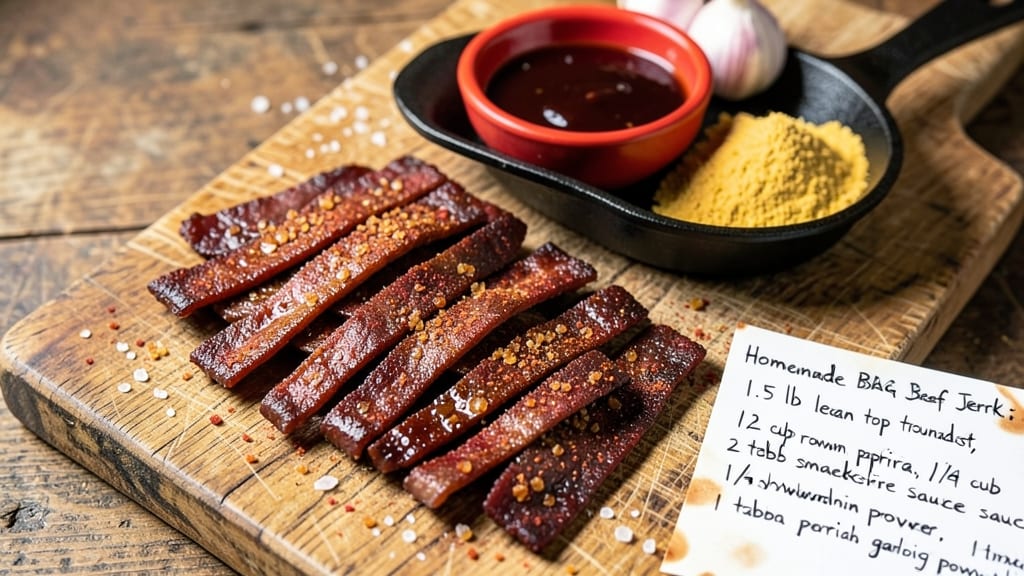
This BBQ beef jerky recipe using a dehydrator transforms lean beef into crispy, savory-sweet bites that pack a flavor punch—perfect for snacking or meal prep. I developed this method after years of perfecting jerky at local BBQ competitions, where the right balance of sweetness and smokiness makes all the difference.
The dehydrator ensures even drying without sacrificing texture, giving you restaurant-quality jerky at home.
Start with thinly sliced beef, marinated in a tangy-sweet BBQ blend that includes brown sugar, Worcestershire, and smoked paprika—this combination creates that signature caramelized crust while keeping the inside tender. The key is patience: letting the marinade work for at least 4 hours (or overnight) ensures deep flavor penetration.
Safety first—always use a meat thermometer to confirm the internal temperature reaches 160°F before dehydrating.
Once in the dehydrator, set it to 160°F for 6 hours, flipping the slices halfway to guarantee even crispiness. The result? Jerky that’s chewy yet crispy, with a perfect balance of smoky-sweet flavors that’ll have you reaching for seconds.
Store in an airtight container for up to 2 weeks, or freeze for longer shelf life.
Pro tip: Swap the BBQ seasoning for a spicy chipotle blend or a herby rosemary-garlic mix for endless variations. This recipe is your gateway to homemade jerky that beats store-bought every time—crispy, flavorful, and impossible to resist.
Ingredients for bbq beef jerky recipe dehydrator
Lean beef, smoky spices, and sweet tang—this dehydrator jerky recipe delivers crispy, competition-worthy bites.
| Ingredient | Amount | Notes |
|---|---|---|
| Lean Beef Top Round Roast 🥩 | 1 ½ lb | Thinly sliced against grain (1/4-inch thick) |
| Brown Sugar 🍯 | ½ cup | Light or dark, packed |
| Worcestershire Sauce 🍶 | ¼ cup | Full-strength, not reduced |
| Smoked Paprika 🌶️ | 2 tbsp | High-quality smoked variety |
| Garlic Powder 🧄 | 1 tbsp | Freshly ground preferred |
| Onion Powder 🧅 | 1 tbsp | Not onion salt |
| Black Pepper 🌶️ | 1 tbsp | Freshly cracked preferred |
| Salt 🧂 | 1 ½ tbsp | Diamond Crystal kosher salt |
| Apple Cider Vinegar 🍏 | ¼ cup | For tangy depth |
| Olive Oil 🫒 | 1 tbsp | For slicing and marinade |
| Honey 🍯 | 2 tbsp | Wildflower preferred |
| Liquid Smoke 🔥 | ½ tbsp | Optional for extra smokiness |
The beef is everything. Top round roast is lean but tender when sliced thinly against the grain—Costco or local butcher often carry pre-cut slices, but ask for it trimmed of fat. If buying whole, freeze for 30 minutes first to make slicing easier. For the marinade, Worcestershire sauce (the good stuff, not the reduced kind) and apple cider vinegar create that signature tang. I grab Diamond Crystal kosher salt for better dissolution, and smoked paprika from Penzeys adds depth without overpowering. The brown sugar? Light or dark doesn't matter—just make sure it's packed into the measuring cup for accuracy.
No Worcestershire? Substitute with 2 tbsp soy sauce plus 1 tbsp balsamic vinegar—it's not identical, but close. Running short on apple cider vinegar? White vinegar or lemon juice works in a pinch. Liquid smoke optional, but if you're going for that authentic BBQ pit vibe, 0.5 tbsp is perfect. For the honey, maple syrup is a 1:1 swap if you're avoiding honey. The olive oil is key for slicing—coat the knife and beef before cutting to prevent sticking. And if you're worried about the jerky being too sweet, reduce the brown sugar to 0.375 cup and add 1 extra tbsp smoked paprika for smokier balance.
Marinated beef keeps in the fridge for up to 2 days before dehydrating—longer marinating = deeper flavor, but don't exceed 48 hours. Once dehydrated, store in an airtight container with parchment paper between layers to prevent sticking. Good for 2 weeks at room temp or 3 months frozen. Pro tip: Vacuum-seal for 6 months if you've got the gear. The jerky reheats beautifully—toss in a 350°F oven for 5 minutes to restore crispiness if it gets soft. And if you're making a big batch, double the recipe—it disappears fast.
Why You'll Love This Recipe
- No-Fuss Prep: I swear by this recipe because it’s just slicing and marinating—no fancy techniques, no stress. The top round roast stays tender when sliced thin, and the marinade (brown sugar, Worcestershire, and smoked paprika) clings like glue. Honestly, I’ve made it while watching TV, and it still comes out perfect.
- Smoky-Sweet Magic: That first bite? Chef’s kiss. The brown sugar caramelizes into a sticky glaze while the smoked paprika and garlic powder give it a deep, savory punch. It’s not just jerky—it’s like a mini BBQ sandwich in every chewy, flavor-packed piece.
- Snack Attack Ready: Between us, this jerky is my go-to for road trips, gym bags, and late-night cravings. It keeps for weeks in the pantry, so I always have a protein-packed backup. (Yes, even on a Tuesday night when I forget lunch.)
- Budget Protein Win: A pound of top round roast stretches into pounds of jerky—way cheaper than pre-packaged stuff. Plus, the ingredients are pantry staples, so I’m not scrambling for specialty items. My wallet and my taste buds thank me.
Step-by-step instructions for BBQ beef jerky
Here's how to transform tough beef into irresistibly crispy jerky using just a dehydrator.
Prep the Beef for Perfect Texture
Start by taking the 1.5 lb lean beef top round roast out of the fridge and letting it sit at room temperature for 30 minutes. This ensures even cooking. Freeze the beef for 15 minutes to firm it up—this makes slicing much easier and gives you cleaner cuts. Using a sharp knife, slice the beef against the grain into ¼-inch thick strips. You should end up with about 40-50 slices for your dehydrator trays.
Lay the slices on a clean cutting board and pat them dry with paper towels. Removing all moisture is crucial—it prevents soggy jerky. Arrange the slices in a single layer on a tray lined with parchment paper and refrigerate while you prepare the marinade. This keeps them from sticking together.
Mix the Flavor-Packed Marinade
In a large bowl, combine the 0.5 cup brown sugar, 2 tbsp smoked paprika, 1 tbsp garlic powder, 1 tbsp onion powder, 1 tbsp black pepper, and 1.5 tbsp salt. Mix these dry ingredients thoroughly to create your base blend. In a separate bowl, whisk together the 0.25 cup Worcestershire sauce, 0.25 cup apple cider vinegar, 1 tbsp olive oil, 2 tbsp honey, and 0.5 tbsp liquid smoke. The vinegar adds tang while the honey balances with its sweetness.
Pour the wet ingredients over the dry blend and stir until you get a thick, sticky paste. This marinade should coat the back of a spoon—it's the secret to flavorful jerky. If it's too thick, add 1-2 tablespoons of water to loosen it slightly. The liquid smoke adds that authentic smoky depth without needing a smoker.
Marinate the Beef Thoroughly
Remove the beef slices from the fridge and place them in a resealable plastic bag. Pour the marinade over the beef, making sure each slice is completely coated. Seal the bag and massage the marinade into the meat for 2-3 minutes to ensure even distribution. Let the beef marinate in the fridge for at least 4 hours, but I recommend overnight if you have time. The longer it marinates, the more flavorful your jerky will be.
After marinating, remove the beef from the bag and let it sit at room temperature for 15 minutes before dehydrating. This prevents condensation from forming in your dehydrator, which can make your jerky soggy. Arrange the slices in a single layer on your dehydrator trays, leaving about ½ inch between each piece. This ensures proper air circulation for even drying.
Dehydrate to Crispy Perfection
Set your dehydrator to 160°F—this temperature ensures the jerky dries thoroughly without burning. Place the trays in the dehydrator and run it for 6 hours. Check the jerky after 4 hours—it should be dry but still slightly pliable. If it's not bending easily, continue dehydrating for another 1-2 hours. The jerky is done when it's completely dry and snaps when bent, but doesn't break into crumbs.
Let the jerky cool completely on the trays for 1 hour before storing. This cooling step is crucial—it prevents condensation from forming in your storage container. Once cooled, transfer the jerky to an airtight container or resealable bag. It will keep for up to 2 weeks in the fridge or 3 months in the freezer. For the best texture, enjoy it within 1 week of dehydrating.
Pro Tips For Making Bbq Beef Jerky Recipe Dehydrator
- Trim Thin, Not Perfect: Slice the top round against the grain into ¼-inch strips—thinner than you think. I used to obsess over even edges, but jerky’s texture depends on surface area, not aesthetics. A sharp knife and steady hand beat a mandoline every time.
- Marinate Overnight, Covered: Worcestershire and smoked paprika need time to penetrate that tough beef. Toss strips in the sauce plus 1 tablespoon of brown sugar (yes, less than the recipe calls for later) and let them sit in the fridge for 12+ hours. The sugar will caramelize during dehydrating, but the real magic happens in the soak.
- Start Hot, Then Drop: Set your dehydrator to 160°F for the first 2 hours—high heat drives out moisture fast and kickstarts the browning. After that, lower it to 145°F to finish. I learned this after watching jerky turn rubbery midway; consistency is key, not brute force.
- Test Doneness Early: Check strips at 6 hours by poking with a toothpick—it should slide in like butter. If they’re still damp, flip them and give them another 2 hours. Waiting too long turns jerky into leather; jerky should bend slightly but snap when folded. (Your nose will tell you too.)
Regional styles of bbq beef jerky recipe dehydrator
Tex-Mex Style
For a bold Southwest twist, swap the BBQ marinade for a chipotle-lime blend—mix 2 tbsp chipotle powder, 1 tbsp cumin, 1 tbsp garlic powder, 1 tbsp onion powder, 1 tbsp smoked paprika, 1 tbsp salt, ¼ cup lime juice, and 2 tbsp olive oil.
The lime keeps it fresh, while chipotle adds smoky heat. I like to add 1 tsp cayenne for extra kick—adjust to taste. Dehydrate at 155°F for 5 hours to preserve moisture for a chewier texture. 🌶️
Classic Kansas City
Kansas City-style jerky leans into bold, sweet, and smoky flavors.
Use ½ cup brown sugar, 2 tbsp smoked paprika, 1 tbsp garlic powder, 1 tbsp onion powder, 1 tbsp black pepper, 1 tbsp salt, ¼ cup ketchup, and 2 tbsp apple cider vinegar. The ketchup adds that signature tangy-sweetness.
Dehydrate at 160°F for 6 hours, then finish with a sprinkle of coarse salt for extra crunch. This style is a crowd-pleaser at BBQ competitions. 🔥
Herb-Infused Mediterranean
For a lighter, herb-forward take, blend 2 tbsp dried oregano, 1 tbsp dried thyme, 1 tbsp garlic powder, 1 tbsp onion powder, 1 tbsp salt, ¼ cup olive oil, 2 tbsp lemon juice, and 1 tbsp honey.
The herbs give it a bright, aromatic profile. Add ½ tsp red pepper flakes for subtle heat. Dehydrate at 150°F for 5 hours to keep it tender. Perfect for snacking with hummus or Mediterranean plates. 🌿
Spicy Coffee Jerky
This variation is a game-changer for coffee lovers. Mix 2 tbsp instant coffee granules, 1 tbsp cocoa powder, 1 tbsp smoked paprika, 1 tbsp brown sugar, 1 tbsp salt, ¼ cup ketchup, and 2 tbsp apple cider vinegar.
The coffee adds a deep, earthy note that pairs surprisingly well with the sweetness. Dehydrate at 160°F for 6 hours
Carolina-style jerky balances sweet, tangy, and slightly spicy flavors. Use ½ cup brown sugar, 2 tbsp apple cider vinegar, 2 tbsp Worcestershire sauce, 1 tbsp smoked paprika, 1 tbsp garlic powder, 1 tbsp onion powder, 1 tbsp salt, and 1 tbsp hot sauce (like Crystal or Tabasco). The vinegar and hot sauce create a tangy kick. Dehydrate at 160°F for 6 hourscrushed red pepper flakes for extra heat. 🌶️Sweet & Tangy Carolina
Nutrition facts
Frequently asked questions
Can I use a regular oven instead of a dehydrator?
Yes, but you'll need to monitor it closely to avoid burning. Preheat your oven to 175°F (instead of 160°F), prop the door open slightly with a wooden spoon, and bake for 3-4 hours. Check frequently—oven temperatures fluctuate more than dehydrators. For even drying, place slices on a wire rack over a baking sheet.
Why is my jerky turning out too chewy instead of crispy?
Chewy jerky usually means it didn't dry long enough or the temperature was too low. Double-check your dehydrator is at 160°F and run it for 6-8 hours, flipping slices halfway. If your jerky bends without snapping, return it for 1-2 more hours. Also ensure slices are ¼-inch thick—thicker cuts need more time.
What’s the best way to store homemade jerky?
For short-term storage (2 weeks), keep it in an airtight container with parchment paper between layers to prevent sticking. For longer shelf life, vacuum-seal or freeze for up to 6 months. Avoid plastic bags without airtight seals—they trap moisture and make jerky soggy.
Can I use ground beef instead of sliced beef?
Ground beef won't work for traditional jerky because it lacks the muscle fibers that give jerky its chewy texture. For jerky, you need thinly sliced beef (like top round or flank steak) cut against the grain. If you're craving a ground beef snack, try making beef sticks with a different method (like baking or frying).
How do I know when the jerky is fully cooked?
Jerky is safe when it reaches an internal temperature of 160°F and is completely dry. Test doneness by bending a piece—it should snap cleanly but not crumble. If it’s still pliable, dehydrate for 1-2 more hours. Always use a meat thermometer for accuracy, especially if you're new to dehydrating meat.