
Sauces & Condiments
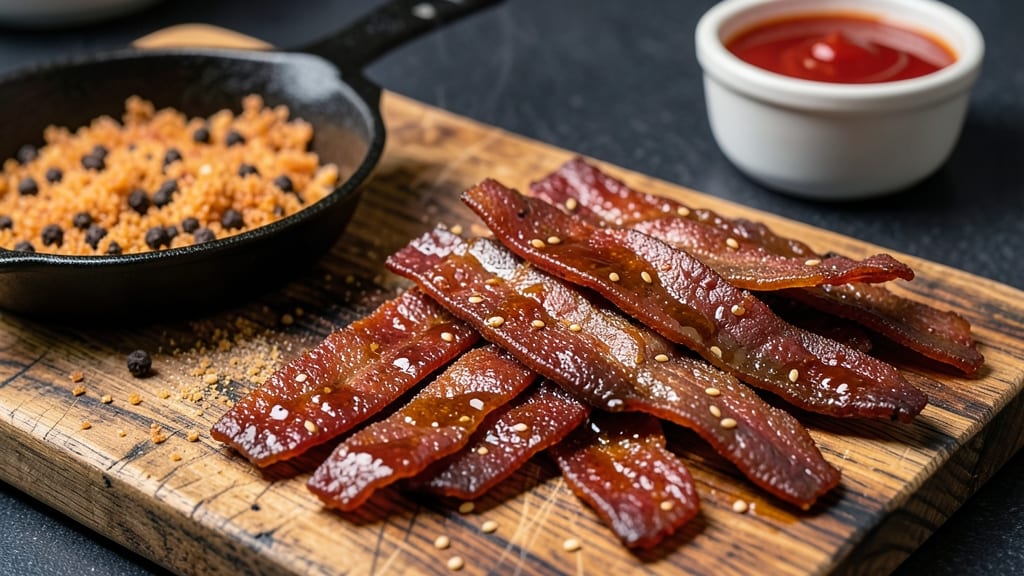
This BBQ sauce beef jerky recipe transforms tough cuts into finger-licking, smoky-sweet strips that rival any store-bought version—with just 2 hours of hands-on time. The secret lies in balancing curing precision with bold BBQ flavors, ensuring tender yet firm jerky that's perfect for snacks, trail mixes, or gifting.
I've perfected this method after years of experimenting with dehydrators and smokers, and it never fails to deliver that perfect chewy texture with deep, caramelized BBQ notes.
The process starts with a carefully formulated curing brine that tenderizes the meat while preserving its natural flavors. You'll slice the beef thinly against the grain for maximum tenderness, then apply the BBQ sauce either before or after dehydrating, depending on whether you want a glossy finish or concentrated flavor.
Using a dehydrator at 160°F ensures even drying without overcooking, though a smoker or even a well-ventilated oven works too. Safety is key—always monitor internal temperatures and avoid cross-contamination.
What you end up with is jerky that's dangerously addictive—crisp at the edges, tender enough to eat without chewing, and bursting with that perfect balance of sweet, smoky, and tangy BBQ flavors.
The beauty of this recipe is its versatility: swap the BBQ sauce for hot sauce or teriyaki, or add spices like cayenne or smoked paprika for extra kick. It's the kind of jerky that disappears within minutes of making it.
Perfect for meal prep, camping trips, or as a protein-packed snack, this recipe makes about 2 pounds of jerky—enough to stock your pantry or share with friends. Let's get started on making jerky that'll have everyone asking for your recipe.
Ingredients for bbq sauce beef jerky
These bold ingredients transform simple beef into addictive, smoky-sweet jerky magic—perfect for snacks or gifting.
| Ingredient | Amount | Notes |
|---|---|---|
| Top Round Roast Beef 🥩 | 2 lb | Tough cut, trimmed of fat |
| Kosher Salt 🧂 | ½ cup | Non-iodized preferred |
| Brown Sugar 🍯 | ¼ cup | Light or dark variety |
| Black Peppercorns 🌶️ | 2 tbsp | Freshly cracked preferred |
| Garlic Powder 🧄 | 1 tbsp | Not garlic salt |
| Onion Powder 🧅 | 1 tbsp | Fresh ground preferred |
| Smoked Paprika 🌶️ | 1 tbsp | For that BBQ depth |
| Cayenne Pepper 🔥 | ½ tsp | Adjust for heat preference |
| Black Pepper 🌶️ | 1 tsp | Freshly ground |
| Store-Bought BBQ Sauce 🍅 | ½ cup | Sweet and smoky preferred |
| Lemon Juice 🍋 | 2 tbsp | Freshly squeezed |
| Water 💧 | 1 ½ cups | Filtered preferred |
The beef is everything here—top round roast from the butcher's counter (not pre-sliced) gives you that perfect chewy texture. Look for well-marbled cuts if your butcher offers them—it keeps the jerky juicier. I always grab mine at Costco when it's on sale, but any grocery store's meat department will have it. Trim any visible fat before slicing—it can make the jerky greasy. For the curing mix, Diamond Crystal kosher salt is my go-to because it dissolves perfectly, but any non-iodized salt works. The brown sugar? Light or dark doesn't matter—just make sure it's real sugar, not that powdered sweetener stuff.
No smoked paprika? Substitute half the amount with regular paprika plus a pinch of liquid smoke—it's a game-changer for that authentic BBQ flavor. Running low on lemon juice? A splash of apple cider vinegar works in a pinch, though it'll be slightly tangier. The BBQ sauce can be store-bought (I love Sweet Baby Ray's for its balance of sweet and smoky) or homemade—just make sure it's thick enough to coat the meat well. Want extra kick? Add a dash of hot sauce to the curing brine. And if you're worried about the jerky being too sweet, reduce the brown sugar by half—the BBQ sauce will still give you that caramelized flavor without overpowering.
This curing mix keeps for up to 2 weeks in an airtight container in your fridge—perfect for making multiple batches. The beef should be sliced thinly against the grain (about 1/4-inch thick) right before curing to maximize tenderness. Once the jerky's done, store it in parchment-lined jars with a tight seal—it'll stay fresh for 2-3 weeks at room temperature or 3 months in the freezer. Pro tip: Portion into snack-sized bags for easy grab-and-go treats. And trust me, make extra—this stuff disappears faster than you'd think!
Why You'll Love This Recipe
- No-Fuss Slicing: I swear by the top round roast—lean, affordable, and slices in seconds with a sharp knife. No fancy butchering skills needed, just even strips that dehydrate perfectly every time.
- Smoky-Sweet Magic: That brown sugar and black peppercorn rub? It’s the secret weapon. The jerky gets this perfect balance of tangy BBQ bite and caramelized sweetness that makes it disappear faster than store-bought.
- Snack Attack Ready: Honestly, this is my go-to for game days, road trips, or when the kids need a protein boost between meals. It’s portable, non-perishable (once dehydrated), and way cheaper than buying pre-packaged jerky.
- Budget Protein Power: A pound of top round costs less than half of what you’d pay for jerky at the store. Between us, I’ve fed my whole family for days with just one batch—plus, the leftovers? Freeze them for later. Zero waste.
Step-by-step instructions for BBQ sauce beef jerky
Transform tough roast beef into smoky-sweet jerky with this foolproof dehydrator method.
Prepare the Beef for Maximum Flavor
Start by trimming any visible fat from the 2 lb Top Round Roast Beef using a sharp knife. The top round is perfect for jerky because it's lean but still flavorful. Cut the beef into ¼-inch thick strips against the grain—this ensures tender jerky that doesn't turn out chewy. I like to make them about 2 inches long for easy handling in the dehydrator.
Place the beef strips in a large bowl and give them a good shake to separate any overlapping pieces. This step is crucial because overlapping strips won't dry evenly. Once separated, you'll have a pile of uniform strips ready for marinating.
Create the Flavor-Packed Marinade
In a medium bowl, combine the 0.5 cup Kosher Salt, 0.25 cup Brown Sugar, 2 tbsp Black Peppercorns (freshly cracked), 1 tbsp Garlic Powder, 1 tbsp Onion Powder, 1 tbsp Smoked Paprika, 0.5 tsp Cayenne Pepper, and 1 tsp Black Pepper. Mix these dry ingredients thoroughly to ensure even distribution of flavors.
In a separate small bowl, whisk together the 0.5 cup Store-Bought BBQ Sauce and 2 tbsp Lemon Juice until smooth. The lemon juice brightens the flavors and helps tenderize the beef. Slowly pour the wet ingredients into the dry mixture while stirring continuously. You should end up with a thick, sticky paste that coats the back of a spoon.
Marinate the Beef Overnight for Deep Flavor
Pour the marinade over the beef strips in the large bowl and use your hands to coat each piece evenly. I like to massage the marinade into the meat for about 2 minutes—this ensures every strip gets fully saturated. Place the bowl in the refrigerator and let the beef marinate for at least 8 hours, but I prefer 12-24 hours for maximum flavor penetration.
Here's the thing—longer marinating doesn't make the jerky soggy. The salt in the marinade actually helps draw out moisture, which is why we dehydrate afterward. The longer it marinates, the more intense the smoky-sweet flavor becomes. Don't skip this step if you want restaurant-quality jerky.
Pre-Dry the Beef Before Dehydrating
After marinating, remove the beef from the refrigerator and let it sit at room temperature for 30 minutes. This helps the dehydration process start more evenly. Line your dehydrator trays with parchment paper and arrange the beef strips in a single layer, leaving about ½ inch between each piece. This spacing ensures proper air circulation during drying.
Set your dehydrator to 160°F and preheat it for 10 minutes before adding the beef. The preheating step is important because it creates a stable drying environment. Place the trays in the dehydrator and let the beef dry for 1 hour before checking for doneness. This initial drying helps prevent the jerky from sticking to the trays later.
Dehydrate to Perfect Jerky Texture
After the initial 1-hour pre-drying, check the beef strips. They should feel slightly leathery but still pliable. Increase the dehydrator temperature to 165°F and continue drying for 6-8 hours, depending on your dehydrator's efficiency. The jerky is done when it's completely dry to the touch and snaps when bent—this is your perfect texture checkpoint.
I know it's tempting to check frequently, but resist the urge to open the dehydrator during this time. Every time you open it, you add moisture back into the drying environment. Instead, trust the process and the temperature settings. Once fully dehydrated, remove the jerky from the dehydrator and let it cool completely before storing.
Store for Long-Term Enjoyment
Allow the jerky to cool completely at room temperature for 30 minutes. This cooling step prevents condensation from forming in your storage container. Transfer the cooled jerky to an airtight container or resealable plastic bag. For best results, store in the refrigerator where it will keep for up to 3 months, or freeze for up to 6 months to preserve maximum freshness.
Here's a pro tip: if you notice any moisture in the container after a few days, sprinkle a little more Kosher Salt over the jerky and mix gently. This helps absorb any excess moisture and keeps your jerky crispy. Enjoy your homemade BBQ sauce beef jerky—perfect for snacks, camping trips, or protein-packed meals on the go!
Pro Tips For Making Bbq Sauce Beef Jerky
- Trim the Fat First: Top round beef has stubborn fat layers—slice them off before slicing the meat. I learned this the hard way when my jerky turned greasy and soggy instead of crisp. Use a sharp knife and work quickly; cold meat is easier to handle.
- Dry the Meat Hard: Pat those beef slices bone-dry with paper towels—no shortcuts. Moisture is the enemy of jerky, and even a damp spot will ruin a batch. Let them air-dry on a rack for 30 minutes if you’re impatient (yes, even if you’re impatient like me).
- Marinate Overnight (No Exceptions): The BBQ sauce mix (brown sugar, garlic powder, etc.) needs at least 12 hours to penetrate the meat. I used to rush it, and the flavor was always flat. Use a zip-top bag and refrigerate—it’s foolproof.
- Smoke Low and Slow: Keep the dehydrator or oven at 160°F max—any hotter, and the outside burns before the inside dries. I was skeptical until I tried it: consistent temp = perfect jerky every time. Check slices at 4 hours; they’ll shrink and firm up.
Serving suggestions for this dish
Trail Mix Pairings
This jerky is perfect for trail mixes—pair it with ½ cup roasted peanuts, ¼ cup dried cranberries, and 2 tbsp dark chocolate chips for a balanced snack.
I like to add 1 tbsp pumpkin seeds for extra crunch. Store in a resealable plastic bag with a tight seal to keep everything fresh. 🥜
BBQ Jerky Board
Create a showstopping BBQ jerky board by arranging your homemade strips alongside pickled jalapeños, smoked gouda cubes, and toasted baguette slices. Drizzle with extra BBQ sauce and sprinkle with crushed red pepper flakes for a smoky, tangy presentation.
This is a crowd-pleaser at parties or game day gatherings. 🧀
Camping Snacks
Pack your jerky in small, resealable bags for easy camping trips. Pair it with beef jerky-friendly crackers or whole-grain tortilla chips for a portable snack. I also bring mini bottles of BBQ sauce for dipping—it’s a game-changer when you’re out in the wilderness. 🏕️
Protein-Packed Meals
Add jerky to salads for a protein boost—toss 2-3 strips into a spinach salad with cherry tomatoes, avocado, and balsamic vinaigrette. It also works in wraps: layer jerky with cream cheese, cucumber slices, and everything bagel seasoning for a quick lunch. 🥗
Gift-Worthy Packaging
For gifting, portion jerky into small glass jars or parchment-lined boxes tied with twine. Add a handwritten tag with the recipe and a note like, “Perfect for snacks, camping, or protein-packed meals!” It’s a thoughtful and practical gift that lasts. 🎁
Breakfast Boost
Start your day with jerky—add strips to scrambled eggs or sprinkle over Greek yogurt with honey and granola. It’s a salty, smoky twist on breakfast classics. I also love tossing jerky into oatmeal for extra protein and flavor. 🍳
Nutrition facts
Frequently asked questions
Can I use a smoker instead of a dehydrator for this recipe?
A smoker works beautifully for jerky. Set it to 165°F and smoke the beef for 4-6 hours until it's dry and slightly shrunk. Use indirect heat to avoid flare-ups. The smoky flavor will complement the BBQ sauce perfectly—just brush the sauce on after the first 2 hours of drying to prevent it from burning.
How do I know when the jerky is fully dried?
Jerky is done when it's completely dry to the touch and makes a satisfying snap when bent. It should also feel leathery but not rubbery. For extra certainty, check the internal temperature with a meat thermometer—it should reach 165°F. If it's still pliable, return it to the dehydrator/smoker for another 1-2 hours.
Can I make this jerky without a dehydrator or smoker?
Yes! Use your oven on low heat (170°F) with the door slightly open for ventilation. Place beef strips on a wire rack over a baking sheet and bake for 3-4 hours, flipping halfway. Line the oven with foil for easy cleanup. This method works but requires more attention to prevent overcooking.
Why does my jerky turn out too chewy?
Chewy jerky usually means it wasn't dried long enough or the slices were too thick. Always slice against the grain to ¼-inch thickness and dehydrate until completely dry (no moisture). If using a smoker, ensure proper airflow. For extra tenderness, marinate for 24 hours instead of the minimum 8 hours.
Can I use ground beef instead of roast beef?
Ground beef won't work well for jerky because it lacks the muscle fiber needed for proper texture. The recipe relies on slicing thin strips against the grain—ground beef's crumbly nature makes this impossible. Stick to lean cuts like top round, flank steak, or sirloin for best results.