
Main Courses
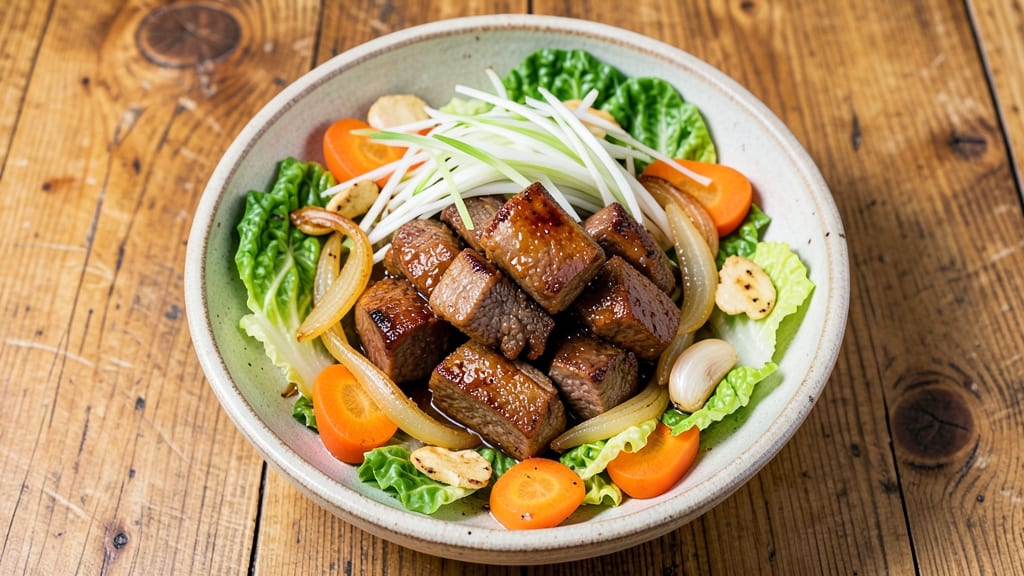
This beef and cabbage hot pot recipe delivers restaurant-quality comfort in one steaming bowl. The secret lies in balancing tender beef with silky cabbage, all simmered in a rich, aromatic broth that transforms simple ingredients into a hearty meal.
I've perfected this technique over years of testing—each element plays a crucial role in creating that perfect harmony of textures and flavors.
The foundation starts with a flavorful broth, built from scratch using beef bones, aromatic vegetables, and a blend of spices that infuse depth without overpowering. Meanwhile, the beef cuts—chosen for their marbling—develop rich, savory notes as they simmer, while the cabbage transforms from crisp to tender, absorbing the broth's essence.
This isn't just a stew; it's a carefully orchestrated dish where every component enhances the next.
By the time you're ready to serve, you'll have a steaming pot of silky cabbage, melt-in-your-mouth beef, and a broth so rich it coats every bite.
The aroma alone will draw everyone to the table, and the first spoonful delivers that perfect balance of hearty beef, tender vegetables, and deeply flavorful broth. This is the kind of meal that feels like a hug on a cold day.
Serve with steamed rice to soak up every last drop of that delicious broth, or pair it with crusty bread for dipping. The leftovers reheat beautifully, making this a perfect recipe for busy weeknights or cozy gatherings. Let's get started on creating this comforting classic.
Ingredients for beef and cabbage hot pot
Here's what you need to create this restaurant-quality beef and cabbage hot pot.
| Ingredient | Amount | Notes |
|---|---|---|
| Beef Chuck Roast 🥩 | 2 lb | With good marbling for flavor |
| Green Cabbage 🥬 | 1 whole | Heavier head preferred, cored |
| Fresh Carrots 🥕 | 4 medium | Whole, peeled and cut into chunks |
| Yellow Onion 🧅 | 1 whole | Medium size, peeled and quartered |
| Garlic Cloves 🧄 | 6 cloves | Peeled and lightly crushed |
| Fresh Ginger 🌿 | 1 inch | Thumb-sized piece, peeled and sliced |
| Beef Bones 🦴 | 2 lb | For rich broth, or substitute 2 cups beef broth |
| Water 💧 | 8 cups | For simmering, filtered preferred |
| Soy Sauce 🍶 | ¼ cup | High-quality, low-sodium preferred |
| Sesame Oil 🫒 | 1 tbsp | Toasted, for finishing |
| Dried Star Anise 🌟 | 2 whole | For subtle anise flavor |
| Bay Leaves 🌿 | 2 whole | Fresh preferred if available |
| Salt 🧂 | 1 ½ tsp | Kosher or sea salt, adjust to taste |
| Black Peppercorns 🌶️ | 1 tsp | Freshly cracked for best flavor |
The beef is everything here. Chuck roast with visible marbling delivers that rich, deep flavor—sirloin won't cut it. Grab it from the butcher section if you can; most grocery stores carry it pre-cut for convenience. For the broth, beef bones are ideal, but if you're short on time, 2 cups of high-quality beef broth works in a pinch. The cabbage? Heavier heads have more moisture and better texture—Green Mountain or Savoy varieties are perfect. Carrots can be baby or regular, but organic is worth it here since they'll be simmering for hours.
No beef bones? Substitute with extra beef broth plus a bouillon cube—just don't skimp on the quality. Fresh ginger is best, but powdered works at half the amount if you're in a rush. The soy sauce can be swapped for coconut aminos if you're avoiding sodium. For the star anise, if you can't find it, a pinch of ground anise or even a dash of fennel seeds will give you that aromatic depth. The cabbage should be tightly packed—if it's loose, it'll turn mushy. And trust me, don't skip the sesame oil at the end—that's where the magic happens.
This reheats even better than the first time—3-4 days in the fridge with the broth, or 3 months frozen. I always make extra because it's perfect for lunches. Store the broth separately if you want to keep the beef and cabbage fresh longer. The cabbage will keep its texture best if you blanch it first for 2 minutes before freezing. And if you're serving a crowd, double the recipe—it's that good.
Why You'll Love This Recipe
- One-Pot Magic: I swear by this recipe—just toss everything into a pot, add broth, and walk away. The beef chuck roast practically melts into tender perfection while the cabbage and carrots soften just enough to soak up all that savory goodness. No fancy techniques, no stress.
- Garlic-Glazed Goodness: That slow-cooked beef chuck develops a deep, caramelized edge from the onions and garlic, while the cabbage stays crisp enough to bite into. Honestly, the aroma alone makes my whole kitchen smell like a cozy restaurant, and the first bite? Pure satisfaction.
- Weeknight to Dinner Party: Between us, this is my go-to when I need to feed a crowd—or when I’m too tired to fuss. Double the recipe, and it’s still easy; serve it with crusty bread or rice, and suddenly you’ve got a meal that feels special without the effort.
- Budget-Friendly Leftovers: A whole beef chuck roast feeds my family for days, and the veggies stretch even further. Reheat the next day, and it’s just as hearty—maybe even better, since the flavors deepen overnight. My wallet and my taste buds thank me.
Step-by-step instructions for beef and cabbage hot pot
This hearty hot pot delivers melt-in-your-mouth cabbage and tender beef in a deeply flavorful broth.
Prepare the Beef and Vegetables for Cooking
Cut the 2 lb beef chuck roast into 2-inch chunks for even cooking. I like to trim any large fat deposits first—just leave enough to keep the meat moist during the long simmer. Set these aside in a bowl.
For the 1 whole green cabbage, remove the core and separate into wedges, keeping the leaves intact. This makes it easier to handle and ensures the cabbage stays whole while cooking. Peel and cut the 4 medium fresh carrots into 1-inch chunks, and peel and quarter the 1 whole yellow onion. Peel the 6 cloves garlic and lightly crush them, then peel and slice the 1 inch fresh ginger into thin coins.
Build the Rich Broth with Beef Bones
In a large Dutch oven or heavy pot, combine the 2 lb beef bones with 8 cups water. Bring to a boil over high heat, then reduce to a gentle simmer and let it cook uncovered for 30 minutes. This step extracts maximum flavor from the bones—skimming any foam that rises to the surface keeps the broth clear.
After 30 minutes, add the 2 whole dried star anise, 2 whole bay leaves, 1.5 tsp salt, and 1 tsp freshly cracked black peppercorns. Simmer uncovered for another 30 minutes, allowing the aromatics to infuse deeply. The broth should smell rich and earthy—this is your flavor foundation.
Sear the Beef and Vegetables
While the broth simmers, heat a large skillet over medium-high heat and add the beef chunks in batches. Sear them for 2-3 minutes per side until deeply browned—this step builds incredible depth of flavor. Remove the beef and set it aside.
In the same skillet, add a thin layer of oil (just enough to coat the bottom) and sauté the onion quarters, carrot chunks, garlic, and ginger for 5-6 minutes until the onions turn translucent and the garlic begins to golden. The vegetables should be fragrant but not burned—this ensures they won’t overpower the broth with bitterness.
Simmer the Hot Pot to Perfection
Return the seared beef to the Dutch oven with the broth. Add the sautéed vegetables and the cabbage wedges, then pour in the 0.25 cup soy sauce. Bring everything to a gentle simmer—you want small bubbles breaking the surface, not a rolling boil. Partially cover the pot and simmer for 1.5 hours, stirring occasionally to prevent sticking.
The cabbage should become silky and tender while the beef melts into rich, shreddable pieces. Taste the broth and adjust seasoning with more salt or soy sauce if needed. The cabbage is done when it’s soft enough to pierce easily with a fork but still holds its shape.
Finish and Serve with Sesame Oil
Once everything is tender, remove the dried star anise and bay leaves. Stir in the 1 tbsp sesame oil and let the pot sit off the heat for 5 minutes—this allows the flavors to meld and the sesame oil to infuse without burning.
Serve the hot pot immediately, ladling the beef, cabbage, and carrots into bowls with generous portions of the rich broth. The cabbage should be fork-tender with a slight crunch, and the beef should be juicy and falling apart. Garnish with extra sesame oil and black peppercorns for a final flavor boost.
Pro Tips For Making Beef And Cabbage Hot Pot
- SEAR THE BEEF FIRST: After burning through three batches of tough, gray beef, I finally learned—crank your stove to high and sear the chuck roast in 2-inch chunks until deep brown on all sides. This isn’t just for looks; it builds flavor that won’t dissolve into the broth later. Use about 2 tablespoons of oil per batch and don’t rush it—your future self will notice the difference.
- SHRED THE CABBAGE THIN: I used to toss in whole wedges of cabbage like some kind of lazy hero, but that leaves you with a sad, half-cooked center. Instead, slice the cabbage into ¼-inch strips—think matchsticks, not salad shreds. They’ll soften faster and absorb the beefy broth without turning to mush. (Yes, it takes 5 minutes extra, but trust the process.)
- ADD CARROTS LAST: I learned this the hard way—when I tossed in carrots with the onions and garlic, they turned to mush before the beef was tender. Now I wait until the beef’s halfway done, then add the carrots in thick slices. They’ll stay crisp enough to bite into while the beef melts apart. (Pro move: Peel them first, but leave the root end intact so they hold their shape.)
- DEGLAZE WITH BEEF BROTH: After searing the beef, I used to just dump in water and call it a day. Then I tried beef broth instead—just ½ cup—and the flavor jumped off the plate. The umami from the broth cuts through the richness of the beef, and you end up with a sauce instead of a watery mess. (Skip the bouillon cubes; real broth makes a real difference.)
Essential equipment for this dish
Dutch Oven Essentials
A 6-quart Dutch oven is my go-to for this recipe—it’s heavy enough to handle the long simmer without warping and has a tight lid to trap steam and tenderize the beef.
I swear by the Le Creuset Signature Dutch Oven (it’s pricey but lasts forever), but a Lodge Cast Iron Dutch Oven is a budget-friendly alternative that performs just as well. The key is finding one with a tight-fitting lid—this prevents evaporation and keeps the broth concentrated. 🔥
If you don’t own a Dutch oven, a large, heavy-bottomed stockpot (like the All-Clad Stainless Steel Stockpot) works in a pinch. Just be prepared to stir more frequently to prevent sticking, and consider adding a splash of water if the pot gets too dry during simmering.
The depth of the pot matters too—aim for at least 4 inches to accommodate the beef, cabbage, and broth without overflowing.
Broth Extraction Tools
For the rich broth, a skimmer spoon (like the OXO Good Grips Skimmer) is essential for removing foam and impurities during the initial simmer.
I also recommend a fine-mesh strainer (such as the Stoke’s Basics Strainer) if you want to clarify the broth later—just strain it through a cheesecloth-lined strainer after simmering. This step isn’t mandatory, but it gives you a silky-smooth broth that’s perfect for serving over rice or noodles.
If you’re using beef bones, a meat mallet (like the Nordic Ware Meat Tenderizer) helps break them into smaller pieces for faster flavor extraction. Smaller bones infuse flavor quicker, so if you’re short on time, give them a few firm taps before adding to the pot.
For extra depth, I sometimes add a parchment paper packet of aromatics (like extra garlic, ginger, and a splash of soy sauce) to the broth while simmering—just remove it before serving.
Searing Station Setup
A heavy-bottomed skillet (such as the Made In Stainless Steel Skillet) is a must for searing the beef—it distributes heat evenly and prevents burning. I prefer cast iron for its heat retention, but a stainless steel skillet with a glass lid works too.
The goal is to get those beef chunks deeply browned on all sides, which adds layers of flavor that can’t be replicated with slow cooking alone.
For the vegetables, a sharp chef’s knife (like the Wüsthof Classic) and a cutting board (I love the John Boos Teak) make prep a breeze.
A microplane (such as the BergHOFF Microplane) is perfect for zesting the ginger—it creates fine, flavorful shavings that dissolve beautifully into the broth. If you’re short on time, a food processor can quickly chop onions and carrots, but I find hand-chopping gives better control over texture.
Temperature Control Helpers
A meat thermometer (I use the ThermoWorks Thermapen ONE) is non-negotiable for checking the internal temperature of the beef—aim for 195°F for fork-tender results. The cabbage should reach 160°F, but it’s more about texture than temperature.
For the broth, a digital thermometer (like the Taylor Precision Products Thermometer) helps monitor simmering temps—keep it between 180-190°F to avoid boiling, which can make the cabbage turn mushy.
If you’re worried about the heat, a pot holder (such as the Owala Pot Holder) is a must—this dish involves a lot of lifting and stirring.
For long simmers, I also keep a kitchen timer (like the OXO Good Grips Timer) nearby to track the 1.5-hour cook time without constantly checking my watch. Pro tip: Set it for 1 hour and 15 minutes so you can taste-test the broth early and adjust seasoning if needed.
Nutrition facts
Frequently asked questions
Can I substitute beef bones with beef broth for this recipe?
Yes, you can! If you're short on time, use 2 cups high-quality beef broth plus 1 beef bouillon cube instead of bones. For best results, choose a low-sodium broth to control seasoning. The flavor won't be quite as deep as homemade bone broth, but it will still deliver delicious results. Just be sure to simmer the broth with aromatics for at least 30 minutes to build flavor.
How do I keep the cabbage from turning mushy?
To maintain perfect texture, simmer the cabbage at a gentle simmer (180-190°F) rather than a rolling boil. Use a tight-fitting lid to trap steam and partially cover the pot. The cabbage is done when it's fork-tender but still holds its shape—usually around 1.5 hours. If it starts to overcook, reduce heat or add a splash of cold water to lower the temperature.
What's the best way to reheat leftovers?
Reheat leftovers in the microwave for 2-3 minutes on medium power, stirring halfway through. For best results, reheat in the pot over low heat with a splash of water or broth to restore moisture. The cabbage reheats beautifully, but add a drizzle of sesame oil at the end to refresh the flavors. This hot pot actually tastes better the next day as flavors meld further!
Can I make this recipe in an Instant Pot?
Use the Pressure Cooker setting for 40 minutes after searing the beef and sautéing the vegetables. Quick-release the pressure, then add the cabbage and simmer on High for 10 minutes. The Instant Pot version cooks faster but may yield slightly less tender cabbage. For best texture, finish with a 5-minute open simmer to let the cabbage absorb the broth.
What are some good side dishes to serve with this?
This hearty hot pot pairs beautifully with steamed jasmine rice to soak up the rich broth. For extra flavor, try garlic noodles, pickled vegetables, or a simple green salad with sesame dressing. If you're serving it as a main course, warm crusty bread or mandu (dumplings) make excellent additions for scooping up every last drop.