
Main Courses
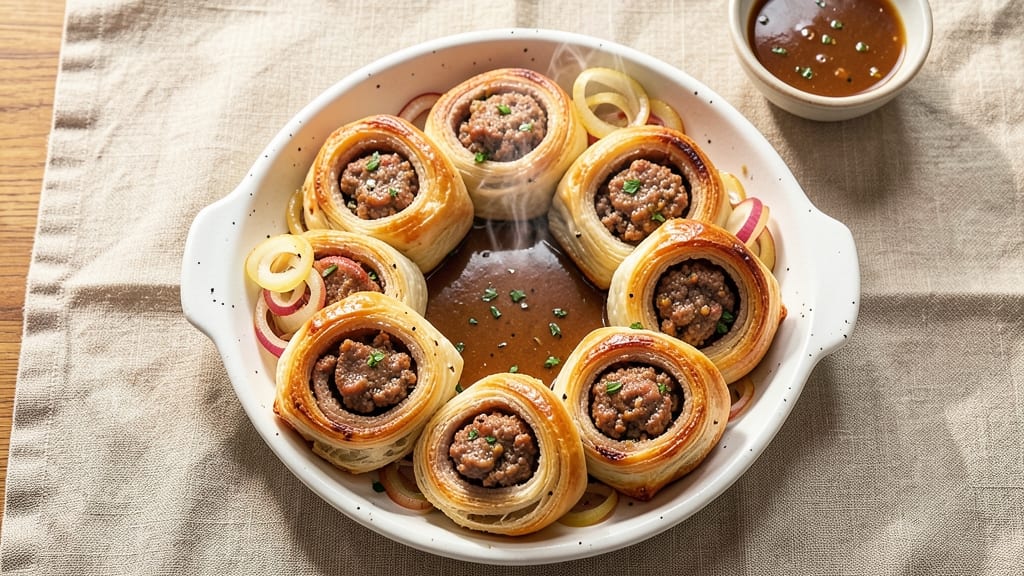
This beef and pork sausage roll recipe delivers restaurant-quality flaky pastry wrapped around savory, herby meat—exactly what I developed after years of perfecting the balance between tender filling and crisp, golden layers. The secret lies in a precise dough technique that creates those signature flaky folds, while the meat filling combines ground beef and pork with just the right seasoning for maximum flavor without overpowering the delicate pastry.
What makes this recipe truly special is the foolproof method for achieving that signature flaky texture without requiring advanced skills.
We'll use a simple cold butter method in the dough that creates hundreds of thin layers when rolled out, while the meat filling gets its depth from a blend of fresh herbs and just enough seasoning to enhance rather than dominate. The result?
Sausage rolls that are crisp on the outside, tender on the inside, and packed with that satisfying meaty flavor in every bite.
By the time you're done, you'll have perfectly shaped sausage rolls with golden-brown pastry that peels back to reveal the savory filling inside. The aroma alone will have everyone gathering around your table, and each bite delivers that perfect combination of textures and flavors.
These are the kind of sausage rolls that make you want to make them again and again—ideal for family dinners, holiday gatherings, or when you want to impress guests with a dish that looks impressive but is actually quite simple to make.
Serve with a side of tangy tomato sauce or creamy horseradish dip for the full experience. The recipe scales easily for parties, and leftovers reheat beautifully. Let's get started on creating these savory perfection rolls that will become your new go-to recipe for any occasion.
Ingredients for beef and pork sausage roll
These 14 ingredients create restaurant-worthy sausage rolls with crisp layers and savory filling.
| Ingredient | Amount | Notes |
|---|---|---|
| All-Purpose Flour 🌾 | 3 ½ cups | For flaky pastry layers |
| Unsalted Butter 🧈 | 1 ¼ cups | Cold, cubed for layers |
| Ice Water 💧 | ½ cup | For dough elasticity |
| Ground Beef 🥩 | 1 lb | 80% lean for juiciness |
| Ground Pork 🐷 | ½ lb | Freshly ground preferred |
| Yellow Onion 🧅 | 1 whole | Finely chopped for filling |
| Garlic Cloves 🧄 | 3 cloves | Minced for aromatic depth |
| Fresh Parsley 🌿 | ¼ cup | Chopped, for freshness |
| Salt 🧂 | 1 ½ tsp | Kosher salt preferred |
| Black Pepper 🌶️ | ½ tsp | Freshly ground for heat |
| Ground Allspice 🌶️ | ¼ tsp | For warm spice notes |
| Ground Nutmeg 🌶️ | ⅛ tsp | Pinch for depth |
| Egg 🥚 | 1 whole | For egg wash |
| Milk 🥛 | 1 tbsp | For brushing pastry |
The butter is non-negotiable—cold cubes create those signature flaky layers. Kirkland brand from Costco is my go-to for bulk, but any unsalted works. For the meat, 80% lean ground beef stays juicy while the pork adds richness. I grab both from Whole Foods when possible—better marbling equals better flavor. The flour? King Arthur is my secret for that tender dough. If you can't find allspice, cinnamon and cloves work in a pinch, but trust me on the allspice—it's what makes this recipe special.
No fresh parsley? Dried works at half the amount, but you'll miss that bright freshness. Short on pork? Extra beef works fine—just add a splash of Worcestershire sauce for depth. The dough gets tricky if it's too warm, so chill it 30 minutes before rolling. For the egg wash, milk instead of water gives that golden finish. And if you're making a big batch, double the dough recipe—it keeps beautifully for 2 days in the fridge.
Wrap tightly in plastic and store in the fridge for up to 2 days—they reheat like a dream. Freeze uncooked rolls for 3 months by wrapping individually. The filling stays fresh for 1 day in the fridge, so make it fresh day-of. Pro tip: Bake from frozen—just add 10 minutes to the time. Leftovers? Toaster oven reheats them perfectly—crispy outside, tender inside every time.
Why You'll Love This Recipe
- No-Knead Magic: I swear by this dough—just flour, butter, and ice water. No mixer, no fuss, and it’s ready in 10 minutes while I chop veggies or wait for the meat to brown. That cold butter in the dough? It makes them flaky without extra effort.
- Double-Meat Power: Ground beef and pork? Yes, please. The beef adds depth, while the pork keeps it tender—no dry, sad rolls here. Honestly, the first time I made this, my husband asked if I’d secretly added bacon.
- Party-Ready Puffs: These freeze like a dream, so I make a batch on Sundays and pull them out for game day, potlucks, or when my kids’ soccer team shows up hungry. Bake straight from frozen, and no one will guess they were made ahead.
- Budget Win: Ground beef and pork stretch further than you’d think, and the dough costs pennies. I’ve fed six people for under $15, and the leftovers? Even better reheated than fresh—crispy outside, juicy inside, every time.
Step-by-step instructions for beef and pork sausage rolls
Here's how to create golden, flaky pastry wrapped around savory sausage filling.
Make the Pastry Dough for Layers
In a large bowl, combine the 3.5 cups all-purpose flour and 1.5 tsp salt. Cut in the 1.25 cups cold unsalted butter using a pastry cutter or your fingers until the mixture resembles coarse crumbs with pea-sized butter pieces. This texture is crucial for flaky layers.
Gradually add the 0.5 cup ice water, 1 tablespoon at a time, mixing gently until the dough just comes together. Avoid overworking it—just until it holds when pressed. Shape into a disk, wrap in plastic, and chill for 30 minutes. The cold dough prevents shrinking and ensures those perfect layers when rolled out.
Prepare the Savory Filling
In a skillet over medium heat, cook the 1 lb ground beef and 0.5 lb ground pork together until browned, breaking it into small pieces. Drain all but 1 tablespoon of fat. Add the finely chopped yellow onion and cook for 5 minutes until softened.
Stir in the 3 minced garlic cloves, 0.5 tsp black pepper, 0.25 tsp ground allspice, and 0.125 tsp ground nutmeg. Cook for another 2 minutes until fragrant. Remove from heat and mix in the 0.25 cup chopped fresh parsley. Let cool completely before assembling—warm filling makes the pastry soggy.
Roll and Fill the Sausage Rolls
On a lightly floured surface, roll the chilled dough into a 12x16-inch rectangle about 1/8-inch thick. Spread the cooled sausage mixture evenly over the dough, leaving a 1-inch border around the edges. This border prevents filling from leaking during baking.
Roll the dough tightly from the long side, using even pressure to keep the filling compact. Trim the ends and cut into 4 equal pieces (about 3-inch lengths). Place them seam-side down on a parchment-lined baking sheet. The chilled dough holds its shape better during cutting.
Create the Signature Crimp and Glaze
Brush the tops of the sausage rolls with the 1 whole egg beaten with 1 tbsp milk for a golden finish. Using a fork, press gently along the edges to create a decorative crimp. This not only looks beautiful but also seals the edges for extra crispiness.
Bake at 375°F for 25-30 minutes until the pastry is deep golden brown and the filling is heated through. For extra browning, broil for 1-2 minutes at the end. The rolls should be firm to the touch and smell irresistibly savory.
Rest and Serve Warm
Let the sausage rolls rest for 5 minutes after baking. This allows the juices to redistribute, keeping the filling moist. Serve immediately with your favorite dipping sauce—whether it's tangy mustard, creamy horseradish, or sweet chutney.
Each bite should deliver tender, flavorful sausage encased in crisp, flaky pastry. The secret to perfection lies in keeping everything cold until assembly and baking at the right temperature for even cooking throughout.
Pro Tips For Making Beef And Pork Sausage Roll
- CHILL THE MEAT MIX: Take your ground beef and pork out of the fridge 15 minutes before mixing—cold meat shrinks when cooked, and you’ll end up with a dense, tough sausage roll if you don’t. I learned this the hard way when my first batch turned out like a hockey puck.
- WORK THE DOUGH FAST: Once you add ice water to the flour-butter mix, stop fiddling. Overworking the dough makes sausage rolls chewy instead of flaky. Aim for 30 seconds of quick kneading—just until it holds together. (Yes, even if it looks shaggy.)
- BRING FILLING TO ROOM TEMP: Warm the ground beef and pork mix to about 60°F (15°C) before stuffing—cold filling chills the dough and weakens the seal. Microwave for 30 seconds, then let it sit while you roll. Your future self will thank you when the rolls stay intact during baking.
- SEAL WITH EGG WASH: Skip the water brush—egg wash (1 egg + 1 tbsp water) creates a golden crust and acts as glue for the seam. Paint it on after rolling, then press edges firmly. This isn’t just for looks; it keeps the filling from leaking like a sieve. (I’ve seen it happen.)
Troubleshooting perfect results
Dough Too Sticky
If your dough feels too wet and sticky when handling, you've likely added too much ice water. The key is to work quickly and use just enough to bring the dough together—it should hold when pressed but still feel slightly dry.
For a quick fix, sprinkle 1 tablespoon flour at a time onto your work surface and knead gently until incorporated. I’ve found that King Arthur flour absorbs moisture better than others, so if you’re struggling, try swapping brands. Remember, the dough should feel like soft butter, not wet clay. 🧈
Pastry Not Flaky
The flakiness comes from keeping that butter cold and handling the dough minimally. If your pastry turns out tough instead of flaky, your butter may have melted during mixing.
Chill the dough for 30 minutes before rolling, and ensure your butter is in pea-sized pieces when cutting it into the flour. Another trick? Roll the dough from the center outward, applying even pressure—this creates those signature layers.
I once ruined a batch because I rushed the chilling step, so don’t skip it! ✨
Filling Leaking
Leaky filling usually means the pastry wasn’t sealed properly or the dough was too thin. To prevent this, leave a 1-inch border around the edges when spreading the filling, and roll the dough tightly from the long side.
If you’re cutting the rolls before baking, use a sharp knife and press down firmly to seal the edges. For extra insurance, brush the seams with a bit of egg wash before baking.
I’ve also had success using a pastry brush to lightly coat the edges with milk before sealing—it adds a subtle barrier. 🥚
Undercooked Filling
If your filling isn’t fully cooked by the time the pastry is golden, you likely started with cold filling or didn’t bake long enough. Always let the sausage mixture cool completely before assembling, and bake until the internal temperature reaches 160°F.
For extra insurance, I recommend baking at 375°F for 25-30 minutes, then checking with a meat thermometer. If the filling is still cool, broil for 1-2 minutes at the end—just watch closely to avoid burning the pastry. 🌡️
Sausage Rolls Too Dense
Dense sausage rolls often happen when the dough is overworked or the filling is too wet. To fix this, handle the dough as little as possible—just until it comes together—and avoid overmixing.
If your filling seems too moist, drain excess fat after browning the meat, and pat it dry with a paper towel before assembling. I’ve also found that using freshly ground pork (not pre-packaged) makes a noticeable difference in texture.
For extra tenderness, let the rolls rest for 5 minutes after baking before slicing. 💪
Nutrition facts
Frequently asked questions
Can I substitute chicken for the pork in this recipe?
While you can replace the pork with an equal amount of ground chicken, you'll lose some richness in flavor and texture. The pork adds fat that keeps the filling juicy, so if using chicken, add 1 tablespoon olive oil to the filling mixture. For best results, use a 50/50 blend of beef and chicken if you're avoiding pork entirely.
How do I make these sausage rolls ahead of time?
You can assemble the rolls up to 2 days in advance and refrigerate them wrapped tightly in plastic. For best results, bake them straight from the fridge—just add 5-10 minutes to the baking time. For freezing, wrap individual rolls in plastic and freeze for up to 3 months. Bake from frozen, adding 10-15 minutes to the time.
What's the best way to reheat leftover sausage rolls?
For crispy results, reheat in a 375°F oven for 10-12 minutes on a wire rack over a baking sheet. For quick reheating, use a toaster oven or air fryer at 350°F for 5-7 minutes. Avoid microwaving—they'll get soggy. If you must microwave, cover with a damp paper towel for 20-30 seconds only.
Can I make these without a food processor?
This recipe is designed to be made by hand. Use your fingers to cut the cold butter into the flour until you get pea-sized pieces. For the filling, cook the meat in a skillet and chop the onions and garlic by hand. The key is patience—work quickly and keep everything cold. The hand method actually creates more flavorful layers than processed dough.
What's the secret to getting that perfect golden-brown crust?
The golden crust comes from three things: cold butter in the dough, proper egg wash, and baking at the right temperature. Brush the tops with egg mixed with milk, then bake at 375°F until deep golden. For extra browning, broil for 1-2 minutes at the very end. The milk in the wash helps create that signature shine and color.