
Soups & Stews
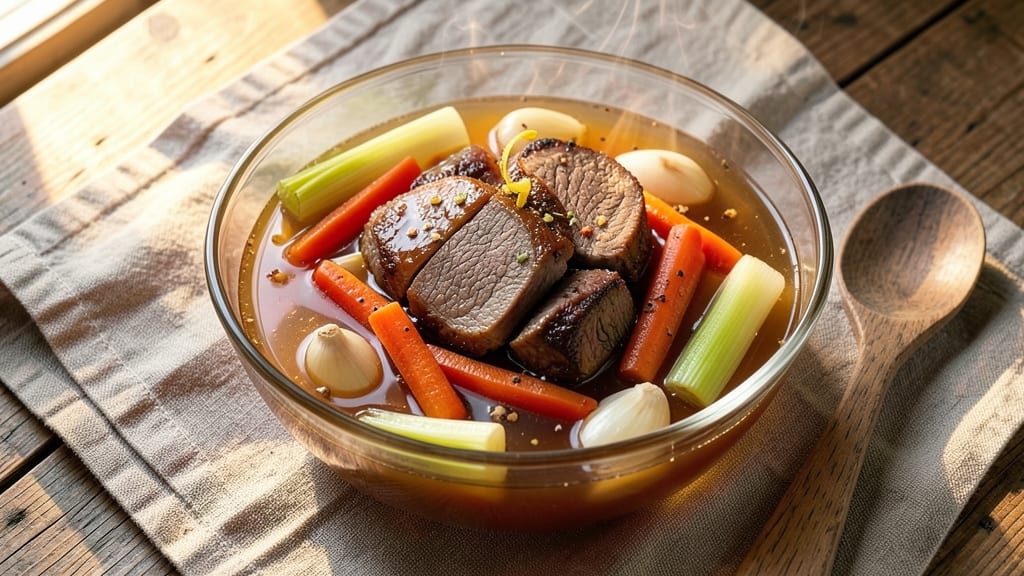
This beef aspic recipe transforms simple ingredients into an elegant centerpiece that wows guests with its crisp, gelatinous perfection. The secret lies in slow-cooked beef broth that sets into a delicate glaze, encasing tender meat and fresh herbs in a restaurant-worthy presentation.
I've perfected the technique over years of holiday feasts, ensuring every slice delivers that satisfying pop of texture and rich, savory flavor.
The process begins with a flavorful beef broth, simmered until deeply concentrated and infused with aromatic vegetables. After carefully layering the broth with cooked beef, herbs, and a touch of gelatin, patience becomes key—chilling for at least 6 hours transforms the liquid into a firm, slicable masterpiece.
The result? A dish that's equal parts impressive and comforting, perfect for special occasions or when you want to elevate everyday dining.
When sliced, the aspic reveals tender beef and vibrant herbs suspended in a glossy, wobbling gel that melts on the tongue. The presentation alone makes it feel luxurious, but the real magic is in the balance of textures—crisp edges, tender meat, and a silky broth that coats every bite.
Serve with classic accompaniments like cornichons, mustard, and crusty bread to complete the experience.
This recipe isn't just about technique—it's about confidence. With precise timing and careful layering, you'll achieve professional results at home. The key to success is attention to detail during the chilling process and clean slicing, which we'll cover step by step. Let's create something truly memorable together.
Ingredients for beef aspic
Sixteen ingredients transform into a showstopping centerpiece that elevates holiday feasts with professional precision.
| Ingredient | Amount | Notes |
|---|---|---|
| Beef Chuck Roast 🥩 | 3 lb | Bone-in preferred for flavor |
| Beef Broth 💧 | 6 cups | Homemade or high-quality store-bought |
| Carrots 🥕 | 2 whole | Medium-sized, peeled and sliced |
| Onions 🧅 | 1 whole | Yellow, peeled and quartered |
| Celery Stalks 🌿 | 4 whole | Trimmed and cut into chunks |
| Garlic Cloves 🧄 | 6 cloves | Peeled and lightly crushed |
| Fresh Parsley 🌿 | ½ cup | Chopped, stems removed |
| Fresh Thyme 🌿 | ¼ cup | Leaves only, stems removed |
| Unflavored Gelatin 🍬 | 2 tbsp | Powdered, high bloom preferred |
| Bay Leaves 🌿 | 2 whole | Dried, for broth infusion |
| Black Peppercorns 🌶️ | 1 tsp | Whole, lightly crushed |
| Salt 🧂 | 1 ½ tsp | Diamond Crystal kosher salt |
| White Wine Vinegar 🍷 | 1 tbsp | For brightness and clarity |
The beef chuck roast is the foundation of this dish—bone-in for maximum flavor and texture. Look for cuts with good marbling at Whole Foods or your local butcher shop, as this ensures tender results. The broth should be rich and deeply flavored; if making from scratch, use a slow simmer for 4-5 hours with the aromatics. For convenience, Kirkland Signature or Pacific Foods beef broths provide excellent results. The gelatin is non-negotiable—high bloom (like Great Lakes) sets more firmly than regular gelatin, creating that perfect wobble. Fresh herbs should be vibrant, not wilted—store-bought parsley and thyme work, but farmers' market selections add depth of flavor.
No bone-in beef? Substitute with beef short ribs, but increase cooking time by 30 minutes. Short on time? Use 1 cup beef stock instead of 2 cups broth—just remember to reduce the gelatin by 1 teaspoon. Fresh herbs unavailable? Dried thyme at one-quarter the amount works, but fresh parsley's bright notes are irreplaceable. The white wine vinegar can be swapped for lemon juice in a pinch, though it adds a slightly different brightness. For a vegetarian-friendly version, replace the beef with mushrooms and extra carrots, but the texture will differ significantly. Always measure gelatin precisely—too much creates a rubbery texture, while too little results in a weak set.
This aspic requires 6-8 hours of chilling time—plan accordingly. Store in the fridge for up to 5 days in an airtight container, covered with plastic wrap pressed directly on the surface to prevent a skin from forming. For longer storage, wrap tightly in plastic and freeze for up to 3 months. When ready to serve, slice with a hot, sharp knife for clean cuts. The presentation is everything—garnish with extra parsley and serve with cornichons and Dijon mustard for a classic French touch. Leftovers reheat beautifully in the microwave, though texture may soften slightly.
Why You'll Love This Recipe
- Minimal Chopping Required: I swear by this trick—just rough-chop the onions, carrots, and celery (no fancy dice needed) and toss them in whole. The broth does all the work while you sip wine and pretend you’re a sous chef.
- Rich, Meat-Packed Broth: That beef chuck roast? It turns the broth into liquid gold—deep, savory, and packed with flavor. Honestly, I’ve never made broth this rich without hours of simmering.
- Meal Prep MVP: Make a big batch on Sunday, and you’ve got ready-to-go lunches all week. Slice the aspic into cubes, pack it in containers, and boom—no cooking during the workweek.
- Budget-Friendly Luxury: A chuck roast and basic veggies stretch into a week’s worth of meals. Between us, this is how I feed my family without breaking the bank—every bite tastes like a fancy dinner.
Step-by-step instructions for beef aspic with herb glaze
Mastering aspic transforms simple roast beef into an elegant, restaurant-quality centerpiece.
Prepare the Roast and Aromatics
Begin by trimming the 3 lb beef chuck roast of excess fat, leaving about ¼ inch for flavor. Pat the meat completely dry with paper towels—this ensures maximum surface area for the gelatin to adhere. In a separate bowl, combine the peeled and sliced 2 whole carrots, peeled and quartered 1 whole onion, trimmed and chunked 4 whole celery stalks, and lightly crushed 6 cloves garlic cloves.
Season the beef generously with the 1.5 tsp salt and 1 tsp black peppercorns, pressing the seasoning into all sides. In the same bowl with the aromatics, add the 2 whole bay leaves, 0.5 cup chopped fresh parsley, and 0.25 cup fresh thyme leaves. This aromatic bundle will infuse the broth with deep, complex flavors that elevate the aspic.
Sear and Braise the Beef
Heat a Dutch oven over medium-high heat and sear the beef on all sides until it develops a deep golden-brown crust—about 3-4 minutes per side. Once browned, remove the beef and set it aside. In the same pot, add the aromatics and sear for 2-3 minutes until fragrant, stirring occasionally to prevent burning.
Return the beef to the pot and pour in the 6 cups beef broth, ensuring the aromatics are submerged. Bring to a gentle simmer, then reduce heat to maintain a low bubble. Cover and braise for 2 hours, turning the beef occasionally, until it reaches an internal temperature of 170°F. This slow cooking ensures the meat becomes fork-tender while extracting maximum flavor into the broth.
Strain and Prepare the Gelatin Broth
Remove the beef from the braising liquid and strain the broth through a fine-mesh sieve into a clean pot, discarding the solids. Return the strained broth to medium heat and whisk in the 2 tbsp unflavored gelatin until fully dissolved. Add the 1 tbsp white wine vinegar and simmer for 5 minutes to enhance clarity and brightness.
While the broth simmers, prepare a shallow baking dish that can hold the beef and enough liquid to fully submerge it. Line the dish with plastic wrap, leaving some overhang for easy removal. Place the braised beef in the dish and pour the gelatin-infused broth over it, ensuring the meat is completely covered. The liquid should reach about 1 inch above the beef.
Chill and Set the Aspic
Cover the dish tightly with plastic wrap and refrigerate for at least 6 hours, or preferably overnight. The aspic needs undisturbed chilling time to set properly. You'll know it's ready when the surface is firm to the touch and the edges pull away cleanly from the dish.
To serve, carefully run a thin knife around the edges of the dish to loosen the aspic. Invert the dish onto a serving platter and remove the plastic wrap. The gelatin will hold the beef in place, creating an elegant presentation. Slice through the aspic with a sharp knife to reveal the tender beef encased in a glossy, herb-infused glaze.
Garnish and Serve
Garnish the aspic with additional chopped fresh parsley and thyme leaves for a pop of color and freshness. The aspic should be firm yet slightly jiggly, with a delicate, translucent appearance. Serve immediately with crusty bread or your favorite sides to enjoy the perfect balance of tender beef and aromatic gelatin.
This technique preserves the beef's moisture and intensifies its flavor, resulting in a dish that's as impressive to look at as it is delicious to eat. The key to success lies in the precise timing of the chilling process and the quality of the broth—never cut corners on either.
Pro Tips For Making Beef Aspic
- Chill the Broth First: Pour your hot beef broth into a clean container and let it cool to room temperature before adding it to the aspic mixture. I learned this the hard way—adding scalding broth straight to the cold gelatin will make your aspic turn out grainy and weak. Patience here guarantees a smooth, glossy set.
- Trim the Chuck Aggressively: Remove all visible fat and connective tissue from the beef chuck roast before simmering—even the stubborn bits. Thick fat slows down the broth’s reduction and can leave your aspic cloudy. A sharp knife and a little elbow grease here make a real difference in clarity.
- Strain Through Fine Mesh: Use a damp cheesecloth or a fine-mesh strainer to filter the broth after simmering, then press the solids with a spoon. Skimping here leaves behind bits that make your aspic look like soup. Sounds tedious, but it’s the thing that matters most for that restaurant-worthy finish.
- Test Gelatin Strength Early: After adding the gelatin (or blooming it in cold water), taste a spoonful of the broth—it should coat your tongue like a thin, warm syrup. If it’s too weak, add another ½ teaspoon of powdered gelatin. I was skeptical until I tried it: this small step prevents a wobbly, sad aspic.
Serving suggestions for leftovers
Classic French Accompaniments
Serve your beef aspic with cornichons—those tiny, tangy French pickles—to cut through the richness. I like to arrange them in a neat circle around the platter for visual appeal. A dollop of Dijon mustard on the side adds a sharp contrast that balances the aspic's savory depth. 🥒
Crusty Bread Pairings
Nothing complements aspic like a warm, crusty baguette. I recommend toasting it lightly with garlic butter (mix 2 tbsp softened butter with 1 minced garlic clove and a pinch of salt) for an extra layer of flavor. The bread soaks up any excess gelatin beautifully while providing texture contrast.
Fresh Herb Garnishes
Fresh herbs elevate both flavor and presentation. Sprinkle chopped chives or tarragon leaves over the aspic just before serving for an aromatic finish. I also like adding a few edible flowers (like nasturtiums) for a delicate, colorful touch that feels restaurant-worthy.
Wine Pairing Perfection
A crisp Chablis white wine (100% Chardonnay) complements the aspic's richness without overpowering it. The wine's mineral notes and acidity cleanse your palate between bites. For red lovers, a light Pinot Noir from Burgundy works beautifully—just avoid heavy, tannic wines that would clash with the gelatin's delicate texture. 🍷
Modern Twist Options
Want to modernize the classic presentation? Serve the aspic in individual ramekins with a side of whipped crème fraîche and a sprinkle of smoked paprika. This works especially well for holiday appetizers or elegant dinner parties. The ramekins also make for perfect portion control.
Seasonal Vegetable Sides
In summer, pair with grilled asparagus tossed in olive oil and lemon zest. For fall, roasted butternut squash with thyme and a drizzle of maple syrup creates a stunning color contrast. The sweetness of the squash balances the aspic's savory notes beautifully. 🍂
Nutrition facts
Frequently asked questions
Why does my beef aspic turn out too soft or jelly-like?
This usually happens when the gelatin isn't fully dissolved or the chilling time was too short. Always whisk the 2 tbsp gelatin into the hot broth until completely dissolved (no lumps!). For a firmer set, increase chilling time to 8-10 hours and use high bloom gelatin. Cover tightly with plastic wrap pressed directly on the surface to prevent skin formation.
Can I make beef aspic without gelatin?
Traditional aspic requires gelatin for that signature wobble, but you can substitute with agar-agar (vegetarian option) or carrageenan. For agar-agar, use 1.5 tsp per cup of liquid and boil it first, then cool slightly before pouring. The texture will be firmer and slightly different, but still impressive. Just note it won't have the same melt-in-your-mouth quality.
How do I slice beef aspic cleanly without tearing?
Use a hot, sharp knife (dip in hot water and wipe dry between cuts) to create clean slices. Run a thin knife around the edges first to loosen the aspic from the dish. Cut through the gelatin at a 45-degree angle for elegant diamond-shaped pieces. Work quickly to maintain the presentation—aspic softens slightly as it sits at room temperature.
What's the best way to reheat leftover beef aspic?
For best results, don't reheat aspic—it's designed to be served cold! If you must, place the entire dish in a 250°F oven for 15-20 minutes until the gelatin softens. The texture will be more like a warm gelée than the original firm set. For leftovers, store in an airtight container covered with plastic wrap pressed directly on the surface to prevent drying.
Can I add other meats or ingredients to beef aspic?
Try adding mushrooms, hard-boiled eggs, or even smoked sausage for extra flavor. For vegetables, use bell peppers or zucchini that hold their shape well. Just ensure all additions are fully cooked before assembling. The key is maintaining the proper liquid-to-gelatin ratio—add extra ½ tsp gelatin for every cup of additional liquid or ingredients.