
Sauces & Condiments
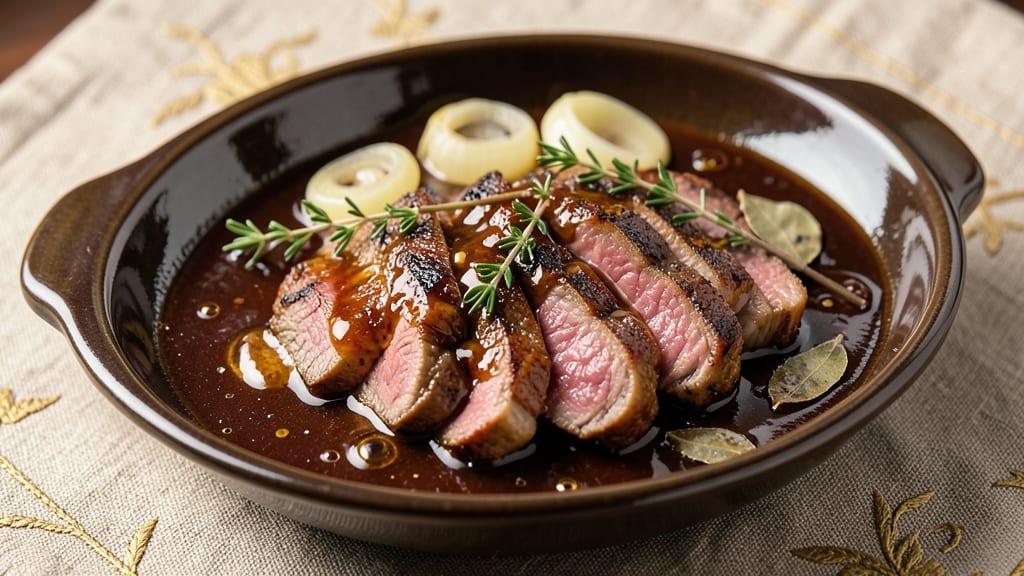
This beef au jus sauce recipe transforms simple pan drippings into a deep, velvety sauce that elevates every roast. The secret lies in reducing beef stock, wine, and aromatics until they create a concentrated, umami-rich base that clings to every bite.
I developed this version after years of testing—it’s the kind of sauce that turns a simple beef roast into a restaurant-worthy centerpiece.
The process is straightforward but requires patience: simmering until the sauce thickens naturally, then optionally thickening with cornstarch for a glossy finish. Shallots, thyme, and bay leaf build layers of flavor, while a splash of red wine adds brightness and depth.
Unlike store-bought versions, this sauce develops a complex, caramelized taste that’s impossible to replicate.
What makes this recipe stand out is its versatility—drizzle it over roasted beef, use it as a dipping sauce for crusty bread, or serve it alongside grilled vegetables. The rich, savory profile makes it a perfect complement to hearty winter meals, while its simplicity ensures it’s always within reach.
Once you taste homemade au jus, you’ll never settle for anything less.
Ready in about 45 minutes, this sauce requires minimal effort but delivers restaurant-quality results. The key is letting it reduce slowly, allowing the flavors to meld into a harmonious, deeply satisfying finish. Trust me—your taste buds (and dinner guests) will thank you.
Ingredients for beef au jus sauce
Transform simple pan drippings into a restaurant-quality sauce with these eleven essential ingredients.
| Ingredient | Amount | Notes |
|---|---|---|
| Beef Drippings 🥩 | 2 cups | From roasted beef, strained |
| Beef Stock 🍲 | 2 cups | Homemade or high-quality store-bought |
| Dry Red Wine 🍷 | 1 cup | Bold variety like Cabernet Sauvignon |
| Shallots 🧅 | 1 whole | Finely minced, about 2 tbsp |
| Fresh Thyme 🌿 | 1 tbsp | Leaves only, chopped |
| Bay Leaves 🍃 | 2 whole | Dried or fresh |
| Garlic Cloves 🧄 | 4 cloves | Minced or finely chopped |
| Cornstarch 🌾 | 1 tbsp | Optional for thickening |
| Cold Water 💧 | 1 tbsp | For cornstarch slurry |
| Diamond Crystal Kosher Salt 🧂 | 1 tsp | Adjust to taste |
| Black Pepper 🌶️ | ½ tsp | Freshly ground preferred |
The beef drippings are the foundation—strained to remove any solids, they carry the deep, meaty flavor that defines au jus. Costco or Whole Foods sell pre-made beef stock if you don’t have homemade, but nothing beats the richness of your own drippings. For the wine, bold, dry varieties like Cabernet Sauvignon work best—avoid sweet wines or those with residual sugar. Shallots add delicate sweetness, so buy them fresh and mince them finely for even distribution. Fresh thyme and bay leaves are non-negotiable here; dried works in a pinch but fresh brings that aromatic punch that makes this sauce sing.
No beef drippings? Use 1 cup of beef stock plus 1 tbsp of beef bouillon powder to mimic the depth. Short on red wine? Substitute with beef broth and 1 tbsp of balsamic vinegar for a similar tang. The cornstarch slurry is optional but worth it for that silky finish—just whisk it quickly to avoid lumps. If you’re using dried herbs, reduce to half the amount of fresh (so 0.5 tbsp dried thyme instead of 1 tbsp fresh). For the garlic, roast it first (400°F for 10 minutes) to mellow its sharpness and add a subtle sweetness that elevates the sauce.
This sauce tastes even better the next day as the flavors meld. Store it in the fridge for up to 5 days in an airtight container, or freeze for 3 months in ice cube trays for single portions. To reheat, simmer gently on the stove—never microwave, or it’ll lose its velvety texture. A splash of water or stock can help restore consistency if it thickens too much while stored. The sauce pairs perfectly with roasted beef, but don’t hesitate to drizzle it over mashed potatoes or use it as a dipping sauce for crusty bread.
Why You'll Love This Recipe
- Pan’s Best Friend: I swear by this sauce because it uses what’s already in your pot. Those rich beef drippings? Pure gold—no extra shopping needed. Just deglaze, simmer, and let the wine and thyme work their magic while you chop veggies for the rest of dinner.
- Wine-Infused Magic: That splash of dry red wine isn’t just for show—it cuts through the richness and adds depth. The shallots caramelize into sweet little nuggets, and the thyme? It’s like a whisper of the French countryside in every spoonful. Not fancy, just ridiculously good.
- Leftovers That Shine: This sauce keeps for days, and honestly? It gets better. Use it to glaze roasted potatoes, drizzle over grilled steaks, or toss with mashed potatoes. My freezer’s full of it—because nothing says “I care” like a homemade au jus waiting in the fridge.
- Weeknight Workhorse: No fancy techniques, no last-minute grocery runs. You’ve got beef drippings (from that roast you made last night), stock (from the bones you saved), and pantry staples. Simmer while you prep the rest of the meal—it’s the kind of sauce that makes you feel like a pro without the stress.
Step-by-step instructions for beef au jus sauce
This rich, velvety sauce transforms simple pan drippings into something extraordinary—let's build it together.
Bloom the Aromatics in Beef Drippings
Place a large, heavy-bottomed saucepan over medium heat and carefully pour in the 2 cups beef drippings. Let them warm for 2 minutes until they begin to shimmer but aren't smoking. This gentle heat helps release the maximum flavor from the drippings.
Add the 1 whole shallots (finely minced), 4 cloves garlic cloves (minced), and 1 tbsp fresh thyme. Stir occasionally for 3-4 minutes until the shallots soften and the garlic becomes fragrant but doesn't brown. You'll know it's ready when the mixture smells intensely aromatic—this is the foundation of your sauce's depth.
Add the 2 whole bay leaves and let everything cook together for another 1 minute. The bay leaves will infuse subtle earthy notes that elevate the sauce. Keep the heat at medium—too high and you'll burn the delicate aromatics before they release their flavors.
Deglaze with Wine and Stock
Pour in the 1 cup dry red wine and immediately scrape up any browned bits from the bottom of the pan using a wooden spoon. This deglazing step captures all the concentrated beef flavor that would otherwise stick to the pan. Let the wine simmer for 3-4 minutes until it reduces by about half and the alcohol aroma dissipates.
Next, add the 2 cups beef stock and bring the mixture to a gentle simmer. Here's where the magic happens—the wine and stock meld together, creating a complex base. Let it simmer uncovered for 10-12 minutes until the liquid reduces by about one-third and the sauce thickens slightly. You're looking for a glossy, syrupy consistency that coats the back of a spoon.
Season with the 1 tsp Diamond Crystal kosher salt and 0.5 tsp black pepper. Taste and adjust—this is your chance to balance the flavors before thickening. The sauce should be rich but not overly salty, with a perfect harmony of beefy, herby, and slightly winey notes.
Thicken and Finish the Sauce
In a small bowl, whisk together the 1 tbsp cornstarch and 1 tbsp cold water to create a smooth slurry. This is your thickening agent, and the cold water is crucial—it prevents the cornstarch from clumping when added to the hot liquid.
Slowly pour the cornstarch slurry into the simmering sauce while stirring constantly with a wooden spoon. The sauce will begin to thicken immediately—keep stirring for 2-3 minutes until it reaches your desired consistency. It should coat the back of a spoon but still be pourable. If it thickens too much, add 1-2 tablespoons of hot water to loosen it.
Remove the sauce from heat and let it sit for 2-3 minutes. Strain it through a fine-mesh sieve into a clean saucepan to remove the bay leaves and any herb stems. This final step ensures a silky, velvety texture without any unwanted bits. Your au jus should now be deep red, glossy, and perfectly balanced—ready to elevate any beef dish.
Pro Tips For Making Beef Au Jus Sauce
- Sear Shallots Slowly: I learned this the hard way—tossing minced shallots into hot drippings makes them burn before they soften. Instead, cook them over medium-low heat for 5-7 minutes, stirring occasionally, until they’re translucent but not browned. That gentle approach keeps their sweetness intact and prevents bitterness.
- Deglaze with Wine First: The second you add wine to the pan, scrape vigorously with a wooden spoon—every last bit of browned fond matters. Let it simmer just until the alcohol smell fades (about 2 minutes), then add stock. Skipping this step means missing out on the sauce’s depth.
- Strain for Clarity: After simmering, strain the sauce through a fine-mesh sieve lined with cheesecloth. It’s messy, but it removes thyme stems and any sediment that’ll cloud your sauce. Trust me, the difference in texture and presentation is worth the extra 30 seconds.
- Salt the Stock Early: Season the beef stock before combining it with wine and drippings—this balances the flavors from the start. If you wait, you’ll end up chasing salt in the final sauce, and the wine’s acidity will make it taste flat. About 1 tsp per cup of stock does the trick.
Essential equipment for this recipe
Heavy-Bottomed Saucepan
This is my non-negotiable tool for making au jus—nothing else comes close. A 5-quart stainless steel saucepan like the All-Clad Stainless or Cuisinart MultiClad distributes heat evenly and prevents scorching. The deep sides give you room to reduce the sauce properly without spilling.
I’ve tried enameled cast iron, but it’s harder to clean those stubborn browned bits from the bottom. 🔥
Wooden Spoon
Use a heat-resistant wooden spoon (I prefer Oxo Good Grips) for stirring and deglazing. Wood won’t scratch your pan and won’t conduct heat like metal, so it won’t burn your hand.
The slightly rough surface also helps scrape up those flavor-packed browned bits during deglazing. Avoid silicone spoons—they can melt under high heat.
Fine-Mesh Sieve
A fine-mesh sieve (like the OXO Good Grips) is essential for straining out bay leaves and herb stems at the end. It catches tiny particles while letting the sauce flow through smoothly.
I keep one dedicated to sauces so it’s always ready. If you don’t have one, a cheesecloth works in a pinch, but it requires more effort to press out all the liquid.
Instant-Read Thermometer
While not strictly necessary, a digital instant-read thermometer (I use ThermoWorks ThermoPop) helps track the sauce’s reduction. Aim for a simmer between 195°F and 205°F—this ensures even cooking without boiling off the alcohol too quickly.
It’s especially useful if you’re new to reducing sauces and want to avoid overcooking.
Whisk for Slurry
For the cornstarch slurry, a balloon whisk (like Zyliss) creates a smooth, lump-free mixture. The flexible wires reach into every corner of your bowl, ensuring the cornstarch and water combine perfectly.
I’ve seen people use forks, but whisking guarantees a silky finish. Keep your whisk clean—starchy residue can gum up future sauces.
Optional: Immersion Blender
If you prefer a smoother texture without straining, an immersion blender (like Ninja) lets you blend out the bay leaves and herbs directly in the pan. Pulse for 10-15 seconds until the sauce is silky.
Just be careful not to over-blend, or you’ll emulsify the sauce into a gloppy mess. This is my go-to when I’m short on time or lazy to strain. ✨
Nutrition facts
Frequently asked questions
Can I make this au jus sauce without beef drippings?
Yes! If you don’t have beef drippings, use 1 cup beef stock plus 1 tbsp beef bouillon powder to mimic that deep, meaty flavor. For extra richness, add 1 tbsp tomato paste when blooming the aromatics—it adds umami depth that complements the wine and herbs. The sauce will still taste amazing, just slightly less concentrated.
How do I prevent the sauce from getting too thick or too thin?
For thickness control, reduce the sauce uncovered over medium-low heat until it reaches your desired consistency—it should coat the back of a spoon but remain pourable. If it thickens too much, whisk in 1-2 tablespoons of hot beef stock or water. Too thin? Simmer uncovered for 5-10 more minutes, stirring occasionally. The cornstarch slurry is optional, but if you use it, add it gradually while stirring constantly to avoid clumping.
Can I substitute white wine for red wine in this recipe?
While you can use white wine, it won’t deliver the same depth of flavor. White wine lacks the bold tannins and richness that red wine provides, which are key to the sauce’s complexity. If you must substitute, use 1 cup beef stock plus 1 tbsp balsamic vinegar for brightness and acidity. For best results, stick with a dry red like Cabernet Sauvignon—it’s worth the difference!
How long can I store this au jus sauce, and how do I reheat it?
Store the sauce in an airtight container in the fridge for up to 5 days or freeze it for 3 months in ice cube trays for single portions. To reheat, simmer gently on the stove over low heat—never microwave, as it can break the sauce’s velvety texture. If the sauce thickens too much while reheating, whisk in 1-2 tablespoons of hot water or beef stock to restore consistency. Stir frequently to prevent scorching.
What can I do if my sauce tastes too salty?
If the sauce is overly salty, carefully dilute it by adding 1-2 tablespoons of warm beef stock or water and simmering for 2-3 minutes to rebalance the flavors. For a more dramatic fix, blend in 1-2 tablespoons of unsalted butter—it adds richness and smooths out harshness. Taste as you go, adjusting gradually. Prevention tip: Season gradually during cooking rather than all at once!