
Soups & Stews
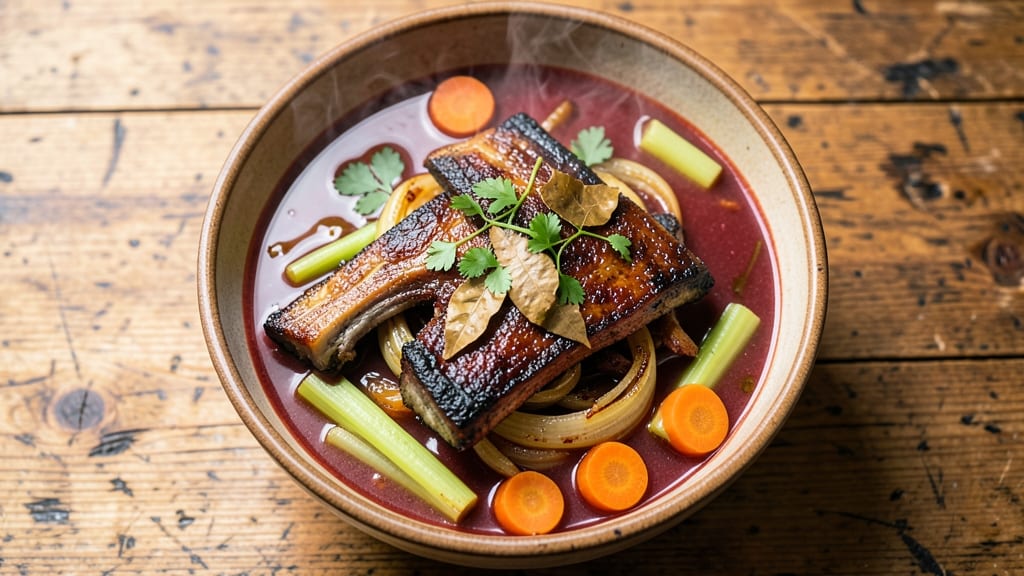
This beef back ribs soup recipe transforms tough cuts into melt-in-your-mouth richness that will have everyone asking for seconds. The slow-cooked ribs infuse the broth with deep, smoky flavor while breaking down into tender strands, creating a soup that's both hearty and comforting.
What makes this recipe special is the balance of traditional braising techniques with modern efficiency—whether you simmer on the stove or use a pressure cooker for faster results.
The foundation of this soup lies in properly preparing the ribs: trimming excess fat, scoring the meat for better tenderness, and browning them in a hot pot to develop that essential caramelized flavor.
Aromatics like onions, garlic, and bay leaves build layers of complexity, while a splash of red wine adds brightness that cuts through the richness. The result is a soup that's deeply flavorful yet perfectly balanced, with each spoonful delivering both meaty satisfaction and velvety broth.
By the time you're done, you'll have a pot of soup that's rich enough to stand alone as a main course but hearty enough to pair beautifully with crusty bread or a simple green salad.
The ribs will be fork-tender, falling apart easily while still maintaining their structural integrity, and the broth will be infused with their natural juices and deep, smoky notes. This is the kind of soup that transforms a simple weeknight dinner into a memorable meal.
The beauty of this recipe is its versatility—it works equally well as a weeknight comfort meal or a centerpiece for a dinner party. The leftovers reheat beautifully, making it perfect for meal prep or feeding a crowd.
Whether you're a seasoned cook or just starting out, this beef back ribs soup delivers restaurant-quality results with simple, professional techniques that anyone can master.
Ingredients for beef back ribs soup
Six hearty ingredients transform tough ribs into velvety, smoky soup perfection.
| Ingredient | Amount | Notes |
|---|---|---|
| Beef Back Ribs 🥩 | 2 lb | Bone-in, trimmed of excess fat |
| Yellow Onions 🧅 | 2 whole | Chopped into 1/2-inch pieces |
| Garlic Cloves 🧄 | 6 cloves | Smashed with side of knife |
| Carrots 🥕 | 4 medium | Peeled and cut into 1-inch chunks |
| Celery Stalks 🌿 | 3 whole | Cut into 1-inch pieces |
| Bay Leaves 🍃 | 2 whole | Dried, for infusion |
| Dry Red Wine 🍷 | ½ cup | Bold variety like Cabernet |
| Beef Broth 💧 | 6 cups | Low-sodium preferred |
| Tomato Paste 🍅 | 2 tbsp | Smooth, not chunky |
| Olive Oil 🫒 | 2 tbsp | Extra-virgin for browning |
| Salt 🧂 | 1 ½ tsp | Kosher salt, adjust to taste |
| Black Peppercorns 🌶️ | ½ tsp | Freshly cracked |
| Fresh Thyme 🌿 | 1 tbsp | Leaves only, chopped |
| Fresh Parsley 🌿 | ¼ cup | Chopped, for garnish |
The ribs are the star—look for bone-in back ribs with good marbling at your butcher or grocery store's meat counter. Costco or Whole Foods often have the best quality cuts. Trim any excess fat before cooking, but leave the membrane on for better flavor infusion. If you can't find fresh thyme, dried works at one-third the amount, but fresh is ideal. The onions, carrots, and celery form the classic mirepoix—don't skip chopping them evenly, or they'll cook at different rates. For the wine, any bold red like Cabernet or Merlot works, but save the good stuff—this isn't the time for that $5 box wine.
No red wine? Substitute with beef broth plus 1 tbsp balsamic vinegar—it adds that same tangy depth. Pre-cut veggies from the store are fine, but if you're feeling fancy, buy whole carrots and celery—they stay fresher longer. The tomato paste can be the squeeze-tube kind from Trader Joe's if you're lazy, but regular canned works too. For extra richness, add 1 tbsp of Worcestershire sauce (check for vegetarian version if needed). Want more body? Swap half the broth for white wine—it adds brightness that balances the meatiness. And if you're short on time, pressure cook the ribs for 45 minutes instead of braising for hours.
This soup tastes even better the next day as flavors meld. Store in an airtight container in the fridge for up to 5 days—the ribs will keep getting more tender. For freezer storage, portion into 2-cup servings with a layer of broth to prevent freezer burn. Keeps for 3 months. To reheat, warm over medium heat and add a splash of water or broth if it gets too thick. Garnish with fresh parsley right before serving—it adds that pop of color and freshness. Leftovers make amazing sandwiches with crusty bread or as a topping for mashed potatoes.
Why You'll Love This Recipe
- One-Pot Wonder: I swear by this recipe when I’m too tired to wash a million dishes—just toss the ribs, onions, garlic, and veggies into a pot, cover with broth, and walk away. The ribs practically fall off the bone by the end, and the broth absorbs all the rich, smoky flavor without any extra effort.
- Deep Umami Magic: That first sip? Chef’s kiss. The beef ribs simmer long enough to melt into the broth, while the onions and garlic caramelize just enough to add this incredible depth—like a slow-cooked pot roast but in soup form. Honestly, I’ve had people ask if I used secret spices, but it’s really just patience and those few simple ingredients.
- Game-Day Crowd Pleaser: Between us, this is my go-to for game day or when friends drop by unannounced. It’s hearty enough to fill a hungry group but still feels light enough that no one will groan about seconds. Plus, the ribs are easy to pull out and serve on the side if someone wants a bigger portion.
- Budget-Friendly Leftovers: I make a double batch on Sundays because the leftovers are ridiculously good the next day—even better, really. The flavors only get stronger as it sits, and it stretches across lunches without getting boring. My wallet thanks me, and so does my taste buds.
Step-by-step instructions for beef back ribs soup
This rich, meaty soup delivers deep flavor with minimal effort—perfect for hearty meals.
Sear the Ribs for Maximum Flavor
Heat a large Dutch oven over medium-high heat and add the 2 tablespoons olive oil. Once shimmering, add the 2 lb beef back ribs in a single layer, bone-side down. Let them sear undisturbed for 5-6 minutes until deeply browned on one side. Flip carefully and repeat on the other side until golden brown all over.
This step is crucial—it creates the Maillard reaction that builds the soup's deep, smoky foundation. Don't rush it; you'll smell that irresistible aroma when it's ready. Once browned, remove the ribs and set aside on a plate.
Build the Soup Base with Aromatics
In the same Dutch oven, add the 2 whole yellow onions, 4 medium carrots, and 3 whole celery stalks, all chopped as specified. Cook for 8-10 minutes, stirring occasionally, until the vegetables soften and begin to caramelize slightly. Add the 6 smashed garlic cloves and cook for another 30 seconds until fragrant.
Here's the thing—don't skip this step. The vegetables release natural sugars that caramelize, adding sweetness to balance the richness of the meat. If the onions start to stick, add a splash of water and scrape up those flavorful browned bits from the bottom of the pot.
Deglaze and Simmer the Soup
Pour in the ½ cup dry red wine and scrape the bottom of the pot with a wooden spoon to release all those flavorful browned bits. Let it simmer for 2-3 minutes until the wine reduces by half. Stir in the 2 tablespoons tomato paste, 2 whole bay leaves, and 1 tablespoon fresh thyme, then add the 6 cups beef broth. Return the ribs to the pot.
Bring everything to a gentle boil, then reduce heat to low and cover partially. Let it simmer for 1 hour and 30 minutes, turning the ribs occasionally to ensure even cooking. You'll know it's ready when the meat is fork-tender and falling off the bone—this is what makes the soup so rich and satisfying.
Finish with Seasoning and Garnish
Remove the ribs from the pot and let them cool slightly. Use two forks to shred the meat directly into the broth, discarding any large bones. Return the broth to a simmer and stir in the 1.5 teaspoons salt and ½ teaspoon cracked black peppercorns. Taste and adjust seasoning if needed—this is where you can really make the soup your own.
Ladle the soup into bowls and garnish each serving with ¼ cup fresh parsley. The parsley adds a bright, fresh contrast to the rich, meaty broth. Serve immediately with crusty bread to soak up every last drop of that flavorful liquid.
Pro Tips For Making Beef Back Ribs Soup
- Sear the Ribs First: Hit those beef back ribs with high heat until they’re deep brown—no rushing. I used to skip this, thinking the soup would flavor them enough, but a proper sear locks in the meaty depth. Two minutes per side in a screaming-hot pot, then deglaze with a splash of broth. That crust? It’s what turns good soup into rich soup.
- Dice the Onions Small: No giant chunks here—cut those yellow onions into ¼-inch pieces so they dissolve into the broth instead of turning to mush. I learned this the hard way when my soup tasted like I’d forgotten to add onions entirely. Small dice also means faster cooking, so the carrots and celery don’t turn to mush while waiting.
- Don’t Overcrowd the Pot: If you dump all the ribs in at once, they’ll steam instead of brown, and the broth will taste bland. Work in batches—sear half, remove, then repeat—so the meat gets that golden crust and the flavors build properly. Trust me, your soup will thank you.
- Simmer Low and Slow: Beef back ribs need time—at least 2.5 to 3 hours on low heat to break down the collagen into gelatin. I used to crank the heat to speed things up, but that just makes the broth cloudy and the meat tough. Keep it at a gentle bubble, and the ribs will fall off the bone like they’re begging to be eaten.
Pro cooking tips for this dish
Sear Like a Pro
That initial sear isn't just about browning—it's about building deep, caramelized flavor through the Maillard reaction. Use a heavy-bottomed Dutch oven (I love my All-Clad) and heat it until the oil shimmers before adding ribs.
Let them sear undisturbed for 5-6 minutes per side—this creates that irresistible crust. If your ribs are thick, don't rush; patience here makes all the difference. 🔥
Wine Deglaze Magic
The wine deglaze is where complexity happens. After searing, pour in that ½ cup dry red wine and scrape every last bit of browned meat from the bottom—those bits are pure flavor gold. Let it reduce by half before adding other ingredients.
I always use a bold Cabernet because its tannins stand up to the richness of the ribs. Pro tip: If you don't have wine, beef broth + 1 tbsp balsamic vinegar works in a pinch.
Low-and-Slow Mastery
This isn't a soup you rush. After adding broth, maintain a gentle simmer (small bubbles, not a rolling boil) for 1 hour and 30 minutes. The ribs need time to break down into tender strands. I check mine every 20 minutes, giving them a gentle turn with tongs.
If the broth reduces too much, add hot water to maintain the right consistency. The key is patience—this is where tough meat transforms into melt-in-your-mouth goodness.
Shredding Technique
When the ribs are tender, remove them and let cool slightly before shredding. Use two forks—one to hold the meat steady while you pull strands with the other. Discard any large bones or cartilage.
I like to shred directly into the broth so every bite gets that meaty richness. If you're short on time, a meat thermometer is your best friend—aim for 195°F internal temperature for perfect tenderness.
Seasoning Balance
Taste before serving! The ribs will have absorbed most of the salt, so adjust carefully. I usually add ½ tsp black pepper and a pinch more salt if needed. For extra depth, a dash of Worcestershire sauce or a splash of red wine vinegar can brighten the flavors.
Garnish with fresh parsley right before serving—it adds a pop of color and freshness that cuts through the richness. 🌿
Pressure Cooker Shortcut
No time for hours of simmering? A pressure cooker cuts cooking time dramatically. Sear the ribs first, then add everything to your Instant Pot and cook on high pressure for 45 minutes.
Release pressure naturally, then shred and finish as directed. The ribs will still be tender, and the broth will be packed with flavor—just be careful not to overcook, or they'll turn mushy. ⚡
Nutrition facts
Frequently asked questions
Can I substitute beef back ribs with pork ribs for this soup?
While pork ribs will work, they'll have a distinctly different flavor profile. Pork ribs are sweeter and more fatty, which can overpower the delicate balance of this recipe. If you must use pork, opt for St. Louis-style pork ribs and reduce the cooking time by 30-45 minutes—they tenderize faster. For best results, stick with beef back ribs to maintain the rich, meaty depth this soup is known for.
How do I know when the ribs are fully tender?
Use the fork test: Insert a fork into the thickest part of a rib—if the meat falls apart easily with minimal pressure, it's ready. You can also check the internal temperature with a meat thermometer; ribs should reach 195°F for perfect tenderness. If they're still tough after 1 hour and 30 minutes, add ½ cup hot water and simmer another 20-30 minutes. Patience is key here!
Can I make this soup in a slow cooker?
Sear the ribs first in a skillet, then transfer everything to your slow cooker. Cook on low for 8 hours or high for 5 hours. The ribs will become fork-tender, and the broth will develop deep flavor. For extra richness, add ½ cup beef broth if the soup seems too thick. The slow cooker method is perfect for hands-off cooking.
Why does my soup taste bland after cooking?
Bland flavor usually means one of two things: under-seasoning or not building enough depth. First, check if you used low-sodium broth—if so, add an extra ½ teaspoon salt at the end. Second, ensure you deglazed the pot thoroughly after searing the ribs and reduced the wine by half. For more complexity, stir in 1 teaspoon soy sauce or ½ teaspoon smoked paprika while simmering. Taste as you go!
How can I make this soup thicker or thinner?
For a thicker soup, simmer uncovered for 10-15 minutes to reduce the broth. If it's too thick, add hot water or broth one ladle at a time until you reach your desired consistency. For a thinner soup, simply add ½ cup liquid (broth or water) and stir well. Avoid adding cold liquid—it can shock the ribs and make them tough. Adjust gradually!