
Main Courses
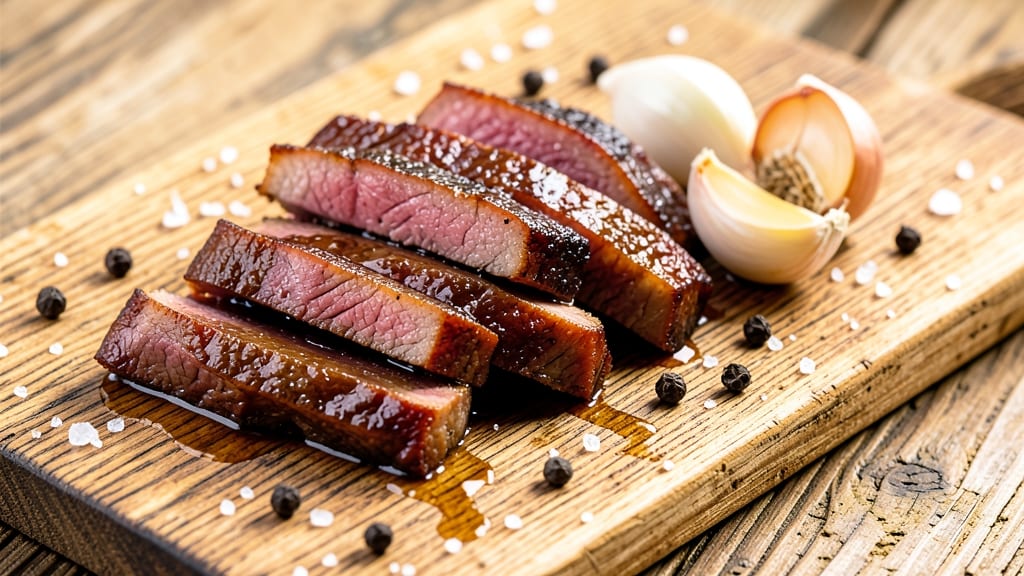
This Australian beef jerky recipe transforms tough cuts into chewy, smoky-sweet snacks with minimal effort. ✨ The secret lies in a bold spice blend of Worcestershire, soy, and brown sugar that mimics traditional bush tucker flavors while delivering restaurant-quality results at home.
Start with thinly sliced rump or sirloin, trimmed of fat to ensure even drying. The marinade—packed with garlic, black pepper, and smoked paprika—infuses deep flavor while acidified with vinegar for food safety. Unlike store-bought versions, this method preserves natural beef taste without artificial additives.
Using an oven at 160°F for 4–6 hours guarantees tender yet crisp edges, but a dehydrator speeds up the process safely. The result? Jerky with a perfect chew, rich umami notes, and a subtle caramelized sweetness that pairs beautifully with beer or salads.
Store in airtight containers for up to 2 weeks, or freeze for longer shelf life. This recipe isn’t just a snack—it’s a taste of Australia’s outdoor traditions, simplified for modern kitchens. Let’s get started!
Ingredients for australian beef jerky
Thinly sliced beef meets a bold marinade of soy, Worcestershire, and brown sugar for authentic Australian flavor.
| Ingredient | Amount | Notes |
|---|---|---|
| Rump Roast or Sirloin 🥩 | 1 ½ lb | Thinly sliced, fat trimmed |
| Worcestershire Sauce 🍶 | ¼ cup | High-quality, no artificial additives |
| Soy Sauce 🥢 | ¼ cup | Low-sodium preferred |
| Brown Sugar 🍚 | ½ cup | Light or dark, packed |
| Garlic Cloves 🧄 | 6 cloves | Minced finely for infusion |
| Black Peppercorns 🌶️ | 1 tbsp | Freshly cracked for intensity |
| Smoked Paprika 🌶️ | 2 tbsp | High-quality, not sweet |
| White Vinegar 🍶 | ¼ cup | For acidity and preservation |
| Olive Oil 🫒 | 2 tbsp | Light, for even coating |
| Salt 🧂 | 1 ½ tsp | Diamond Crystal preferred |
| Ground Coriander 🌿 | 1 tsp | For earthy depth |
| Onion Powder 🧅 | 1 tsp | Freshly ground preferred |
The beef cut matters most here—rump roast delivers the best chew, while sirloin offers leaner slices. Trim all visible fat before slicing to ensure even drying. For sourcing, local butcher shops often have pre-cut rump roast, but if buying whole, ask for the thinly sliced variety. The Worcestershire sauce should be high-quality—Lea & Perrins is a reliable choice. Brown sugar should be packed into the measuring cup for accurate results. Freshly cracked black peppercorns elevate the flavor significantly compared to pre-ground options.
No Worcestershire sauce? Substitute with 2 tbsp soy sauce plus 1 tbsp balsamic vinegar for depth. Running low on smoked paprika? Regular paprika plus a pinch of liquid smoke works in a pinch. For the vinegar, white or apple cider vinegar both work, but white vinegar has a cleaner acidity. The garlic can be pre-minced from a jar if needed, but freshly minced offers superior flavor. If you prefer a sweeter jerky, increase the brown sugar to 0.75 cup. For a smokier profile, add 1/4 tsp chipotle powder to the marinade.
Marinate the beef for at least 12 hours in the refrigerator for maximum flavor infusion. After drying, store in airtight containers lined with parchment paper to prevent moisture buildup. Keeps at room temperature for up to 2 weeks or frozen for 3 months. For longer storage, vacuum-seal portions. The jerky maintains its best texture when stored properly—avoid plastic bags as they trap moisture and cause sogginess.
Why You'll Love This Recipe
- No-Fuss Prep: I swear by this recipe because it’s the kind of thing you can throw together while scrolling through your phone—just slice the rump roast thin, toss it in a bowl with Worcestershire, soy sauce, and minced garlic, then let it marinate while you handle the rest of dinner. No fancy equipment, no stress.
- Sweet-Savory Magic: That balance of brown sugar and Worcestershire? Absolute perfection. The sugar caramelizes just enough to give it a sticky, slightly crisp edge, while the soy and garlic keep it deep and savory—like a cross between a pub snack and a gourmet bite. Honestly, I’ve had people ask if I bought it pre-made.
- Snack Attack Ready: This jerky keeps beautifully in the fridge for a week, so I always have a stash for road trips, hiking, or when the kids suddenly announce they’re starving at 3 PM. It’s also the ultimate hostess gift—no one ever turns down a bag of homemade jerky, and it’s way cheaper than store-bought.
- Budget-Friendly Protein: A single rump roast feeds my whole family, and the ingredients cost a fraction of what you’d pay for pre-packaged jerky. Plus, the leftovers? They’re perfect for quick lunches or tossing into salads later—no waste, just flavor. Between us, this is how I stretch my grocery budget without sacrificing taste.
Step-by-step instructions for Australian beef jerky
Master this smoky-sweet marinade and dehydration technique for restaurant-quality jerky at home.
👨🍳 Step 1: Prepare the Marinade
In a medium bowl, combine the 0.25 cup Worcestershire Sauce, 0.25 cup Soy Sauce, 0.5 cup Brown Sugar, 0.25 cup White Vinegar, 2 tbsp Olive Oil, 1.5 tsp Salt, 1 tsp Ground Coriander, and 1 tsp Onion Powder. Whisk vigorously until the brown sugar dissolves completely and the mixture becomes smooth and glossy.
Next, add the 6 cloves minced Garlic Cloves and 1 tbsp cracked Black Peppercorns, stirring well to distribute the spices evenly. Let the marinade sit at room temperature for 15 minutes—this allows the flavors to meld and the sugar to fully integrate, creating a balanced sweet-savory base.
🍳 Step 2: Slice and Marinate the Beef
Using a sharp boning knife, cut the 1.5 lb Rump Roast or Sirloin into ¼-inch thick slices against the grain. This thickness ensures even drying while maintaining tenderness. Trim any visible fat, as it can create uneven textures during dehydration.
Place the sliced beef in a large resealable plastic bag and pour the marinade over the top. Seal the bag and massage the marinade into the beef, ensuring every slice is thoroughly coated. Refrigerate for at least 12 hours (or up to 24 hours)—this extended marination is crucial for deep flavor penetration and proper tenderization.
🔥 Step 3: Preheat and Arrange for Dehydration
Preheat your dehydrator to 160°F—this low temperature ensures slow, even drying without cooking the meat. Arrange the marinated beef slices in a single layer on the dehydrator trays, ensuring they don't overlap. This spacing allows proper air circulation, which is essential for consistent results.
Leave about ¼ inch between each piece. If using an oven method, prop the door open with a wooden spoon and place a wire rack on top of a baking sheet. Bake at 175°F instead, checking frequently to prevent over-browning.
⏰ Step 4: Dehydrate Until Leather-Like
Dehydrate the beef for 6-8 hours, flipping the slices halfway through (after 3-4 hours). You'll know they're ready when the edges curl slightly and the center feels firm to the touch but still pliable. The jerky should be dry to the touch with no moisture remaining.
For perfect texture, check for flexibility—jerky should bend slightly without breaking. If using the oven method, rotate the baking sheet every hour to ensure even drying. Over-drying makes jerky brittle; under-drying creates a chewy, unsafe product.
🔪 Step 5: Cool and Store Properly
Once fully dehydrated, remove the jerky from the dehydrator or oven and let it cool completely on a wire rack. This cooling step prevents condensation from forming in your storage container, which could promote bacterial growth.
Store in an airtight container in the refrigerator for up to 2 weeks or freeze for up to 3 months. The smoky-sweet flavor will develop more depth over time, making this jerky perfect for camping trips, snacks, or protein-packed meals.
Pro Tips For Making Australian Beef Jerky
- Slice Thin, Slice Even: I learned this the hard way—uneven slices mean uneven drying. Use a sharp knife or meat slicer to cut the rump or sirloin into strips about ¼-inch thick (6mm). Too thick? They’ll stay chewy. Too thin? They’ll burn before drying.
- Marinate Overnight, Not Hours: This isn’t one of those "throw it together last-minute" dishes. Mix the Worcestershire, soy sauce, brown sugar, and minced garlic, then let the meat soak for at least 12 hours (24 is better). The sugar needs time to penetrate, and the soy won’t cling properly if you rush it.
- Skip the Boiling Water Bath: I used to blanch the strips in boiling water to "kill bacteria," but it turns them mushy. Instead, pat them bone-dry with paper towels after marinating—this helps the sugar caramelize and the jerky crisp up. No need for extra steps; trust the dehydrator or oven’s heat to do the work.
- Use a Meat Thermometer: Jerky’s done when it hits 160°F (71°C) internally—not when it looks dry. Ovens and dehydrators lie. Check the thickest strip with a thermometer; if it’s below, keep going. Overcooking? It’ll turn to leather. Undercooked? You’ll regret it later.
Troubleshooting your australian beef jerky
Uneven Drying Spots
If your jerky dries unevenly with some slices still moist while others are brittle, your beef slices are likely overlapping or too thick. Trim any slices thicker than ¼ inch and arrange them in a single layer with ¼ inch spacing between each piece.
For thicker cuts, slice against the grain and dehydrate at 150°F for an extra 1-2 hours to ensure even drying. 🌡️
Soggy Jerky
Soggy jerky usually means it didn’t dry long enough or was stored improperly. Check for moisture by touching the center of a slice—it should feel firm but still slightly flexible.
If stored in airtight containers, condensation can ruin the texture. Always let jerky cool completely before storing, and use parchment paper between layers to absorb excess moisture.
Excessive Browning
Over-browning happens when the temperature is too high or the jerky dries too quickly. Lower your dehydrator temperature to 150°F and extend drying time by 1-2 hours. If using an oven, reduce heat to 165°F and prop the door open slightly.
A light spray of apple cider vinegar on the beef before dehydrating can also help prevent browning while adding tang.
Weak Flavor
If your jerky lacks depth, your marinade might not have infused long enough. Always marinate for at least 12 hours, and use high-quality Worcestershire sauce like Lea & Perrins for authentic flavor.
For extra punch, add 1 tsp liquid smoke or ½ tsp chipotle powder to the marinade. Taste the marinade before applying—if it’s bland, adjust with more soy sauce or brown sugar.
Brittle Texture
Brittle jerky means it was over-dried. Remove slices as soon as they’re firm but still pliable—jerky should bend slightly without snapping. If using an oven, check every 30 minutes after 4 hours of drying.
For extra tenderness, add 1 tbsp honey or 1 tbsp molasses to the marinade to keep the meat supple during dehydration.
Marinade Not Sticking
If the marinade slides off the beef, your slices may be too dry or the marinade isn’t acidic enough. Add 1 extra tbsp of vinegar to the marinade and let the beef soak for an additional 30 minutes before dehydrating.
For extra grip, toss the marinated beef in 1 tbsp cornstarch before drying—this helps the marinade adhere better while preventing stickiness. ✨
Nutrition facts
Frequently asked questions
What's the best beef cut for authentic Australian jerky?
For the most authentic texture and flavor, use rump roast or sirloin. These cuts are lean, flavorful, and slice beautifully against the grain for that perfect chewy texture. Avoid fatty cuts like ribeye—the fat doesn't dry properly and can make the jerky greasy. Ask your butcher for "thinly sliced rump" if you want to skip the slicing step.
Can I make this jerky without a dehydrator?
Use your oven set to 175°F with the door propped open slightly. Place slices on a wire rack over a baking sheet and dehydrate for 6-8 hours, checking every hour to prevent over-browning. For even drying, rotate the rack halfway through. Just be patient—oven jerky takes longer than a dehydrator but works perfectly!
How do I know when the jerky is fully dried?
The jerky is ready when it's dry to the touch with no moisture remaining and feels firm but still slightly flexible. Test by gently pressing the center of a slice—it should bend without breaking. If it feels damp, continue drying for another 1-2 hours. Over-drying makes jerky brittle, while under-drying can create a chewy, unsafe product.
Why does my jerky taste bland compared to store-bought?
Store-bought jerky often contains artificial flavor enhancers, while homemade relies on quality ingredients. Boost flavor by using high-quality Worcestershire sauce (like Lea & Perrins), adding 1 tsp liquid smoke or ½ tsp chipotle powder to the marinade, and marinate for 24 hours instead of the minimum 12 hours. Taste the marinade before applying—if it's bland, adjust with more soy sauce or brown sugar.
How long will homemade jerky last?
Properly dried jerky stored in an airtight container keeps for 2 weeks at room temperature or 3 months in the freezer. For longer storage, vacuum-seal portions. To prevent spoilage, always let jerky cool completely before storing and avoid plastic bags (they trap moisture). The flavor actually improves over time, making it perfect for camping trips or emergency snacks.