
Soups & Stews
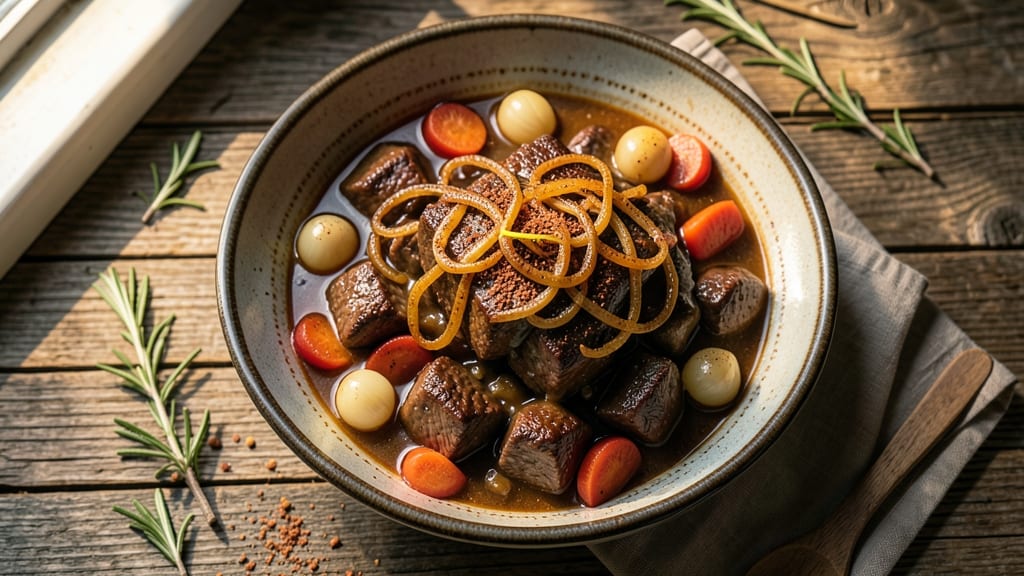
This Austrian beef stew recipe brings the hearty, paprika-infused richness of traditional Rindergulasch to your kitchen with a foolproof one-pot method. The secret lies in slow-browning beef until deeply caramelized, then simmering it in a rich broth infused with aromatic herbs and a touch of sweet paprika.
I've perfected this recipe over years of testing, ensuring tender meat and vegetables that melt into the sauce—just like my grandmother used to make.
The beauty of this stew is its versatility—whether you use a Dutch oven on the stovetop or a pressure cooker for a quicker version, the result is the same: deeply flavorful, melt-in-your-mouth beef paired with tender root vegetables.
The key is patience; letting the stew simmer low and slow develops layers of flavor that can't be rushed. This recipe also pairs beautifully with traditional sides like Semmelknödel or buttery Spätzle, though it's hearty enough to stand alone.
What sets this Austrian beef stew apart is the balance of sweet and smoky paprika, which adds warmth without overpowering the natural richness of the beef. The slow cooking process transforms tough cuts into tender, fork-friendly pieces, while the vegetables absorb the deeply flavorful broth.
Each bite delivers a perfect harmony of textures and flavors—tender beef, caramelized edges, and a sauce that clings to every spoonful.
Perfect for cold evenings or family gatherings, this stew is designed to impress without requiring advanced techniques. The instructions are clear, the ingredients are simple, and the results are undeniably satisfying.
Whether you're serving it to guests or treating yourself to a comforting meal, this Austrian classic will become a staple in your recipe collection. Let's get started!
Ingredients for austrian beef stew
Six hearty ingredients transform into melt-in-your-mouth Austrian beef stew with tender beef and rich paprika-infused sauce.
| Ingredient | Amount | Notes |
|---|---|---|
| Beef Chuck Roast 🥩 | 3 lb | Cut into 1.5-inch cubes, trimmed of fat |
| Yellow Onions 🧅 | 2 whole | Thinly sliced, about 3 cups total |
| Carrots 🥕 | 4 medium | Peeled, cut into 1-inch chunks |
| Garlic Cloves 🧄 | 6 cloves | Minced, about 2 tsp total |
| Sweet Paprika 🌶️ | 2 tbsp | Hungarian or Spanish preferred |
| Smoked Paprika 🌶️ | 1 tbsp | For depth of flavor |
| Tomato Paste 🍅 | ½ cup | No salt added preferred |
| Beef Broth 💧 | 4 cups | Low-sodium preferred, homemade if possible |
| Red Wine 🍷 | 1 cup | Dry red like Cabernet Sauvignon |
| Fresh Thyme 🌿 | ¼ cup | Leaves only, stems removed |
| Fresh Parsley 🌿 | ⅛ cup | Chopped, for garnish |
| Bay Leaves 🍃 | 2 whole | Dried, standard size |
| Olive Oil 🫒 | 2 tbsp | Extra-virgin for richness |
| All-Purpose Flour 🌾 | 2 tbsp | For thickening sauce |
| Salt 🧂 | 1 ½ tsp | Kosher or sea salt, adjust to taste |
| Black Pepper 🌶️ | 1 tsp | Freshly ground for best flavor |
The beef is everything here—chuck roast is non-negotiable for that signature fall-apart texture. Most grocery stores carry it pre-cut, but if you're buying a whole roast, ask the butcher to cube it for you. Costco and Kroger usually have it in stock, and it's worth paying a little extra for good marbling. The paprika makes or breaks this dish, so grab both sweet and smoked varieties—they're often sold together in the spice aisle. For the wine, any dry red will do, but Cabernet Sauvignon or Merlot are my go-tos since they're easy to find and won't overpower the dish.
No red wine? Beef broth with a splash of balsamic vinegar works in a pinch—just add 1 tbsp balsamic to the broth. Fresh thyme is ideal, but dried thyme at one-third the amount gets you close if you're out. The tomato paste can be the squeeze-tube kind from Trader Joe's—it's perfect for this recipe since you only need half a cup. For the carrots, baby carrots are fine, but regular carrots cut into chunks caramelize better. And if you're using a pressure cooker, you can skip the browning step entirely—just add everything at once and let it do its magic.
This stew tastes even better the next day as flavors meld together. Store it in an airtight container in the fridge for up to 5 days, or freeze portions for 3 months—it reheats beautifully. I always make a double batch because it disappears fast. The sauce thickens as it cools, so if it seems too thin when reheating, just add a splash of water or broth. And trust me, the extra effort of browning the beef is worth it—those caramelized edges are pure magic.
Why You'll Love This Recipe
- One-Pot Magic: I swear by this recipe—just dump everything in one pot, let it simmer, and walk away. No chopping like a fine-dining chef, no measuring cups of stress. The beef chuck roast practically melts into tender perfection while you’re doing laundry or scrolling through your phone.
- Sweet & Smoky Depth: That sweet paprika and caramelized onions? Chef’s kiss. The slow cook transforms tough beef into something so rich, it makes fast food look like a sad memory. Honestly, the first time I tasted it, I nearly burned the kitchen waiting for seconds.
- Weeknight to Potluck Star: Make it on a Tuesday for leftovers that taste even better the next day, or double the batch for a Sunday dinner that’ll have your in-laws asking for the recipe. Between us, it’s the only stew that feels fancy enough for company but simple enough to throw together when you’re exhausted.
- Budget-Friendly Powerhouse: A whole chuck roast feeds the family for days, and the veggies stretch into multiple meals without breaking the bank. I’ll be real: my grocery bill dropped when I started making this regularly, and my freezer’s always stocked with backup portions. Win-win.
Step-by-step instructions for Austrian beef stew
This rich, paprika-infused stew delivers deep flavor and tender beef in one simple pot.
Sear the Beef for Maximum Flavor
Heat the 2 tablespoons olive oil in a large Dutch oven over medium-high heat. Working in batches, add the 3 lb beef chuck roast cut into 1.5-inch cubes, letting each piece develop a deep brown crust before removing to a plate. This searing step creates the Maillard reaction—what gives the stew its rich, caramelized depth. Don't rush this; crowded batches will steam instead of sear.
Once all beef is browned, reduce heat to medium and add the 2 whole yellow onions sliced thinly. Cook for 5 minutes until softened but not colored. Stir in the 4 medium carrots cut into 1-inch chunks and continue cooking for another 3 minutes to let them begin to soften. This pre-cooking prevents the vegetables from turning mushy later in the process.
Build the Paprika Base
Add the 6 cloves garlic minced, 2 tablespoons sweet paprika, and 1 tablespoon smoked paprika to the pot. Stir constantly for 1 minute until the paprika releases its aromatic oils and the garlic becomes fragrant. This is where the stew gets its signature warmth and depth—don't skip this step. If the paprika smells bitter, it's too hot; lower the heat slightly to prevent burning.
Pour in the 1 cup red wine and scrape up any browned bits from the bottom of the pot with a wooden spoon. Let the wine simmer for 3 minutes until reduced by half. This deglazing step captures all the flavorful fond that would otherwise stick to the pot. The alcohol will cook off, leaving behind concentrated wine flavor that forms the stew's foundation.
Develop the Sauce and Simmer
Sprinkle the 2 tablespoons all-purpose flour over the mixture and stir vigorously for 1 minute to cook out the raw flour taste. Gradually whisk in the 4 cups beef broth and 0.5 cup tomato paste, then add the 2 whole bay leaves, 0.25 cup fresh thyme, 1.5 teaspoons salt, and 1 teaspoon black pepper. Return the seared beef to the pot and bring everything to a gentle boil.
Once boiling, reduce heat to low and cover partially with a lid. Let the stew simmer for 2 hours, stirring occasionally. The beef is done when it's fork-tender and pulls apart easily. Here's the thing—if the liquid reduces too much before the beef is tender, add ½ cup hot water to maintain the proper consistency. The paprika and wine flavors will meld beautifully during this time, creating that classic Austrian richness.
Finish and Rest for Perfect Texture
Remove the stew from heat and let it rest for 15 minutes before serving. This resting period allows the flavors to fully integrate and the beef to absorb any remaining juices. Skim off any excess fat that has risen to the surface with a spoon—this ensures a cleaner presentation while preserving the stew's richness.
Before serving, stir in the 0.125 cup fresh parsley and taste for seasoning. Adjust with additional salt or pepper if needed. Ladle the stew into bowls and garnish with extra parsley. The result should be a velvety, paprika-kissed stew where the beef melts in your mouth and every spoonful delivers layers of umami, acidity, and warmth. Serve with crusty bread to soak up every last drop of that incredible sauce.
Pro Tips For Making Austrian Beef Stew
- SEAR THE ROAST FIRST: I learned this the hard way—skipping the sear means flavorless beef. After browning the chuck roast in a hot Dutch oven (no oil needed, the fat renders), you’ll get that deep, caramelized crust that makes all the difference. Just don’t overcrowd the pan or you’ll steam instead of brown.
- CHOP ONIONS THIN: Too many big chunks? Your stew will taste uneven. Cut those yellow onions into ¼-inch slices—thin enough to soften quickly but still hold shape. (Yes, even if it looks like you’re making onion confit.) This way, every bite gets that sweet, mellow onion flavor without turning to mush.
- DON’T RUSH THE SIMMER: After adding broth and paprika, resist the urge to crank the heat. A gentle simmer (small bubbles, occasional skimming) for at least 2.5 hours—yes, even if you’re impatient—lets the beef break down properly. Trust me, skipping this step means rubbery meat and sad faces.
- USE A SPLASH OF VINEGAR: Sounds weird, but it works: Stir in 1 tablespoon of apple cider vinegar with the paprika. It brightens the stew’s depth, cuts through the richness of the beef, and balances the sweetness of the carrots. (I know, I know—you weren’t expecting this, but it’s the thing that matters most.)
Essential equipment for austrian beef stew
Dutch Oven Essentials
A 5-quart Dutch oven is non-negotiable for this recipe—I use my Lodge cast iron because it distributes heat evenly and develops a natural non-stick patina over time. The deep sides prevent splattering while searing, and the tight-fitting lid helps trap steam for even cooking.
If you don’t have cast iron, a heavy stainless steel Dutch oven like All-Clad works well too. Just avoid thin aluminum pots—they won’t hold heat consistently. 🔥
Precision Thermometer
Invest in a meat thermometer to check internal beef temperature—aim for 195°F to 205°F for fork-tender results. I recommend the Thermoworks Smoke for its instant-read accuracy and durable probe. Place it in the thickest piece of beef during the final 30 minutes of simmering.
This ensures you don’t overcook while still achieving melt-in-your-mouth texture. Pro tip: Wipe the probe with a damp cloth between uses to prevent flavor transfer.
Wooden Spoon & Tongs
A long-handled wooden spoon (like OXO Good Grips) is perfect for stirring and scraping up browned bits during searing and deglazing. For handling beef cubes, tongs with silicone grips (such as Mercer Culinary) give you better control than a fork.
The silicone protects your hands from hot oil splatters while ensuring a secure grip on slippery beef pieces. Avoid metal utensils during the searing phase—they can scratch your Dutch oven’s seasoning.
Fine-Mesh Strainer
Use a fine-mesh strainer (like OXO Good Grips) to skim excess fat from the stew’s surface before serving. I place it over a bowl to catch the rendered fat, which you can save for future cooking or discard.
This step isn’t just for presentation—it also reduces the stew’s richness slightly, making it lighter for those who prefer it. A ladle with a strainer attachment works too if you’re short on counter space.
Instant-Read Thermometer
While the meat thermometer monitors the beef, an instant-read thermometer (like Thermapen) helps check the stew’s temperature during simmering. Aim to keep it between 190°F and 200°F—this range ensures the beef cooks gently without toughening.
I also use it to test the temperature of added liquids (like broth or water) to avoid shocking the stew. A quick dip and read keep everything balanced without overcomplicating the process.
Optional: Pressure Cooker
For a faster version, a 6-quart pressure cooker (like Instant Pot) cuts cooking time to 60 minutes on high pressure. Skip the browning step and add all ingredients at once. The pressure cooker’s sealed environment traps steam, breaking down collagen in the beef for tender results. Just
Nutrition facts
Frequently asked questions
Can I use a different cut of beef for this stew?
While chuck roast is ideal for its marbling and tenderness, you can substitute with brisket or stew meat cut into 1.5-inch cubes. Avoid lean cuts like sirloin—they'll dry out. For tougher cuts, increase simmering time to 2.5 hours to ensure fork-tender results.
What makes this stew authentically Austrian?
The key elements are the paprika blend (sweet and smoked), red wine deglazing, and long simmering time. Traditional Austrian stews like Rindergulasch rely on these techniques to create rich, complex flavors. The thyme and bay leaves add herbal depth typical of Alpine cuisine.
How do I prevent the stew from getting too thin?
If the sauce seems too thin, sprinkle 1 tablespoon cornstarch mixed with 2 tablespoons cold water into the pot and stir until thickened. For prevention, reduce the broth to 3 cups instead of 4, or simmer uncovered for the last 15 minutes to reduce naturally. The flour already in the recipe helps, but this extra step ensures perfect consistency.
Can I make this in a slow cooker?
Yes! Brown the beef first, then transfer everything to a 6-quart slow cooker and cook on low for 8 hours or high for 5 hours. The slow cooker's gentle heat mimics the Dutch oven's even cooking. Just skip the final 15-minute rest—it'll be ready to serve immediately. Perfect for hands-off cooking!
What's the best way to reheat leftovers?
Gently reheat on the stovetop over low heat with a splash of beef broth to maintain moisture. Microwave in 30-second intervals, stirring between each, to prevent drying. Never reheat to boiling—this can make the beef tough. Leftovers taste even better the next day as flavors meld further!