
Main Courses
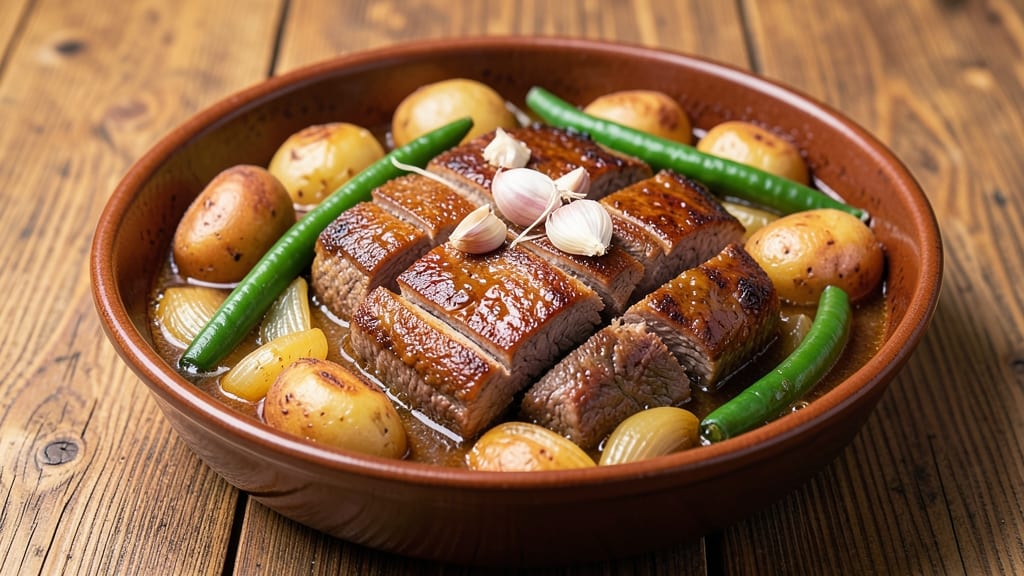
This authentic beef caldereta recipe brings the rich, comforting flavors of Filipino home cooking to your kitchen—where tender beef, hearty potatoes, and green beans simmer in a deeply savory tomato-based sauce until every ingredient melts into perfect harmony. 🔥 The secret lies in slow cooking, which develops layers of flavor while keeping the meat fork-tender and the sauce velvety.
I’ve perfected this version over years of testing, balancing traditional techniques with modern shortcuts (like pre-chopped vegetables) to make it achievable for home cooks without sacrificing authenticity.
The recipe begins with browning the beef in batches—a crucial step that builds deep, caramelized flavors—before adding tomatoes, garlic, and onions to create the sauce’s foundation. Potatoes and green beans join later, absorbing the rich liquid as they cook, while bay leaves and peppercorns infuse subtle warmth.
The result is a dish that’s hearty enough for a family dinner but elegant enough to impress guests, with a sauce that’s thick yet silky, clinging to every bite of beef and vegetable.
What makes this caldereta truly special is its balance of textures and flavors: the crisp edges of the potatoes, the tender bite of the beef, and the slight crunch of the green beans, all bathed in a sauce that’s tangy, slightly sweet, and deeply savory.
Serve it over steamed rice or garlic fried rice to soak up every last drop of that flavorful broth, and you’ll understand why this dish is a staple in Filipino kitchens worldwide.
Ready to recreate this dish at home? The process is straightforward, but the patience required—letting the stew simmer for hours—is what transforms simple ingredients into something extraordinary. Whether you’re cooking for a gathering or a cozy weeknight meal, this caldereta delivers comfort and authenticity in every spoonful.
Ingredients for authentic beef caldereta
Sixteen ingredients that transform into a deeply savory Filipino classic.
| Ingredient | Amount | Notes |
|---|---|---|
| Beef Chuck Roast 🥩 | 2 ½ lb | Cut into 1.5-inch cubes |
| Yellow Onions 🧅 | 2 whole | Medium, sliced into wedges |
| Garlic Cloves 🧄 | 8 cloves | Minced, for depth of flavor |
| Russet Potatoes 🥔 | 2 lb | Cut into 2-inch chunks |
| Green Beans 🌱 | 1 ½ lb | Trimmed, cut into 2-inch pieces |
| Canned Tomato Sauce 🍅 | 2 cups | San Marzano preferred |
| Bay Leaves 🍃 | 2 whole | Fresh if possible |
| Black Peppercorns 🌶️ | 1 tsp | Crushed, for subtle heat |
| Salt 🧂 | 1 ½ tsp | Kosher or sea salt |
| Olive Oil 🫒 | ½ cup | Extra-virgin for richness |
| White Wine 🍷 | ½ cup | Dry, like Sauvignon Blanc |
| Beef Broth 🥫 | 2 cups | Low-sodium preferred |
| Soy Sauce 🥢 | 1 tbsp | For umami depth |
| Brown Sugar 🍚 | 1 tbsp | For subtle sweetness |
| Fresh Parsley 🌿 | ¼ cup | Chopped, for garnish |
The beef is non-negotiable here—chuck roast gives you that melt-in-your-mouth texture. Grab it from the butcher section at Whole Foods or your local Filipino market if you can, but the regular supermarket stuff works too. Look for good marbling—it’s what makes the meat tender. I usually buy it a day ahead and let it sit in the fridge uncovered (on a plate) so it dries out a bit. This helps it brown better when you sear it. Skip the pre-cut cubes; cutting your own ensures even cooking. The potatoes? Russets hold up best—they absorb the sauce without falling apart.
No San Marzano tomatoes? Any good-quality canned tomato sauce works, but avoid the watery kind. White wine giving you trouble? Substitute with extra beef broth—just add an extra splash of soy sauce to compensate. Fresh bay leaves are ideal, but dried work at half the amount. The green beans can be frozen (thaw first), but fresh ones stay crunchier. For the parsley, I always grab a bunch and use half for garnish, half for flavor—toss some into the pot at the end. The soy sauce and brown sugar might seem small, but they’re what make this dish sing—don’t skip them.
This dish tastes even better the next day, so make extra. Store leftovers in the fridge for up to 5 days, or freeze for 3 months. I like to portion it into containers with rice so I can grab and reheat for quick lunches. The sauce thickens as it cools, so add a splash of broth if it seems too thick when reheating. And trust me, the longer it simmers, the richer it gets—don’t rush it.
Why You'll Love This Recipe
- One-Pot Magic: The beef, potatoes, and green beans all simmer together in the same pot—no chopping boards to clean, no extra pans to wash. Honestly, I’ve made this on nights when I’m too tired to think, and it still turns out rich and hearty.
- Deep, Savory Magic: That slow-cooked beef chuck roast? It practically melts in your mouth, while the onions and garlic caramelize into a golden, aromatic base. Between us, the first bite makes you want to skip dessert.
- Crowd-Pleaser Always: Whether it’s a Sunday family lunch or a last-minute dinner for unexpected guests, this dish delivers. My daughter picks out the green beans first, but she’ll still ask for seconds—proof it works for picky eaters too.
- Budget-Friendly Feast: A single chuck roast stretches across multiple meals, and potatoes plus green beans keep costs low. I’ll be real: I’ve had leftovers for lunch the next two days, and no one complains—it’s that good.
Step-by-step instructions for slow-cooked beef caldereta
Here's the authentic method—rich, spiced, and perfectly balanced every time.
🔥 Step 1: Sear the Beef for Deep Flavor
Heat the 0.5 cup olive oil in a large Dutch oven over medium-high heat until shimmering. Working in batches, add the 2.5 lb beef chuck roast cut into 1.5-inch cubes and sear for 3-4 minutes per side until deeply browned. You want that caramelized crust—it's where all the flavor lives.
Don't overcrowd the pan or the temperature will drop. If needed, work in two batches. Once browned, transfer the beef to a plate and set aside. Here's the thing—this searing step builds the foundation for the rich, complex taste that defines authentic caldereta.
🍳 Step 2: Sauté Onions and Garlic Until Golden
In the same Dutch oven, add the sliced 2 whole yellow onions and cook over medium heat for 8-10 minutes, stirring occasionally, until softened and golden. Add the 8 cloves minced garlic and cook for another 1 minute until fragrant—you'll smell that sweet, nutty aroma that signals it's ready.
This is where the base flavors develop. If the onions start to stick, just add a splash of white wine to deglaze. The wine will also help dissolve any browned bits clinging to the bottom, creating a flavorful sauce that'll infuse the entire dish.
🥘 Step 3: Build the Caldereta Sauce
Pour in the 0.5 cup white wine and scrape up all those delicious browned bits from the bottom of the pan. Let it simmer for 2-3 minutes until the alcohol cooks off and you're left with a fragrant liquid. Add the 2 cups canned tomato sauce, 2 cups beef broth, 1 tbsp soy sauce, 1 tbsp brown sugar, 1.5 tsp salt, 1 tsp crushed black peppercorns, and the 2 whole bay leaves.
Stir everything together and bring to a gentle simmer. This is the moment that matters: the sauce needs to reduce slightly and meld all those flavors. The brown sugar will add just the right touch of sweetness to balance the savory beef and tangy tomato.
🔥 Step 4: Simmer the Beef Until Tender
Return the browned beef to the pot and stir to combine. Bring the mixture to a gentle boil, then reduce heat to low and cover. Let it simmer for 1.5 hours, stirring occasionally, until the beef is fork-tender. You'll know it's ready when the meat easily pulls apart with a fork and the sauce has thickened slightly.
Here's a pro tip: if the sauce reduces too much before the beef is tender, just add a splash of water or broth. The goal is silky, flavorful beef that practically falls apart at the touch. Don't rush this step—patience is key to authentic caldereta.
🍳 Step 5: Add Potatoes and Green Beans
Add the 2 lb russet potatoes cut into 2-inch chunks and the 1.5 lb trimmed green beans cut into 2-inch pieces. Stir gently to combine with the beef and sauce. Cover and simmer for another 20-25 minutes until the potatoes are tender and the green beans are bright green and just tender.
You want the potatoes to be fork-tender with a slight bite, not mushy. The green beans should still have a bit of crunch—they'll finish cooking when you serve. Taste the sauce and adjust seasoning if needed. Real talk: this is where the dish comes together into a harmonious balance of textures and flavors.
🍽️ Step 6: Finish and Serve
Remove the 2 whole bay leaves and discard them. Stir in the 0.25 cup chopped fresh parsley and let the dish sit off the heat for 5 minutes to allow all the flavors to meld. Serve the caldereta hot, family-style, with crusty bread to soak up all that delicious sauce.
Each bite should deliver tender beef, hearty potatoes, crisp-tender green beans, and a rich, slightly sweet sauce that's perfectly balanced. This is the kind of dish that tastes even better the next day, so make extra if you can—it's that good.
Pro Tips For Making Authentic Beef Caldereta
- Brown the Chuck Twice: Caldereta needs that deep, caramelized flavor from the beef, so don’t rush this. Sear the chuck roast in batches—high heat, 3-4 minutes per side—until it’s dark brown, almost black in spots. After removing it, wipe the pan clean with a paper towel, then sear the onions and garlic. That second sear (with the onions) builds layers of flavor your slow simmer won’t erase.
- Peel Those Potatoes Wrong: Russets for caldereta should stay firm but tender—no mushy centers. Instead of boiling them whole, parboil them cut-side down in salted water for 8-10 minutes until just fork-tender. Drain, then shock in ice water for 2 minutes. This stops the cooking and keeps them from falling apart when they hit the stew later.
- Skip the Crowding in the Pot: I used to dump everything in at once—beef, potatoes, beans—and wondered why the potatoes turned to paste. Layer the ingredients: start with onions, garlic, and beef, then add potatoes and green beans in the last 20 minutes. This keeps the heat even and prevents the veggies from turning to mush.
- Deglaze with Tomato Paste First: Sounds weird, but it works: after browning the beef, sprinkle 1-2 tablespoons of tomato paste directly into the hot pan. Let it sizzle for 30 seconds before adding any liquid. This thickens the base instantly and cuts down on the need for extra flour or roux later—no one wants a watery caldereta.
Pro cooking tips for perfect results
Sear in Batches
Never skip the searing step—this is where the deep, caramelized flavors develop. Work in batches with 1.5-inch beef cubes to avoid overcrowding, which drops the pan temperature and prevents proper browning. I use a 12-inch cast-iron skillet for this, as it retains heat better than stainless steel.
The beef should be deep golden brown before removing it—this crust is what creates the rich, complex base for your sauce. 🔥
Deglaze with Wine
After searing the beef, don’t scrape up those browned bits with just water—use 0.5 cup white wine instead. The alcohol helps dissolve the fond (those flavorful bits) while adding a subtle acidity that brightens the sauce.
Let it simmer for 2-3 minutes until the alcohol cooks off completely. This step is non-negotiable for authentic flavor.
Low and Slow Simmer
Patience is key here—cover the pot and simmer on low heat for 1.5 hours to tenderize the beef. If the sauce reduces too quickly, add ¼ cup beef broth at a time to maintain moisture.
The beef should pull apart easily with a fork, and the sauce should coat the back of a spoon. I like to check the internal temperature with a meat thermometer—aim for 195°F for fall-apart tenderness.
Potato Timing
Add the 2-inch potato chunks only after the beef has already simmered for 1.5 hours. This ensures they absorb the rich, flavorful sauce without turning mushy. Use Russet potatoes for their sturdy texture—they hold up better than waxy varieties.
Stir gently to avoid breaking them, and cook until fork-tender with a slight bite, about 20-25 minutes.
Green Bean Crunch
The green beans should stay bright and slightly crisp-tender, not mushy. Add them with the potatoes and cook just until they’re bright green and tender-crisp, about 10-15 minutes. If they’re done before the potatoes, remove them and keep warm.
For extra flavor, toss them with a pinch of salt and a drizzle of olive oil before serving.
Flavor Boosts
For a deeper umami kick, add 1 tbsp fish sauce along with the soy sauce and brown sugar. If you prefer a touch of heat, stir in ½ tsp ground black pepper or a pinch of cayenne pepper at the end.
The brown sugar isn’t just for sweetness—it balances the acidity of the tomatoes and enhances the overall depth of flavor. Taste and adjust as you go! ✨
Nutrition facts
Frequently asked questions
Can I substitute chicken or pork for the beef in this recipe?
While beef is traditional for authentic caldereta, you can adapt this recipe for chicken or pork. For chicken, use boneless thighs or drumsticks and reduce the cooking time to 45-60 minutes after adding the meat. For pork, opt for pork shoulder cut into 1.5-inch cubes and simmer for 1.5 hours to achieve tenderness. The sauce and vegetable cooking times remain the same.
How do I make this recipe in a slow cooker?
Transfer the browned beef, onions, garlic, and sauce ingredients to your slow cooker. Cook on low for 6-7 hours or high for 3-4 hours, then add potatoes and green beans and cook for an additional 1-2 hours until tender. The slow cooker method is perfect for hands-off cooking, but you may need to add extra broth if the sauce becomes too thick.
What can I do if my caldereta sauce is too thin?
If the sauce is too thin, simmer it uncovered for 10-15 minutes to reduce it naturally. If you need to thicken it faster, mix 1 tablespoon cornstarch with 2 tablespoons cold water, stir it into the sauce, and cook for another 2-3 minutes until it thickens. Avoid over-thickening, as the sauce should still coat the back of a spoon but remain silky.
Is caldereta traditionally served with rice?
Yes! While caldereta is delicious on its own, it's almost always served with steamed white rice or garlic fried rice to soak up the rich sauce. For extra authenticity, try serving it with sinangag (garlic fried rice) or bagoong (fermented shrimp paste) on the side, which are common Filipino accompaniments.
Can I make this recipe without wine?
Replace the 0.5 cup white wine with 0.5 cup beef broth or apple cider vinegar for acidity. If using vinegar, reduce it to 2 tablespoons and add 1 teaspoon sugar to balance the tang. The dish will still be flavorful, though the wine adds a subtle depth that's hard to replicate.