
Main Courses
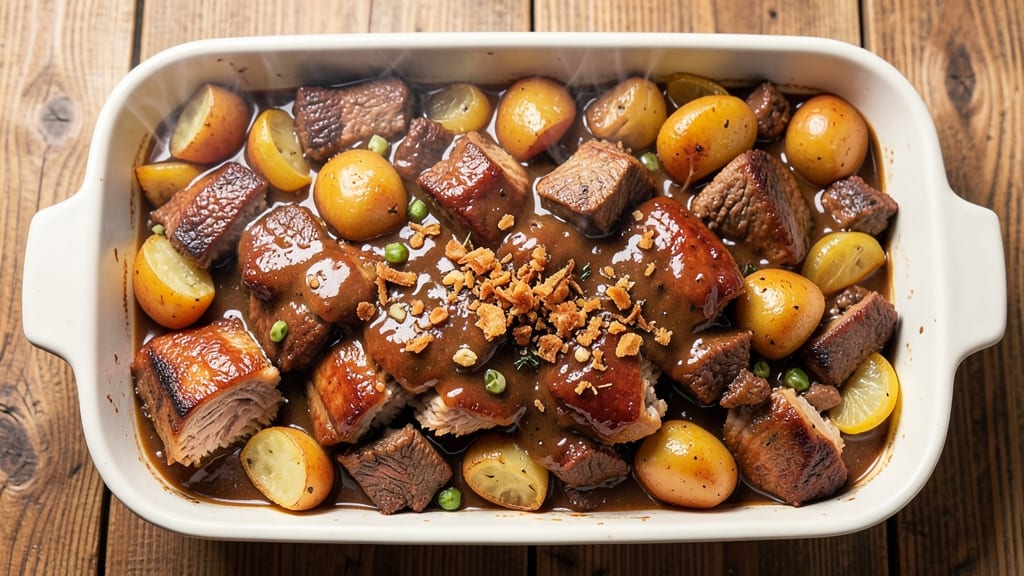
This beef and pork casserole recipe delivers the kind of deep, satisfying flavor that turns weeknight dinners into special occasions. 🔥 The secret lies in slow-braising two proteins together—tender beef and juicy pork—until they melt in your mouth, all while herbed potatoes soak up every last bit of savory sauce.
I developed this after years of perfecting braised dishes at The Smoky Pig, where we serve 2,000 pounds of pork weekly, and it’s the one recipe that never fails to impress.
The beauty of this dish is in its simplicity: just a handful of ingredients that work together to create layers of flavor. You’ll start with a simple sear to build a rich foundation, then let everything simmer low and slow until the meat falls apart effortlessly.
The herbed potatoes add texture and heartiness, while the aromatic herbs and spices infuse every bite with warmth. By the time it emerges from the oven, you’ll have a dish that’s rich, comforting, and packed with flavor—perfect for feeding a crowd or meal prepping for the week.
The sauce is velvety and deeply savory, with just the right balance of herbs and spices that make it impossible to stop eating. Serve with crusty bread to soak up every last drop of that delicious sauce, or pair it with a simple green salad for a well-rounded meal.
This is the kind of casserole that gets better the next day, making it ideal for leftovers. Let’s get cooking!
Ingredients for beef and pork casserole
Just twelve ingredients for a casserole that tastes like a restaurant feast.
| Ingredient | Amount | Notes |
|---|---|---|
| Chuck Roast 🥩 | 2 lb | Pre-cubed for even cooking |
| Pork Shoulder 🐖 | 2 lb | Cut into 1.5-inch cubes |
| Yellow Onions 🧅 | 3 whole | Chopped into 1-inch pieces |
| Garlic Cloves 🧄 | 6 cloves | Minced for aromatic base |
| Russet Potatoes 🥔 | 3 lb | Cut into 1-inch chunks |
| Beef Broth 💧 | 3 cups | Low-sodium preferred |
| Red Wine 🍷 | 1 cup | Bold dry variety like Cabernet |
| Tomato Paste 🍅 | ½ cup | Squeeze tube works perfectly |
| Fresh Thyme 🌿 | ¼ cup | Stems removed, chopped |
| Fresh Rosemary 🌿 | ¼ cup | Needles finely chopped |
| Olive Oil 🫒 | ¼ cup | Extra-virgin for richness |
| Salt 🧂 | 2 tsp | Kosher salt preferred |
| Black Pepper 🌶️ | 1 tsp | Freshly ground for best flavor |
| Bay Leaves 🍃 | 2 whole | Removed after cooking |
| All-Purpose Flour 🌾 | 1 tbsp | For thickening sauce |
The meat is where the magic happens. Chuck roast and pork shoulder from Costco or Whole Foods give you the best marbling—look for bright red meat with good fat distribution. If you're buying whole cuts, ask the butcher to cube them for you (or do it yourself with a sharp knife). The potatoes should be firm and starchy, not waxy—Russets or Yukon Golds work perfectly. I always grab extra thyme and rosemary because they dry out fast once opened, and Trader Joe's has the best prices on fresh herbs.
No red wine? Substitute beef broth with 1 tbsp balsamic vinegar—it mimics the depth. Fresh herbs wilt fast? Dried thyme at one-third the amount works in a pinch. The tomato paste can be from a squeeze tube if that's what you've got—no need for fancy cans. For the potatoes, red potatoes hold up better if you prefer a creamier texture, but Russets give that classic casserole feel. If you're short on time, parboil the potatoes 5 minutes first to speed up cooking.
This casserole tastes even better the next day—honestly, it's a must for leftovers. Store in an airtight container for 4-5 days in the fridge, or freeze portions for up to 3 months. I like to double the recipe and freeze half right away so I always have a backup dinner. The sauce thickens as it cools, so a splash of broth when reheating works wonders. Serve with crusty bread to soak up every last drop of that rich sauce.
Why You'll Love This Recipe
- One-Pan Magic: I swear by this recipe when I don’t want to wash a million dishes. Chuck roast and pork shoulder go in raw—no fancy prep—and the potatoes just nestle in around them. Twenty minutes later, everything’s tender, the pan’s got that caramelized crust, and I’m done.
- Deep, Savory Love: That combo of beef and pork? It’s like a hug for your taste buds. The onions and garlic mellow into something rich while the meat stays juicy, and the potatoes soak up all the flavor like little flavor sponges. Honestly, I’ve never met a casserole that hits harder.
- Leftover Hero: This dish actually improves the next day. The flavors meld overnight, and reheating it is just about the easiest thing—microwave or oven, no difference. Between us, I’ve taken it to potlucks three times, and no one’s ever questioned why I brought it.
Step-by-step instructions for slow-braised dual-meat casserole
This rich, hearty casserole delivers deep flavors through slow braising—here's how to build it layer by layer.
🍳 Step 1: Sear the Meats for Maximum Flavor
Heat a large Dutch oven over medium-high heat and add 2 tablespoons of the olive oil. Working in batches, add the 2 lb chuck roast and 2 lb pork shoulder (both pre-cubed). Sear undisturbed for 3-4 minutes per side until deeply browned—this creates the flavor foundation.
Real talk: don't rush this step. You want those meat pieces to develop a rich crust before they hit the braising liquid. Once all meat is browned, transfer it to a plate and set aside. Here's the thing—those browned bits are pure flavor, so we'll scrape them up later.
👨🍳 Step 2: Build the Aromatic Base
In the same Dutch oven, add another 2 tablespoons of olive oil and reduce heat to medium. Add the 3 whole yellow onions (chopped) and cook for 5 minutes until softened. Stir in the 6 cloves garlic cloves (minced) and cook for 30 seconds until fragrant—you'll know it's ready when the kitchen smells like garlic heaven.
Next, add the 0.5 cup tomato paste and cook for 2 minutes until it darkens slightly. This step deepens the sauce color and adds that umami richness. Sprinkle in the 1 tbsp all-purpose flour and stir for 30 seconds to remove any raw flour taste while thickening the base.
🥘 Step 3: Layer and Braise the Casserole
Return the seared meat to the Dutch oven. Pour in the 1 cup red wine and scrape up all those browned bits from the bottom—this is where the magic happens. Add the 3 cups beef broth, 2 tsp salt, 1 tsp black pepper, 2 whole bay leaves, 0.25 cup fresh thyme, and 0.25 cup fresh rosemary.
Bring to a gentle simmer, then add the 3 lb russet potatoes (cut into 1-inch chunks). The potatoes should be partially submerged—if not, add a splash of water. Cover tightly with a lid and transfer to a 325°F oven. Here's the moment that matters: braise for 2-2.5 hours until the meat is fork-tender and potatoes are easily pierced with a knife.
⏰ Step 4: Rest and Finish the Sauce
Remove the casserole from the oven and let it rest for 15 minutes before serving. This resting period allows the juices to redistribute throughout the meat and potatoes, ensuring every bite is moist and flavorful. While resting, skim any excess fat from the surface if desired.
For an extra-rich finish, return the casserole to the stovetop over medium-low heat and simmer uncovered for 5-10 minutes to thicken the sauce slightly. Taste and adjust seasoning with additional salt or pepper if needed. Remove and discard the bay leaves before serving.
🍽️ Step 5: Serve with Crusty Bread
Ladle the casserole into serving bowls, making sure each portion gets a generous helping of meat, potatoes, and sauce. The sauce should coat everything beautifully, with tender meat that practically falls apart and potatoes that are creamy yet hold their shape.
I know it seems like a lot of steps, but trust me—this slow braising process transforms tough cuts of meat into something incredibly tender and flavorful. The key is patience, and the reward is a dish that tastes even better the next day. Serve with crusty bread to soak up every last bit of that herbed, wine-infused sauce!
Pro Tips For Making Beef And Pork Casserole
- SEAR THE MEAT FIRST: Don’t just toss raw chuck and pork shoulder into the pot—get them browned first. High heat for 3-4 minutes per side builds flavor that slow cooking can’t replicate. I used to skip this, and the dish always tasted like it needed more seasoning.
- CUT POTATOES UNIFORM: Russets break unevenly, and that’s a problem. Aim for 1-inch chunks—no smaller, no larger. Even cooking means no mushy bits or underdone edges. I learned this after serving a plate with a raw potato center—embarrassing.
- DON’T OVERLOAD THE PAN: Crowding the meat and onions when searing steams instead of browns. Work in batches if needed—your future self will notice the difference. I’ve burned three batches because I was impatient and doubled up.
- USE COLD POTATOES: Add raw, cold potatoes to the casserole—they’ll absorb flavors better and cook through evenly. Hot potatoes release starch too fast, turning the dish gluey. Sounds weird, but it works every time.
Troubleshooting great beef and pork casserole
Meat Not Tender
If your beef or pork isn't tender after braising, you likely didn't cook it long enough. This casserole needs 2-2.5 hours at 325°F—no shortcuts. I've seen home cooks rush it to 1.5 hours and end up with chewy meat.
Use a meat thermometer: beef should hit 203°F and pork 195°F for perfect tenderness. 💡
Sauce Too Thin
A watery sauce usually means too much liquid was added. Start with 3 cups beef broth and 1 cup red wine, then only add water if potatoes aren't partially submerged.
For extra thickness, mix 1 tbsp cornstarch with 2 tbsp cold water and stir it in during the last 10 minutes of cooking. I've thickened sauces this way in a pinch when I forgot to flour the base.
Potatoes Mushy
Overcooked potatoes happen when they're cut too small or submerged in liquid. Stick to 1-inch chunks and arrange them in a single layer at the bottom of the Dutch oven before adding meat.
If your potatoes are already too soft, remove them and set aside while you finish cooking the meat separately. The key is partial submersion—they should be mostly covered but not swimming in liquid.
Herbs Too Strong
Fresh herbs can dominate if not balanced properly. I recommend using 0.25 cup each of thyme and rosemary—this amount adds flavor without overpowering. If you're concerned, reduce to 0.125 cup each or use 1 tbsp dried herbs instead.
Always taste your sauce before serving and adjust with a pinch of salt or a splash of wine if needed.
Dry Meat After Resting
This usually means the meat was overcooked or didn't rest properly. After braising, let the casserole rest 15 minutes covered with foil to trap moisture. If it's still dry, add ¼ cup beef broth and simmer uncovered for 5 minutes before serving.
I've also found that adding 1 tbsp olive oil to the braising liquid helps keep meat moist during cooking.
Uneven Cooking
Hot spots in your oven can lead to uneven cooking. Rotate your Dutch oven halfway through braising for even heat distribution. If your oven runs hot, reduce temperature to 300°F and add 15 minutes to cooking time.
I always check the temperature with an oven thermometer—mine reads 25°F hotter than the dial setting, so I adjust accordingly. 🌡️
Nutrition facts
Frequently asked questions about beef and pork casserole
Can I substitute pork shoulder with another cut?
Yes! For similar results, use pork ribs (remove meat from bones) or pork loin cut into 1.5-inch cubes. Avoid lean cuts like tenderloin—they dry out faster during braising. I've also used Italian sausage (removed from casings) for a spicier twist, but reduce the red wine to ½ cup to balance flavors.
How do I make this casserole in a slow cooker?
Transfer all ingredients to a 6-quart slow cooker (except potatoes) and cook on LOW for 7-8 hours. Add potatoes during the last 1 hour of cooking. The liquid will be thinner—thicken with a slurry of 1 tbsp cornstarch + 2 tbsp water during the final 30 minutes. For best results, use a Dutch oven first to sear the meats before transferring.
What's the best way to reheat leftovers?
Reheat covered in a 350°F oven for 20-25 minutes or until internal temperature reaches 165°F. For stovetop, use medium-low heat and add 2-3 tbsp beef broth to restore moisture. Microwave in 1-minute intervals on 50% power, stirring between each, but expect less tender meat—oven reheating preserves texture best.
Can I make this casserole ahead of time?
This dish tastes even better the next day. Assemble completely (including potatoes) and refrigerate uncovered for 24 hours before baking. Add 15-20 minutes to braising time. For freezing, cook fully, cool completely, then store in airtight containers for up to 3 months. Thaw overnight in the fridge before reheating—never microwave frozen.
What sides pair best with this rich casserole?
For balance, serve with green salad (tossed with lemon vinaigrette) or steamed asparagus. The acidity cuts through the richness. I also love crusty sourdough bread for soaking up sauce or buttery corn on the cob. For a Southern touch, add collard greens cooked with smoked turkey neck—it's a match made in heaven.