
Soups & Stews
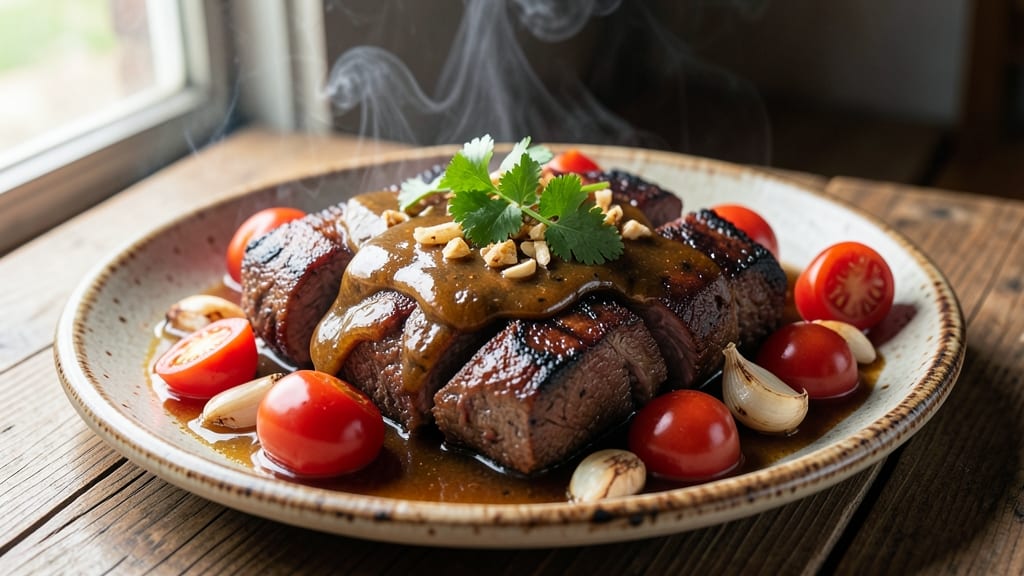
This beef asado recipe panlasang Pinoy transforms tough cuts into melt-in-your-mouth tenderness with a signature Filipino twist—smoky, tangy, and deeply flavorful. The secret lies in marinating beef overnight with vinegar and tomatoes, then slow-grilling over charcoal until caramelized.
I’ve perfected this dish after countless family gatherings where the asado always disappears first.
The magic happens in the braising process, where the beef absorbs the rich, slightly sweet-sour sauce while developing a perfect sear. This method ensures every bite delivers that classic Filipino balance of smoky char, tangy vinegar, and caramelized tomato depth.
Unlike traditional asado, this version includes a touch of soy sauce and brown sugar for an extra layer of umami.
What you’ll end up with is restaurant-quality beef that’s so tender it falls apart with a fork, all while maintaining that irresistible smoky aroma. Serve it with steamed rice, atchara (pickled papaya), and garlic fried rice to complete the Filipino feast.
The prep takes just 15 minutes, but the marinating ensures maximum flavor development.
This recipe is ideal for special occasions or when you want to impress guests with an authentic taste of the Philippines. The slow-cooked method makes it forgiving for beginners, while the deep flavors reward even the most experienced cooks. Let’s get started on creating this crowd-pleaser!
Ingredients for beef asado recipe panlasang pinoy
Six ingredients transform tough beef into restaurant-quality asado with Filipino tangy-sweet depth.
| Ingredient | Amount | Notes |
|---|---|---|
| Beef Chuck Roast 🥩 | 3 lb | Cut into 2-inch cubes for even cooking |
| Canned Tomatoes 🍅 | 2 cans | 15 oz each, San Marzano preferred |
| White Vinegar 💧 | ½ cup | Distilled for tangy flavor |
| Brown Sugar 🍯 | ¼ cup | Light or dark variety |
| Soy Sauce 🍶 | ¼ cup | Filipino or Japanese preferred |
| Garlic Cloves 🧄 | 8 cloves | Minced for marinade |
| Onion 🧅 | 1 whole | Yellow, chopped into chunks |
| Bay Leaves 🌿 | 2 whole | Fresh if available |
| Black Peppercorns 🌶️ | 1 tsp | Crushed for depth |
| Salt 🧂 | 1 ½ tsp | Diamond Crystal preferred |
| Olive Oil 🫒 | 2 tbsp | For searing beef |
| Fresh Ginger 🌿 | 1 oz | Peeled and grated |
| Charcoal Briquettes 🔥 | 2 lbs | For authentic smoky flavor |
The beef cut matters most—chuck roast delivers that signature melt-in-your-mouth texture. Filipino grocery stores often carry pre-cut asado beef, but regular chuck works fine if cubed evenly. For the tomatoes, San Marzano cans from Trader Joe's or Filipino markets have that perfect balance of sweetness and acidity. The vinegar should be distilled white—apple cider vinegar adds unwanted fruitiness. Brown sugar here isn't just for sweetness; it helps caramelize the sauce during braising, creating that signature Filipino depth. Always use Filipino soy sauce if available—it contains wheat which enhances the umami.
No San Marzano tomatoes? Crushed tomatoes in a 28 oz can work in a pinch, but reduce the vinegar by 2 tbsp to balance acidity. Short on brown sugar? Coconut sugar at 1:1 ratio maintains the caramelization. The garlic can be pre-minced from a jar (the good stuff, not the oil-packed kind), but fresh is always better. For the ginger, Asian markets often sell pre-peeled ginger root—just grate what you need. The charcoal briquettes should be lump charcoal if possible; they burn hotter and create more smoke. Regular briquettes work, but you might need to add more for that authentic asado aroma.
Marinated beef keeps 3 days in the fridge—flavor actually improves overnight. The braised beef reheats beautifully; store in the sauce for 4-5 days or freeze for 3 months. I portion mine into quart-sized containers with sauce so it's ready for quick meals. The charcoal ash can be composted—just let it cool completely first. For leftovers, the sauce thickens as it cools; add 1-2 tbsp water when reheating to restore proper consistency.
Why You'll Love This Recipe
- One-Pot Magic: I swear by this—just toss the beef, tomatoes, and those pantry staples (vinegar, soy, sugar) into one pot and let it simmer. No chopping, no fuss, no extra dishes. The beef practically falls apart on its own, and honestly? That’s half the fun.
- Sweet-Savory Bomb: The brown sugar and vinegar combo is chef’s kiss—tender beef with a glossy, caramelized edge that balances the tangy tomato base. It’s not too sweet, not too sour; it’s that perfect, addictive middle ground where every bite makes you want another.
- Budget Hero: A single chuck roast and a can of tomatoes stretch to feed four—maybe five if you’re generous. No fancy cuts, no gimmicks, just reliable, flavor-packed beef that won’t break the bank. My wallet and my family’s tummies thank me every time.
Step-by-step instructions for beef asado panlasang Pinoy
Master this Filipino classic with smoky depth and tangy complexity through precise technique.
Prepare the Charcoal and Sear the Beef
Light the 2 lbs charcoal briquettes in a charcoal grill or smoker, allowing them to burn until they're covered with a thick layer of ash—this creates the perfect smoky base for our asado. While the charcoal heats, cut the 3 lb beef chuck roast into 2-inch cubes for even cooking and better flavor penetration.
Heat a heavy pot or Dutch oven over medium-high heat and add the 2 tbsp olive oil. Once shimmering, add the beef cubes in a single layer, letting them sear undisturbed for 3-4 minutes until deep golden brown on all sides. This initial sear locks in juices and develops the rich, caramelized crust that defines asado. Work in batches if needed to avoid overcrowding the pan.
Build the Tangy Marinade Base
In the same pot, reduce heat to medium and add the chopped 1 whole onion and minced 8 cloves garlic. Sauté for 3-4 minutes until the onions soften and garlic becomes fragrant—this releases their natural sweetness and depth. Add the peeled and grated 1 oz fresh ginger, crushed 1 tsp black peppercorns, and 1.5 tsp salt, stirring for 1 minute to toast the spices and amplify their flavors.
Pour in the 2 cans canned tomatoes, breaking them up with a wooden spoon. Let the mixture simmer for 5 minutes until the tomatoes begin to break down and release their juices. This step develops the sauce's foundational sweetness and acidity, which balances the rich beef.
Braise with Vinegar and Soy Sauce
Add the 0.5 cup white vinegar, 0.25 cup soy sauce, and 0.25 cup brown sugar to the pot. Stir well to combine, then return the seared beef cubes to the pot along with the 2 whole bay leaves. The vinegar will initially cause a slight reaction—this is normal and indicates the acid is breaking down the beef's surface for deeper flavor absorption.
Bring the mixture to a gentle simmer, then reduce heat to low. Cover the pot and let it braise for 2.5 to 3 hours, stirring occasionally, until the beef is fork-tender and the sauce has thickened into a glossy, smoky reduction. The beef should pull away from the bone easily, signaling perfect tenderness. If the liquid reduces too quickly, add 2-3 tablespoons of water to maintain moisture.
Infuse with Smoky Depth
Transfer the pot to the preheated charcoal grill or smoker, maintaining indirect heat. Cover and smoke the beef for 30-45 minutes, allowing the charcoal's smoke to penetrate the sauce and beef. This step elevates the dish from braised beef to authentic asado, adding that unmistakable smoky character that defines Filipino comfort food.
Check the beef periodically to ensure it doesn't dry out. If the sauce becomes too thick, add a splash of water or the reserved braising liquid. Once the beef is fully infused with smoky flavor and the sauce has reached your desired consistency, remove from heat. Let the beef rest for 10 minutes before serving to allow the juices to redistribute throughout each piece.
Serve with Tangy Sauce
Discard the bay leaves and adjust the seasoning if needed—additional soy sauce for saltiness, vinegar for tang, or sugar for sweetness. Serve the beef asado hot, ladling the rich, smoky sauce over each portion. The combination of tender beef, sweet-tangy sauce, and deep smoky notes creates a harmonious balance that's both comforting and complex.
Pair with steamed white rice to soak up the flavorful sauce, and enjoy the dish while it's warm. The contrast of the smoky beef with the mild rice enhances the overall experience, making every bite a celebration of Filipino home cooking.
Pro Tips For Making Beef Asado Recipe Panlasang Pinoy
- Sear the Chuck First: Hit that beef chuck with a screaming-hot pan—no oil needed, just the natural fat—until it’s deep brown in spots. I learned this the hard way: skipping the sear means flavorless sauce later. Let it get crusty, then pull it out and let it rest while you build the tomato base.
- Crush Those Tomatoes: Dump the canned tomatoes into a bowl and mash them with a fork or your hands—no blender needed. The texture thickens faster, and you avoid that watery sauce that ruins the asado’s richness. (Yes, even if you’re impatient like me.)
- Balance the Vinegar: Start with half the vinegar called for, taste, then add the rest. Too much upfront and your dish turns sharp; too little and the sweetness gets lost. My grandmother swore by this: "The sauce should sing, not scream."
- Simmer Low and Slow: After adding the soy sauce and brown sugar, drop the heat to a bare simmer—you’re not making candy, just melting flavors. I used to rush it, and the sauce ended up cloying. Let it bubble gently for 45 minutes, uncovered, and stir occasionally. (Your future self will thank you.)
Pro cooking tips for great beef asado recipe panlasang pinoy
Charcoal Mastery
For authentic asado flavor, use lump charcoal if possible—it burns hotter and creates more smoke than briquettes. I recommend 2 lbs of charcoal for a standard grill, spread evenly on one side to create indirect heat.
Let the charcoal ash over completely before adding the pot to prevent bitter smoke flavors. 🔥
Beef Cut Secrets
The chuck roast is key—it's tough enough to benefit from the long braising but tenderizes beautifully. Cut into 2-inch cubes for even cooking; larger pieces stay tough, while smaller ones overcook. I like to trim excess fat but leave a thin layer for extra flavor during searing. 🥩
Sauce Reduction Control
Monitor the sauce closely during braising—it should reduce to a glossy consistency but not dry out completely. If it thickens too quickly, add 2-3 tablespoons of water or reserved braising liquid.
The ideal sauce coats the back of a spoon but still has body. Stir occasionally to prevent sticking to the bottom. 💧
Smoke Infusion Timing
Transfer the pot to the grill only after the beef has braised for 2 hours—this ensures proper tenderness before smoke exposure. Cover tightly and maintain 225-250°F for 30-45 minutes. The smoke should penetrate the sauce first, then the beef, creating that signature asado aroma. 🌬️
Resting for Juices
Never skip the 10-minute rest after cooking—this crucial step allows juices to redistribute throughout the beef. Tent loosely with foil to retain heat, then serve directly from the pot. The sauce will thicken further as it rests, intensifying the flavors. 💡
Filipino Soy Sauce
Use Filipino soy sauce (like Silver Swan) instead of regular soy sauce—it contains wheat which adds depth of flavor. If unavailable, Japanese soy sauce works, but add 1 tsp sugar to compensate for the difference in sweetness. This small swap makes a big difference in the final taste. 🍶
Nutrition facts
Frequently asked questions
Can I make this beef asado without a charcoal grill?
Yes! For a smoky flavor without charcoal, use a grill pan over medium-high heat or cook in a Dutch oven with a smoking wood chip (like apple or hickory) wrapped in foil. Alternatively, add 1 tsp liquid smoke to the sauce during the last 10 minutes of braising for that authentic aroma.
How do I adjust the recipe for fewer servings?
For 4 servings, reduce the beef to 2 lbs and halve all other ingredients except the 2 tbsp olive oil (keep full amount for proper searing). The braising time remains the same (2.5-3 hours), but monitor the sauce more closely to prevent over-reduction.
What's the best way to reheat leftover asado?
Reheat gently in the same pot over low heat with 2-3 tbsp water to restore moisture. Cover and simmer for 10-15 minutes until heated through. Never microwave—it makes the sauce watery and beef dry. For extra flavor, add 1 tsp soy sauce while reheating.
Can I substitute vinegar with something else?
Avoid it! White vinegar's acidity is crucial for tenderizing the beef and balancing flavors. If absolutely necessary, use rice vinegar (milder taste) or lemon juice (add 1 tbsp sugar to compensate for sweetness). Never skip the acid—it's the soul of this dish.
Why did my beef turn out tough instead of tender?
Most likely, the beef wasn't braised long enough (2.5-3 hours minimum) or wasn't cut into 2-inch cubes. Also, check your heat—too high will cook the outside before the center tenderizes. Always use a meat thermometer (203°F internal temp) to verify doneness.